State Key Laboratory of New Ceramics and Fine Processing, School of Materials Science and Engineering, Tsinghua University, Beijing, 100084, China.
Toyota Physical and Chemical Research Institute, Nagakute, 480-1192, Japan.
Nat Commun. 2017 Oct 18;8(1):1024. doi: 10.1038/s41467-017-01149-4.
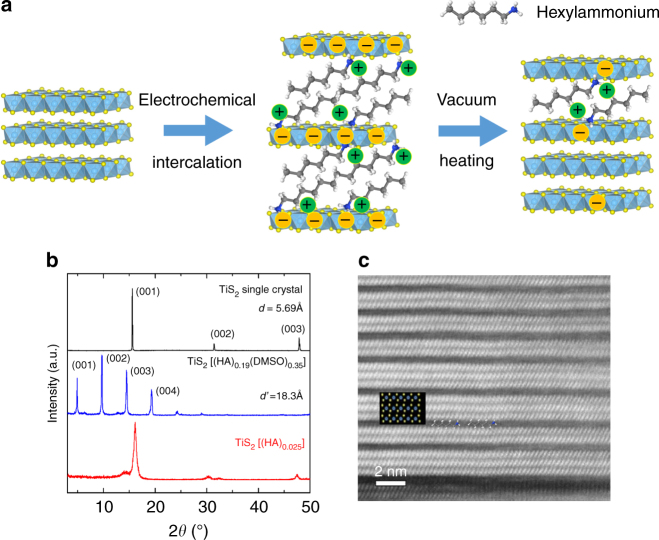
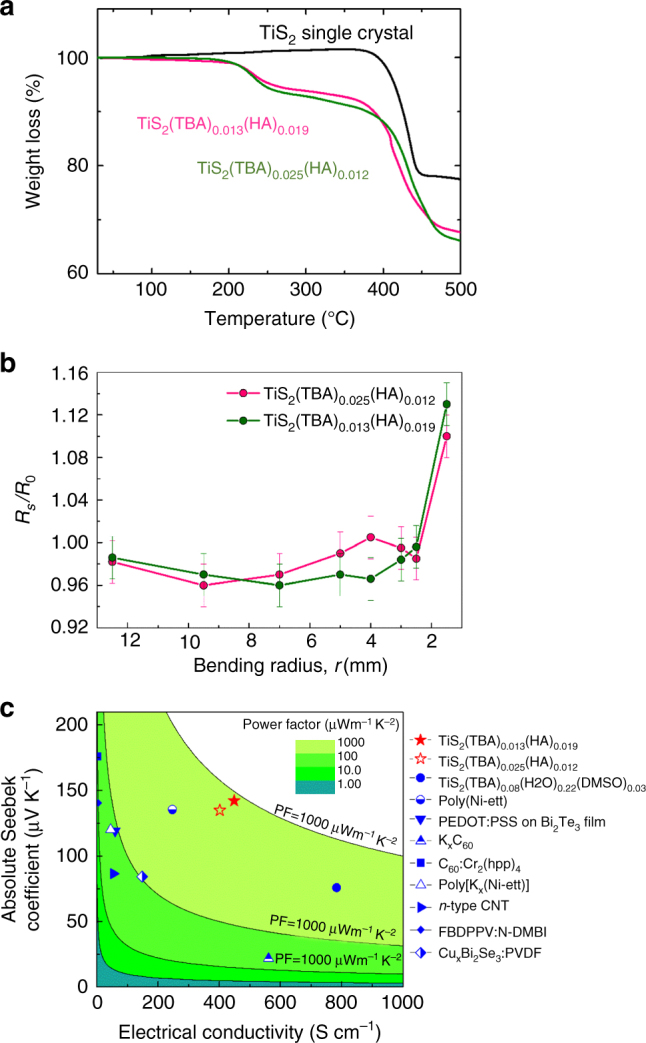
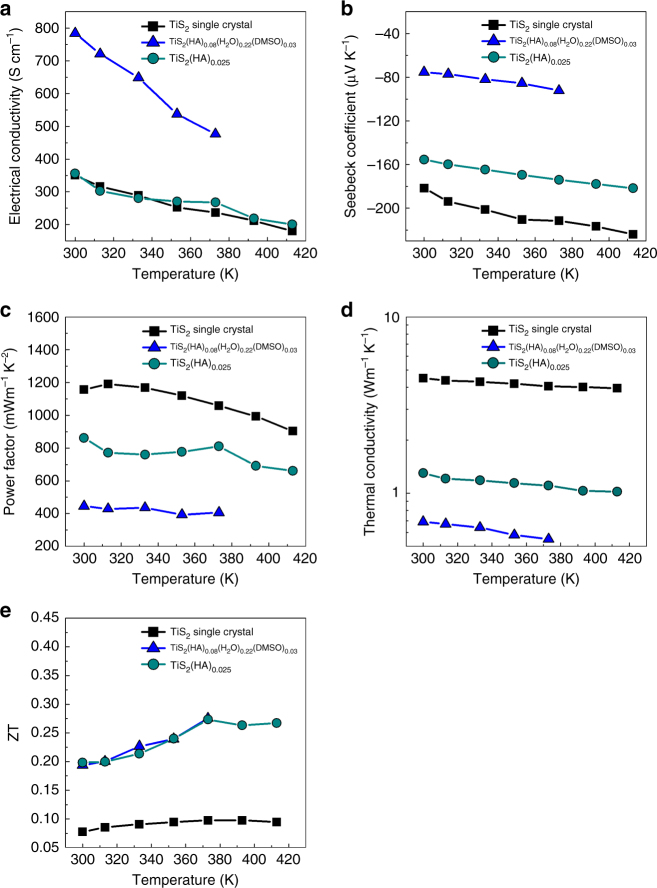
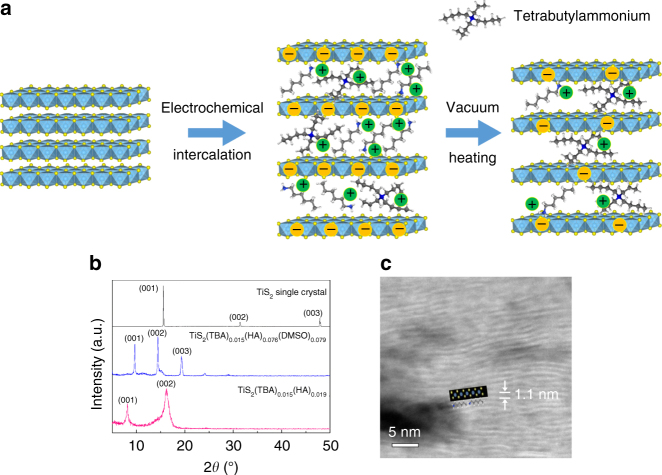
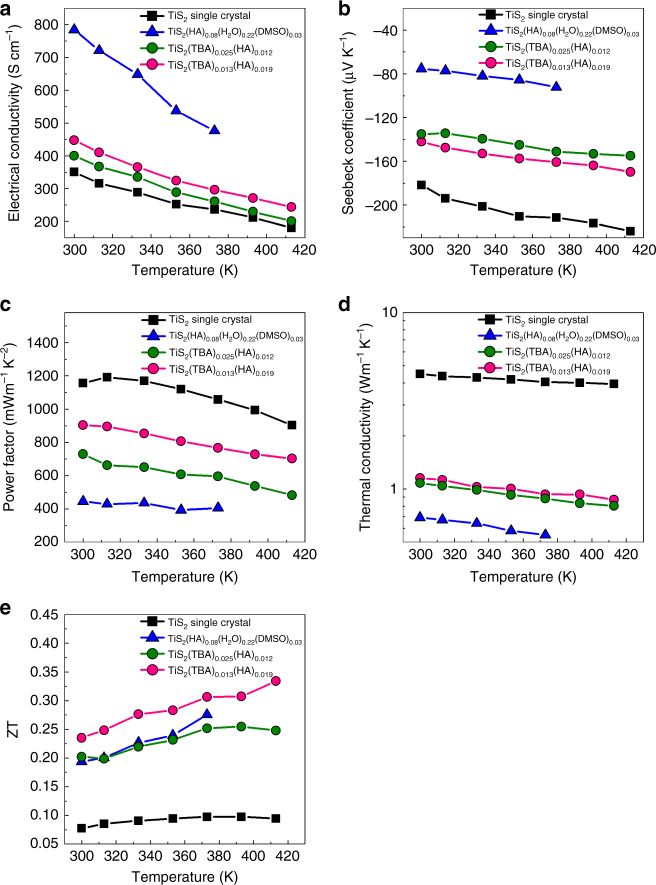
Hybrid inorganic-organic superlattice with an electron-transmitting but phonon-blocking structure has emerged as a promising flexible thin film thermoelectric material. However, the substantial challenge in optimizing carrier concentration without disrupting the superlattice structure prevents further improvement of the thermoelectric performance. Here we demonstrate a strategy for carrier optimization in a hybrid inorganic-organic superlattice of TiS[tetrabutylammonium] [hexylammonium] , where the organic layers are composed of a random mixture of tetrabutylammonium and hexylammonium molecules. By vacuum heating the hybrid materials at an intermediate temperature, the hexylammonium molecules with a lower boiling point are selectively de-intercalated, which reduces the electron density due to the requirement of electroneutrality. The tetrabutylammonium molecules with a higher boiling point remain to support and stabilize the superlattice structure. The carrier concentration can thus be effectively reduced, resulting in a remarkably high power factor of 904 µW m K at 300 K for flexible thermoelectrics, approaching the values achieved in conventional inorganic semiconductors.
具有电子输运但声子阻断结构的混合无机-有机超晶格作为一种很有前途的柔性薄膜热电材料而出现。然而,在不破坏超晶格结构的情况下优化载流子浓度的巨大挑战,阻碍了热电性能的进一步提高。在这里,我们展示了一种在 TiS[四丁基铵][己基铵]的混合无机-有机超晶格中进行载流子优化的策略,其中有机层由四丁基铵和己基铵分子的随机混合物组成。通过在中间温度下对混合材料进行真空加热,沸点较低的己基铵分子被选择性地脱插,由于电中性的要求,电子密度降低。沸点较高的四丁基铵分子保持不变,以支撑和稳定超晶格结构。因此,载流子浓度可以有效地降低,从而在 300 K 时为柔性热电材料实现高达 904 µW m K 的显著高功率因子,接近传统无机半导体的数值。