Niles Paul B, Michalski Joseph, Ming Douglas W, Golden D C
Astromaterials Research and Exploration Science Division, NASA Johnson Space Center, Houston, TX, 77058, USA.
Department of Earth Sciences and Laboratory for Space Research, University of Hong Kong, Hong Kong, China.
Nat Commun. 2017 Oct 17;8(1):998. doi: 10.1038/s41467-017-01227-7.
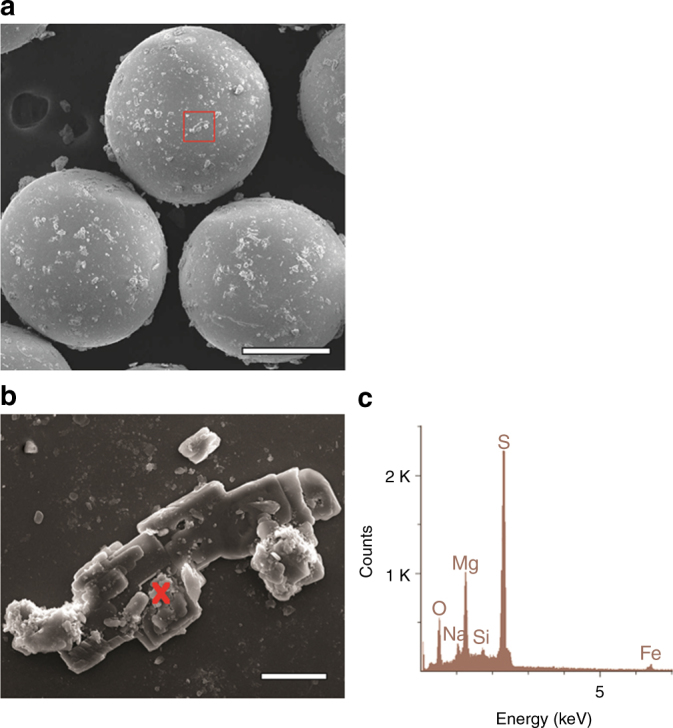
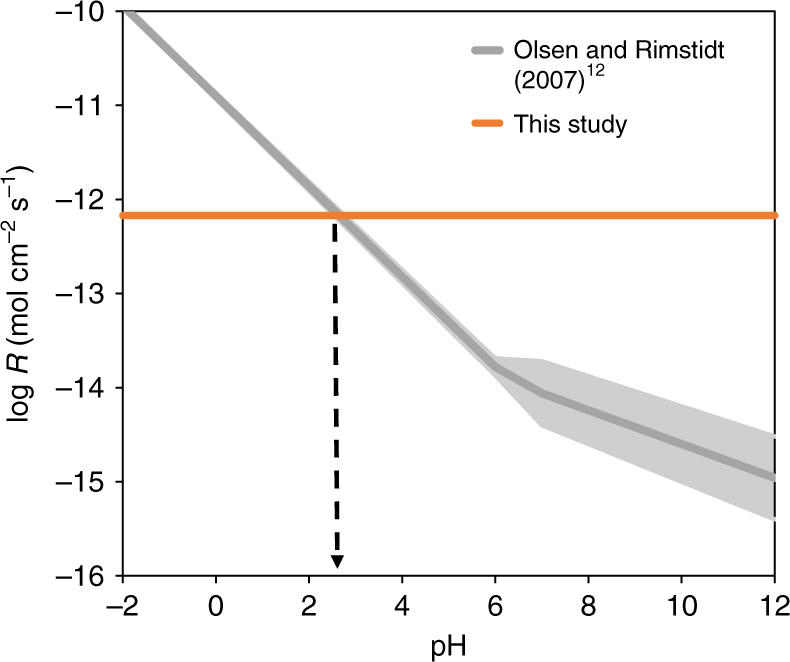
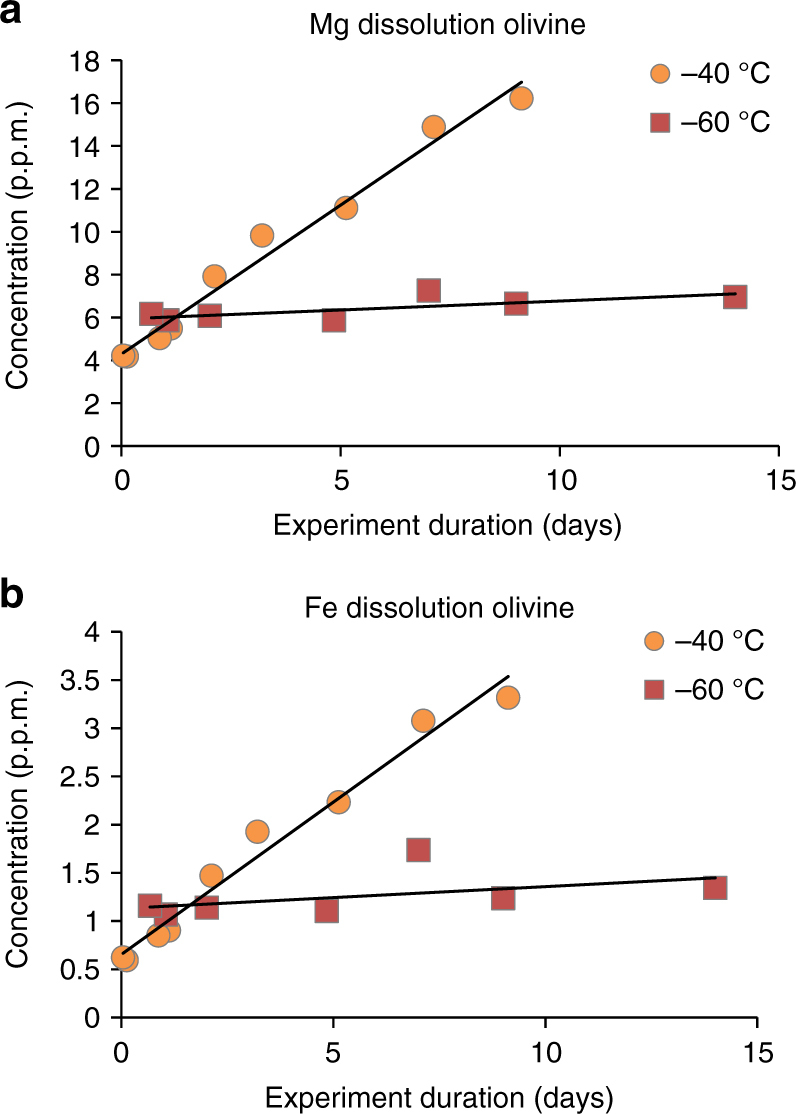
Large Hesperian-aged (~3.7 Ga) layered deposits of sulfate-rich sediments in the equatorial regions of Mars have been suggested to be evidence for ephemeral playa environments. But early Mars may not have been warm enough to support conditions similar to what occurs in arid environments on Earth. Instead cold, icy environments may have been widespread. Under cryogenic conditions sulfate formation might be blocked, since kinetics of silicate weathering are typically strongly retarded at temperatures well below 0 °C. But cryo-concentration of acidic solutions may counteract the slow kinetics. Here we show that cryo-concentrated acidic brines rapidly chemically weather olivine minerals and form sulfate minerals at temperatures as low as -60 °C. These experimental results demonstrate the viability of sulfate formation under current Martian conditions, even in the polar regions. An ice-hosted sedimentation and weathering model may provide a compelling description of the origin of large Hesperian-aged layered sulfate deposits on Mars.
火星赤道地区存在大量赫斯珀利亚纪(约37亿年前)富含硫酸盐的层状沉积物,这被认为是短暂存在的盐湖环境的证据。但早期火星可能不够温暖,无法支持类似于地球干旱环境中的条件。相反,寒冷的冰环境可能曾经广泛存在。在低温条件下,硫酸盐的形成可能会受阻,因为在远低于0°C的温度下,硅酸盐风化的动力学通常会受到强烈抑制。但是酸性溶液的低温浓缩可能会抵消这种缓慢的动力学。我们在此表明,低温浓缩的酸性盐水在低至-60°C的温度下能迅速对橄榄石矿物进行化学风化并形成硫酸盐矿物。这些实验结果证明了在当前火星条件下,即使在极地地区,硫酸盐形成的可行性。一个以冰为主导的沉积和风化模型可能为火星上赫斯珀利亚纪大型层状硫酸盐矿床的成因提供一个令人信服的解释。