Kim Joong Sun, Han Na-Kyung, Kim Sung-Ho, Lee Hae-June
Research Center, Dongnam Institute of Radiological & Medical Sciences, Busan, Korea.
Division of Basic Radiation Bioscience, Korea Institute of Radiological and Medical Sciences, Seoul, Korea.
Oncotarget. 2017 Sep 2;8(41):69386-69397. doi: 10.18632/oncotarget.20624. eCollection 2017 Sep 19.
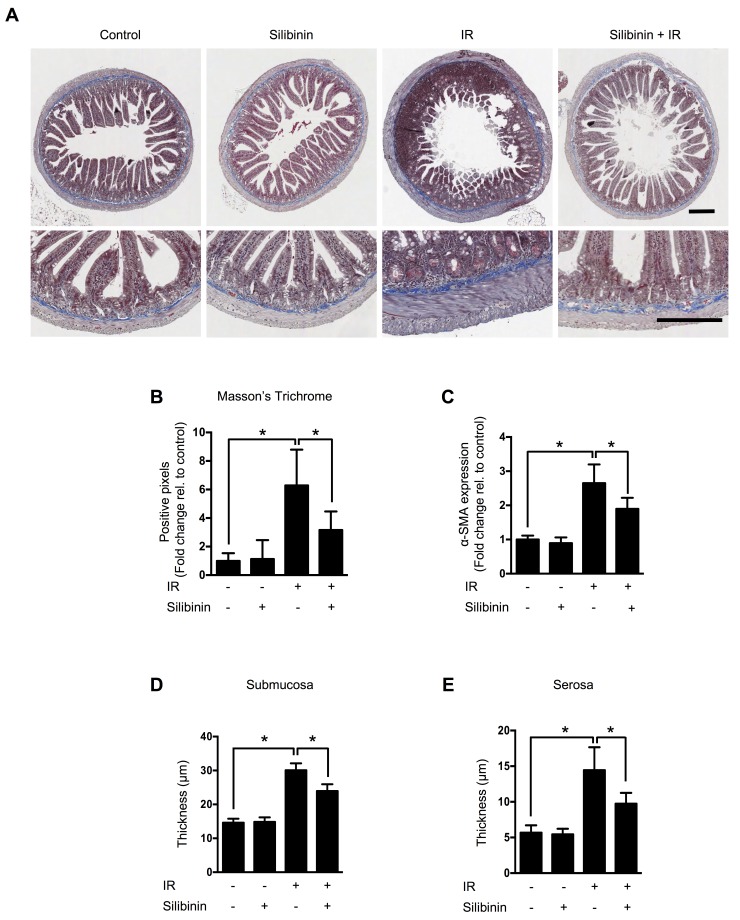
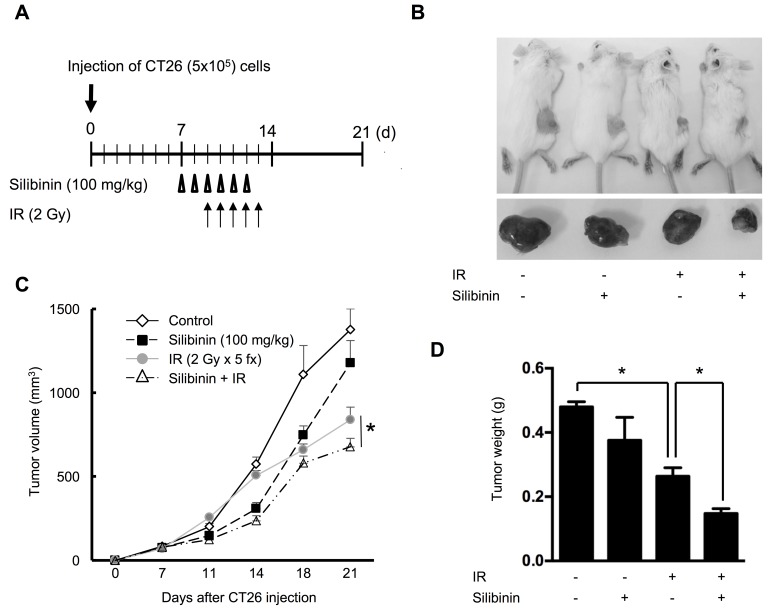
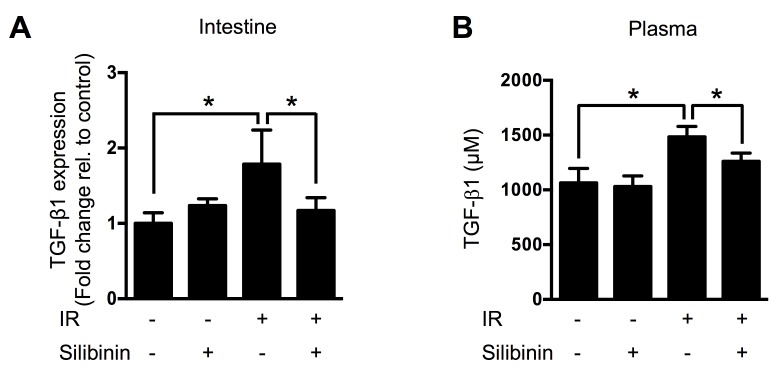
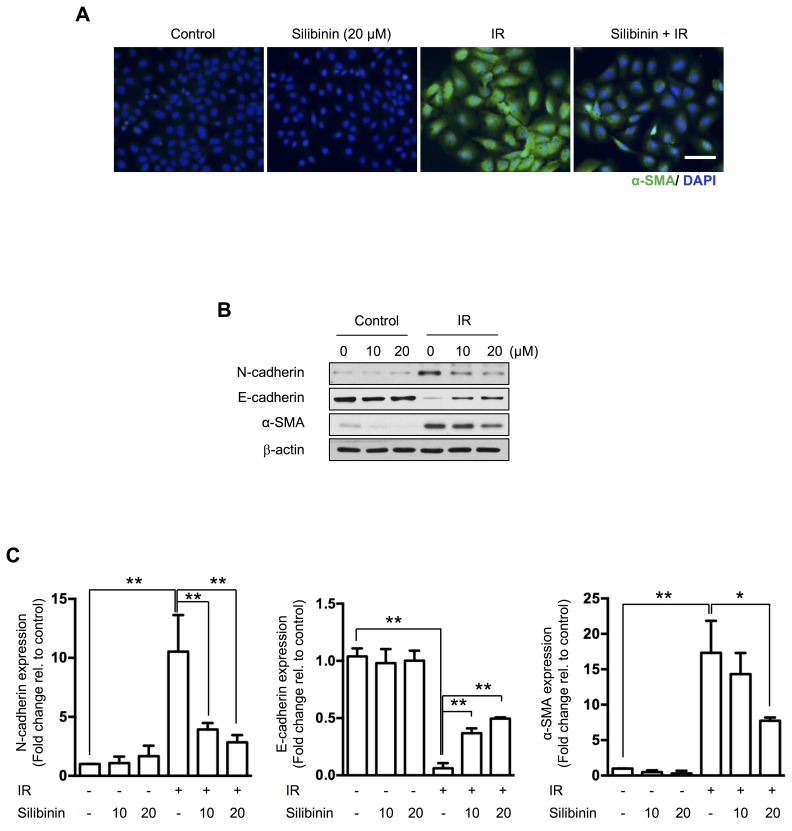
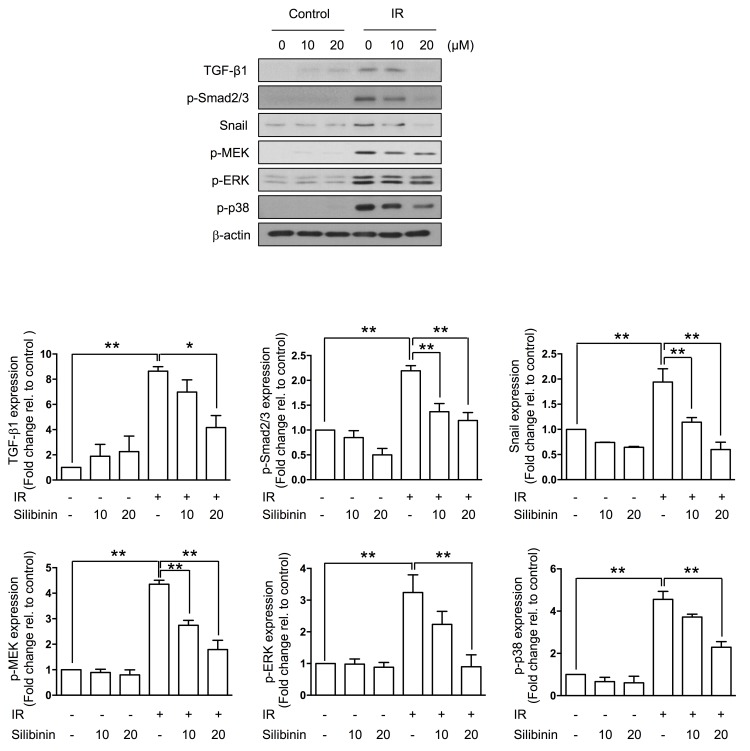
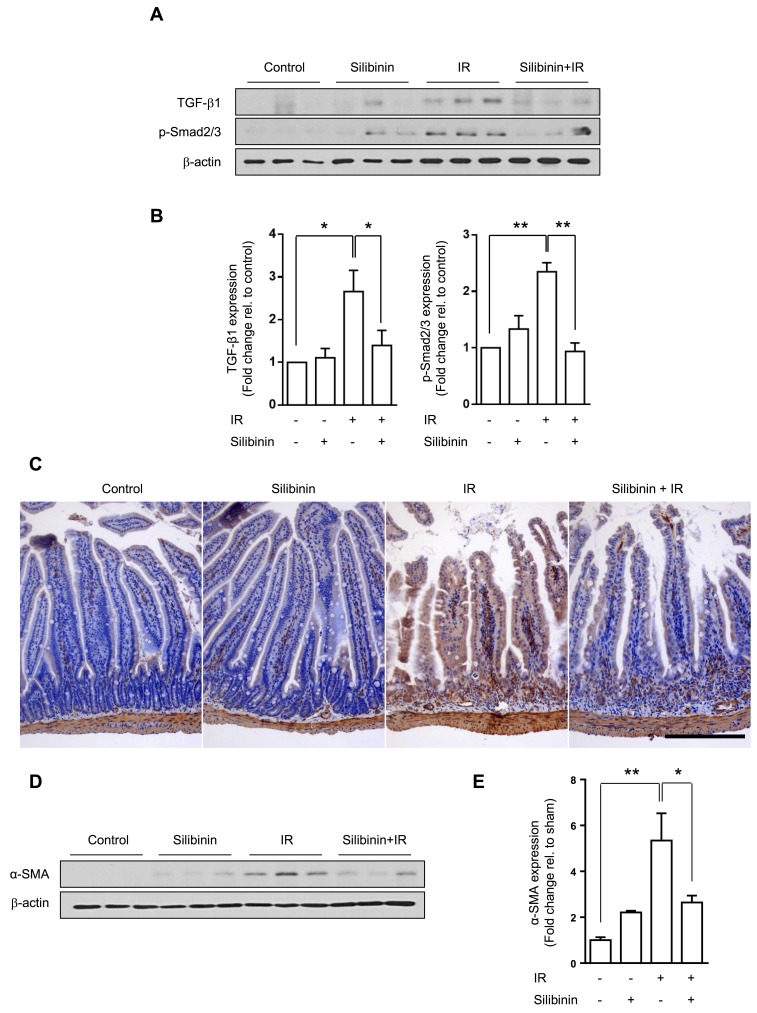
Radiotherapy is a common treatment for cancer patients, but its use is often restricted by the tolerance of normal tissue. As cancer patients live longer, delayed radiation effects on normal tissue have become a concern. Radiation-induced enteropathy, including inflammatory bowel disease and fibrosis, are major issues for long-term cancer survivors. To investigate whether silibinin attenuates delayed radiation-induced intestinal injury in mice, we focused on intestinal fibrotic changes. Silibinin improved delayed radiation injuries in mice in association with decreased collagen deposition within the intestines and deceased transforming growth factor (TGF)-β1 levels in the intestine and plasma. Treating mice bearing CT26 mouse colon cancer tumors with both silibinin and radiation stimulated tumor regression more than radiation alone. We also investigated the effect of silibinin on the radiation-induced epithelial-to-mesenchymal transition (EMT), the primary mechanism of fibrosis. We assessed changes in E-cadherin, N-cadherin, and α-smooth muscle actin expression, and demonstrated that silibinin attenuates radiation-induced EMT. Irradiating intestinal epithelial cells increased TGF-β1 levels, but silibinin suppressed TGF-β1 expression by inhibiting Smad2/3 phosphorylation. These results suggest silibinin has the potential to serve as a useful therapeutic agent in patients with radiation-induced intestinal fibrosis.
放射治疗是癌症患者的常见治疗方法,但其应用常常受到正常组织耐受性的限制。随着癌症患者生存期延长,正常组织的迟发性放射效应已成为一个关注点。放射性肠病,包括炎症性肠病和纤维化,是长期癌症幸存者面临的主要问题。为了研究水飞蓟宾是否能减轻小鼠迟发性放射性肠损伤,我们重点关注肠道纤维化变化。水飞蓟宾改善了小鼠的迟发性放射损伤,同时肠道内胶原蛋白沉积减少,肠道和血浆中转化生长因子(TGF)-β1水平降低。用水飞蓟宾和放射治疗携带CT26小鼠结肠癌肿瘤的小鼠,比单独放射治疗更能促进肿瘤消退。我们还研究了水飞蓟宾对放射诱导的上皮-间质转化(EMT)的影响,EMT是纤维化的主要机制。我们评估了E-钙黏蛋白、N-钙黏蛋白和α-平滑肌肌动蛋白表达的变化,并证明水飞蓟宾可减轻放射诱导的EMT。照射肠道上皮细胞会增加TGF-β1水平,但水飞蓟宾通过抑制Smad2/3磷酸化来抑制TGF-β1表达。这些结果表明,水飞蓟宾有可能成为放射性肠纤维化患者的有效治疗药物。