Ma Fei, Li Wenjie, Liu Chunxiao, Li Wei, Yu Haining, Lei Bo, Ren Yanlv, Li Zhigao, Pang Da, Qian Cheng
Department of Breast Surgery, Harbin Medical University Cancer Hospital, Harbin, China.
Translational Medicine Research and Cooperation Center of Northern China, Heilongjiang Academy of Medical Sciences, Harbin, China.
Oncotarget. 2017 Jun 9;8(41):69538-69550. doi: 10.18632/oncotarget.18422. eCollection 2017 Sep 19.
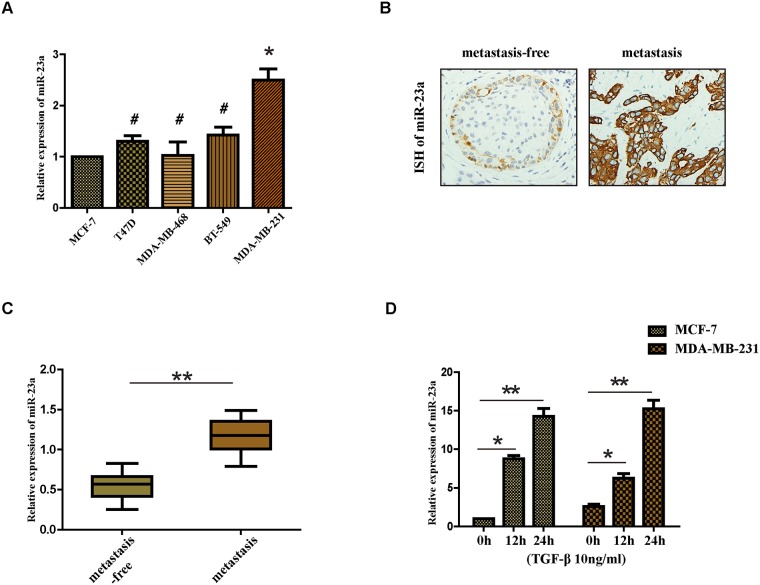
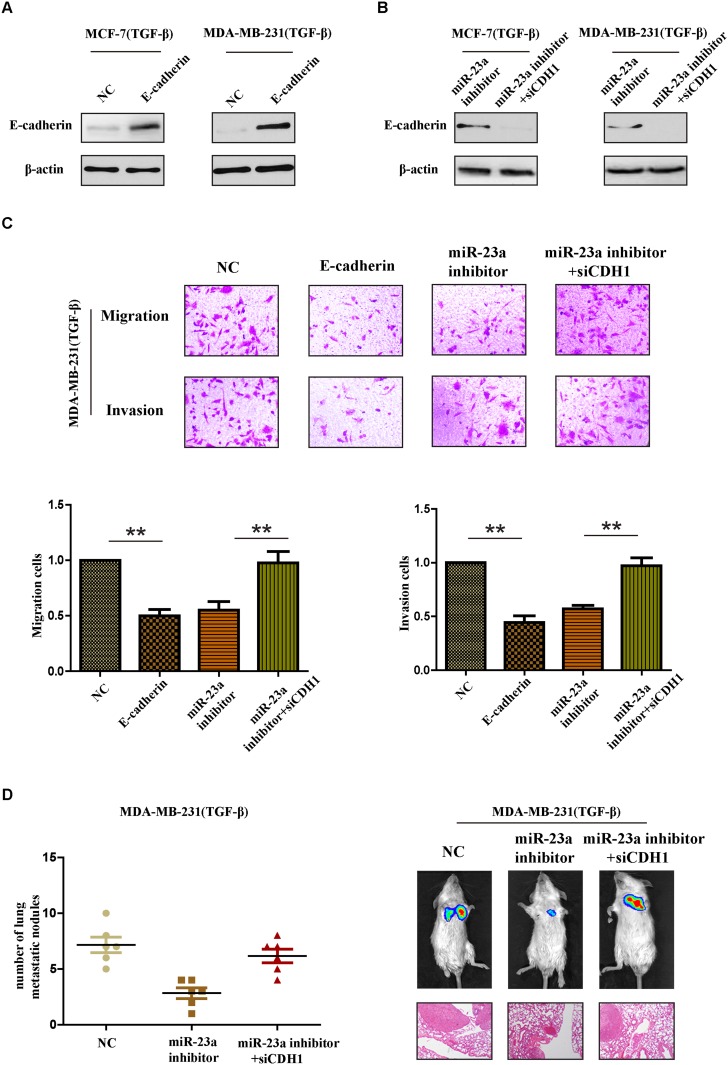
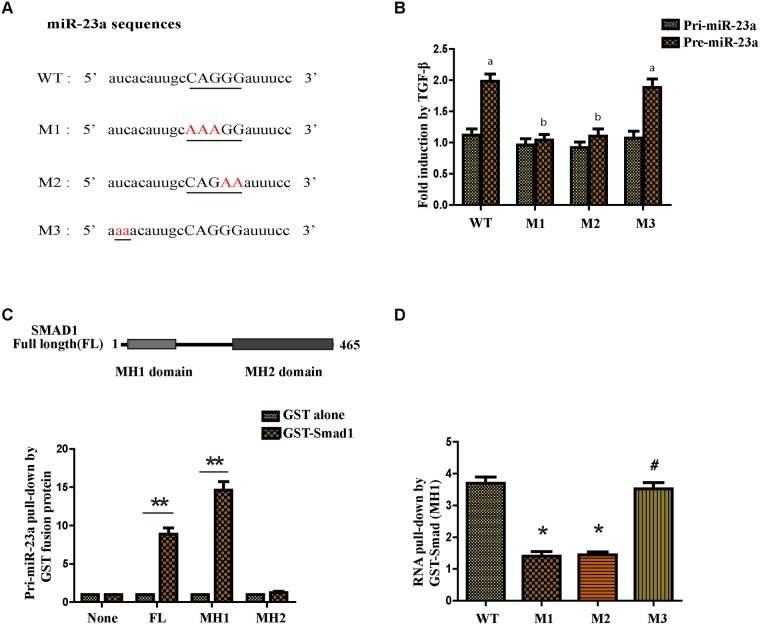
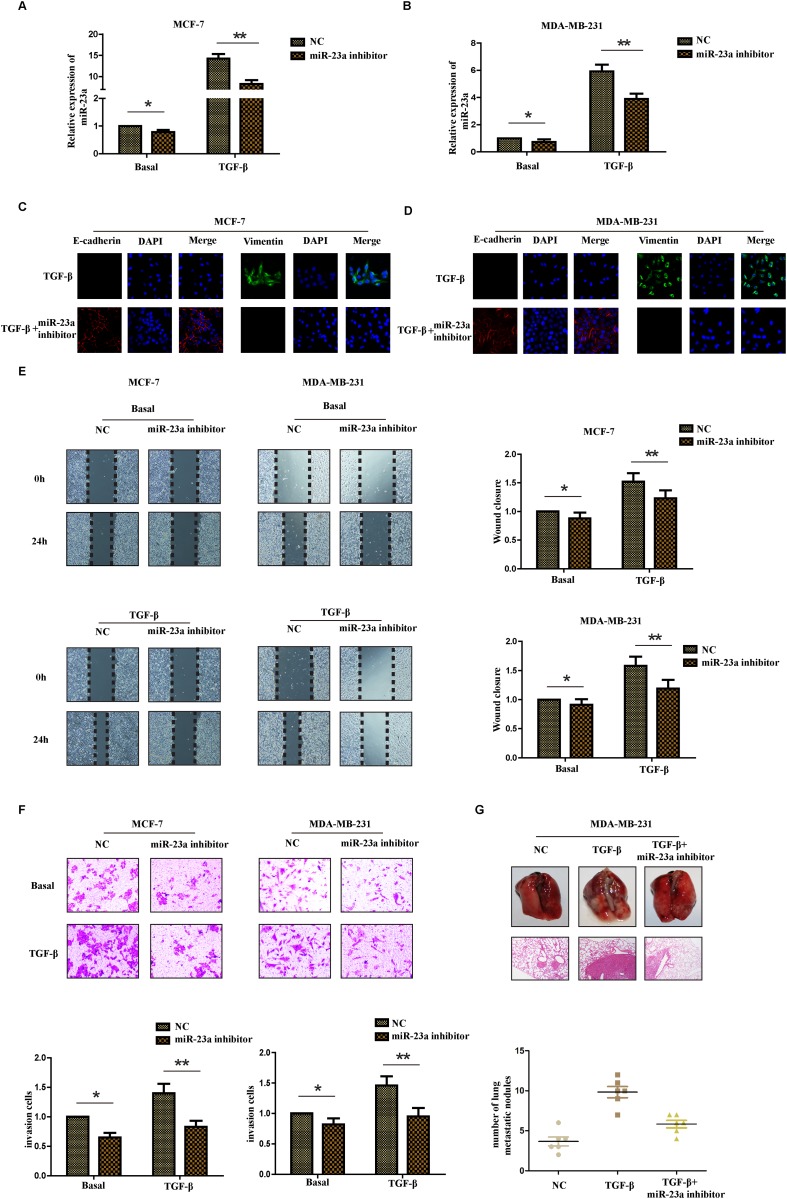
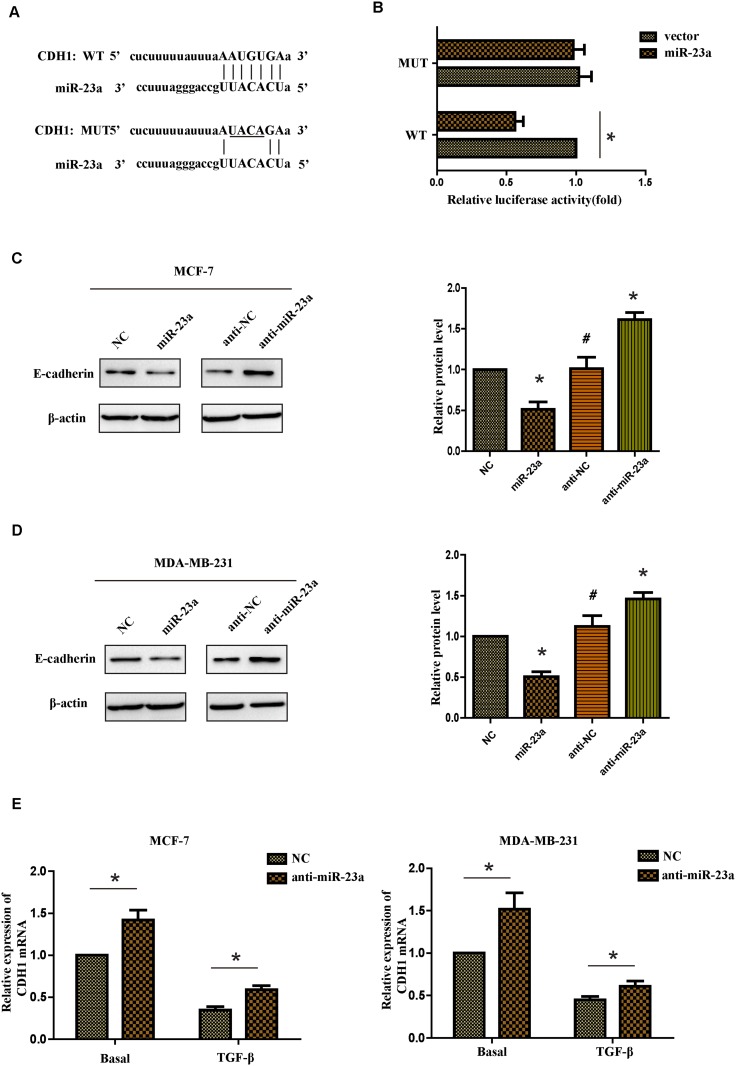
TGF-β1-induced epithelial-mesenchymal transition (EMT) has been proved to be associated with metastasis of breast cancer cells. We attempted to detect a novel mechanism that microRNAs mediated the TGF-β1-induced EMT in the process of breast cancer metastasis. Here we reported that the expression of miR-23a was higher in breast cancer cells with high metastasis ability and patients with lymph node metastasis and the treatment of TGF-β1 significantly upregulated the expression of miR-23a in breast cancer cells. We found that miR-23a was upregulated by TGF-β1 post-transcriptionally and Smads directly bound the RNA Smad binding element (R-SBE) of miR-23a. Functional studies showed that inhibition of miR-23a suppressed the TGF-β1-induced EMT, migration, invasion and metastasis of breast cancer both and . In addition, we determined that miR-23a directly targeted and suppressed CDH1, one important gene in EMT phenomenon. Notably, Wnt/β-catenin signaling was activated by the suppression of CDH1 in the miR-23a mediated process of TGF-β1-induced EMT and tumor invasion. These results demonstrate that miR-23a promotes TGF-β1-induced tumor metastasis in breast cancer by targeting CDH1 and activating Wnt/β-catenin signaling. Taken together, our results indicate a novel regulatory mechanism of TGF-β1-induced EMT and suggest that miR-23a might be a potential target in breast cancer therapy.
转化生长因子-β1(TGF-β1)诱导的上皮-间质转化(EMT)已被证明与乳腺癌细胞转移有关。我们试图检测一种新机制,即微小RNA在乳腺癌转移过程中介导TGF-β1诱导的EMT。在此我们报告,具有高转移能力的乳腺癌细胞以及有淋巴结转移的患者中,miR-23a的表达更高,且TGF-β1处理显著上调了乳腺癌细胞中miR-23a的表达。我们发现miR-23a在转录后被TGF-β1上调,并且Smads直接结合miR-23a的RNA Smad结合元件(R-SBE)。功能研究表明,抑制miR-23a可抑制TGF-β1诱导的乳腺癌细胞的EMT、迁移、侵袭和转移。此外,我们确定miR-23a直接靶向并抑制CDH1,CDH1是EMT现象中的一个重要基因。值得注意的是,在miR-23a介导的TGF-β1诱导的EMT和肿瘤侵袭过程中,CDH1的抑制激活了Wnt/β-连环蛋白信号通路。这些结果表明,miR-23a通过靶向CDH1并激活Wnt/β-连环蛋白信号通路促进TGF-β1诱导的乳腺癌肿瘤转移。综上所述,我们的结果表明了一种TGF-β1诱导的EMT的新调控机制,并提示miR-23a可能是乳腺癌治疗中的一个潜在靶点。