Di Iorio Valentina, Karali Marianthi, Brunetti-Pierri Raffaella, Filippelli Mariaelena, Di Fruscio Giuseppina, Pizzo Mariateresa, Mutarelli Margherita, Nigro Vincenzo, Testa Francesco, Banfi Sandro, Simonelli Francesca
Eye Clinic, Multidisciplinary Department of Medical, Surgical and Dental Sciences, Università degli Studi della Campania Luigi Vanvitelli, via Pansini 5, Naples 80131, Italy.
Medical Genetics, Department of Biochemistry, Biophysics and General Pathology, Università degli Studi della Campania Luigi Vanvitelli, via Luigi De Crecchio 7, Naples 80138, Italy.
Genes (Basel). 2017 Oct 20;8(10):280. doi: 10.3390/genes8100280.
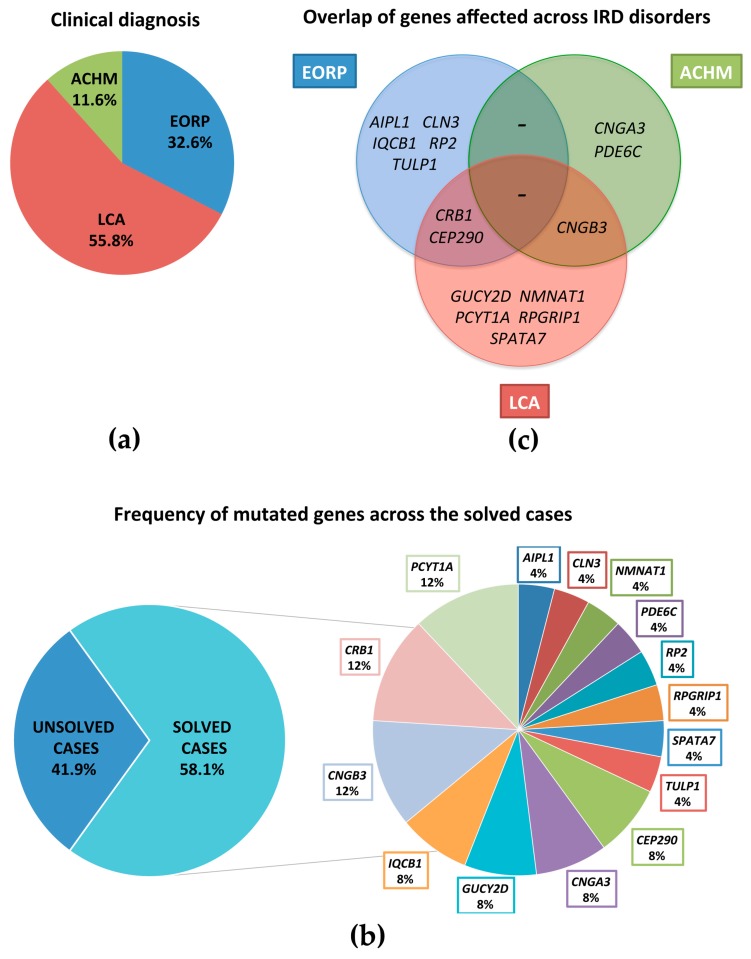
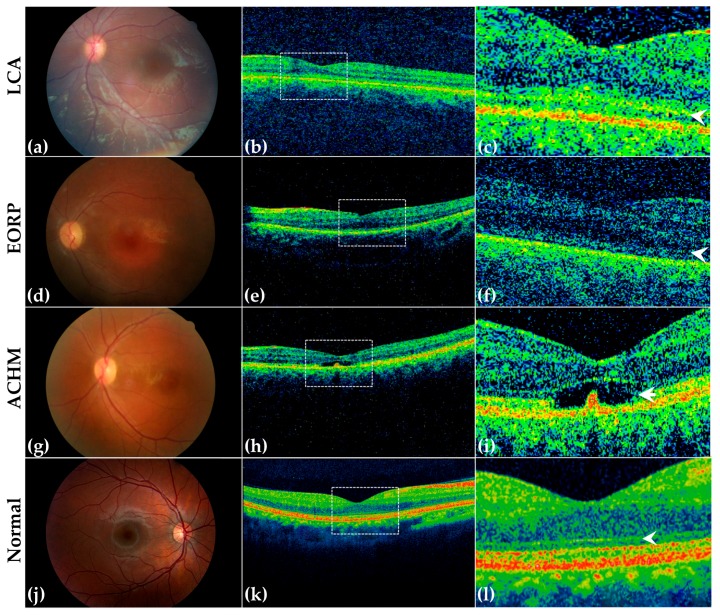
We performed a clinical and genetic characterization of a pediatric cohort of patients with inherited retinal dystrophy (IRD) to identify the most suitable cases for gene therapy. The cohort comprised 43 patients, aged between 2 and 18 years, with severe isolated IRD at the time of presentation. The ophthalmological characterization also included assessment of the photoreceptor layer integrity in the macular region (ellipsoid zone (EZ) band). In parallel, we carried out a targeted, next-generation sequencing (NGS)-based analysis using a panel that covers over 150 genes with either an established or a candidate role in IRD pathogenesis. Based on the ophthalmological assessment, the cohort was composed of 24 Leber congenital amaurosis, 14 early onset retinitis pigmentosa, and 5 achromatopsia patients. We identified causative mutations in 58.1% of the cases. We also found novel genotype-phenotype correlations in patients harboring mutations in the and genes. The EZ band was detectable in 40% of the analyzed cases, also in patients with genotypes usually associated with severe clinical manifestations. This study provides the first detailed clinical-genetic assessment of severe IRDs with infantile onset and lays the foundation of a standardized protocol for the selection of patients that are more likely to benefit from gene replacement therapeutic approaches.
我们对一组患有遗传性视网膜营养不良(IRD)的儿科患者进行了临床和基因特征分析,以确定最适合基因治疗的病例。该队列包括43名年龄在2至18岁之间的患者,就诊时患有严重的孤立性IRD。眼科特征分析还包括评估黄斑区光感受器层的完整性(椭球带(EZ))。同时,我们使用一个覆盖150多个在IRD发病机制中具有既定或候选作用的基因的面板,进行了基于靶向新一代测序(NGS)的分析。根据眼科评估,该队列由24例莱伯先天性黑蒙、14例早发性视网膜色素变性和5例色盲患者组成。我们在58.1%的病例中发现了致病突变。我们还在携带 和 基因突的患者中发现了新的基因型-表型相关性。在40%的分析病例中可检测到EZ带,包括那些通常与严重临床表现相关基因型的患者。本研究首次对婴儿期发病的严重IRD进行了详细的临床-基因评估,并为选择更可能从基因替代治疗方法中获益的患者奠定了标准化方案的基础。