Wang Chun-Chung, Yen Jui-Hung, Cheng Yi-Cheng, Lin Chia-Yu, Hsieh Cheng-Ta, Gau Rung-Jiun, Chiou Shu-Jiau, Chang Hwan-You
Institute of Molecular Medicine, National Tsing Hua University, Hsinchu, Taiwan.
Biomedical Technology and Device Research Laboratory, Industrial Technology Research Institute, Hsinchu, Taiwan.
Food Nutr Res. 2017 Oct 5;61(1):1379861. doi: 10.1080/16546628.2017.1379861. eCollection 2017.
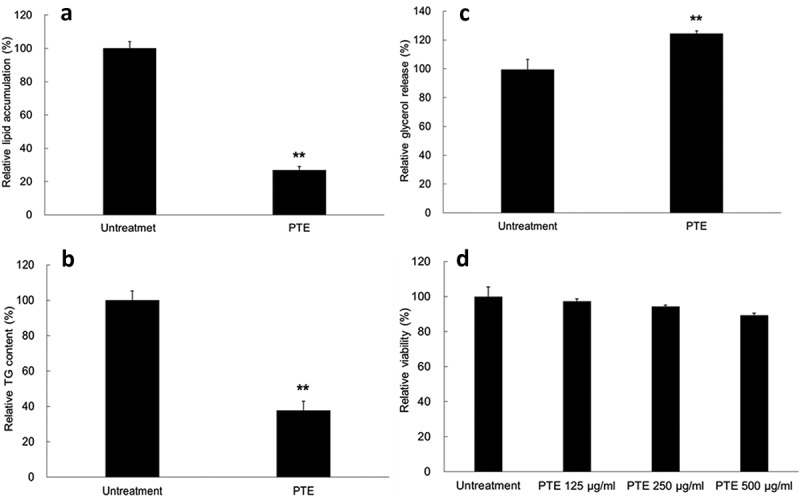
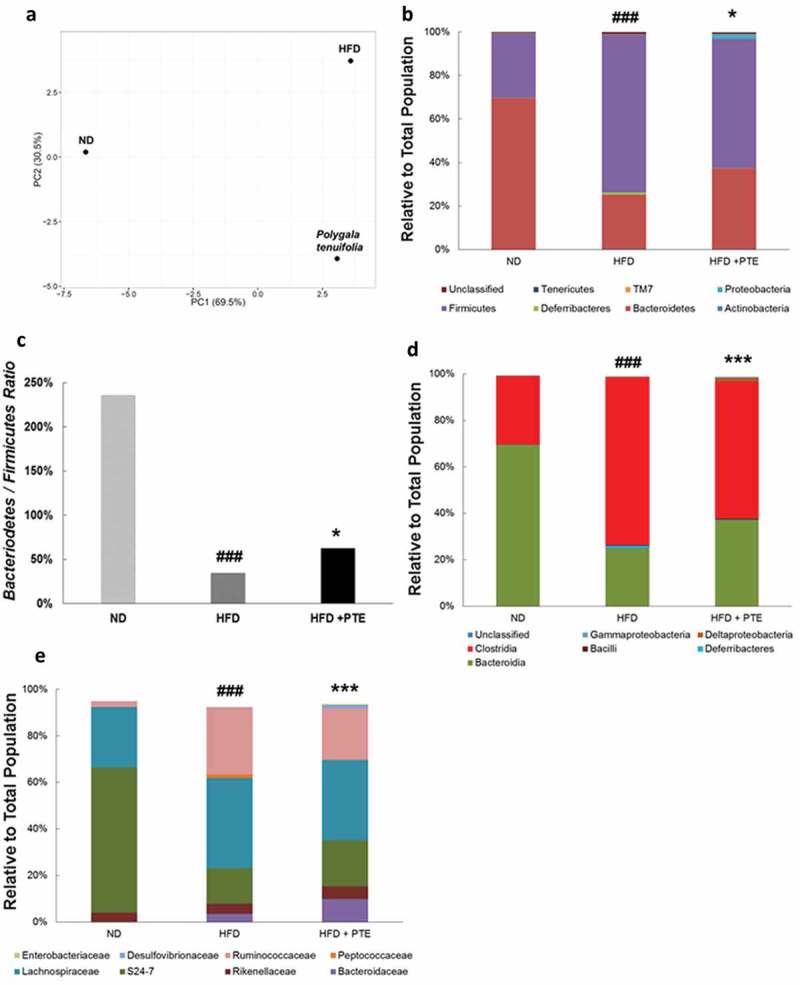
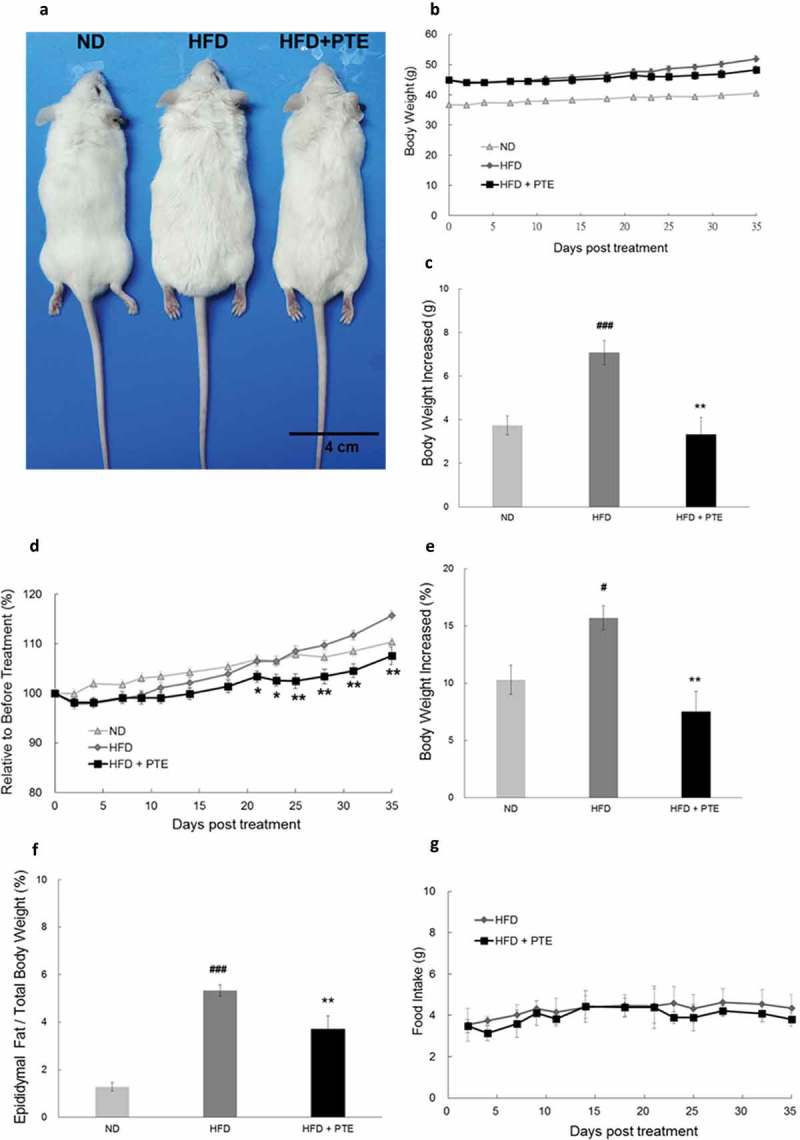
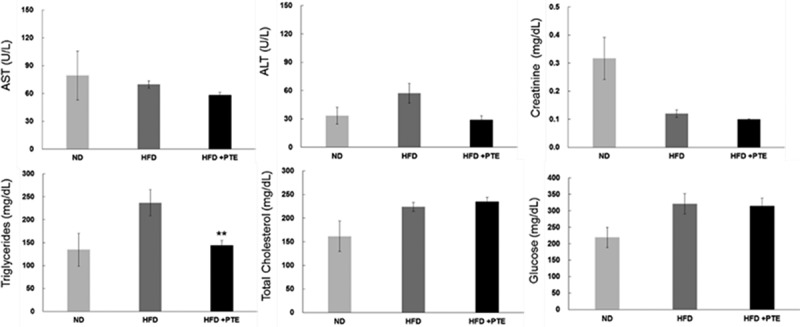
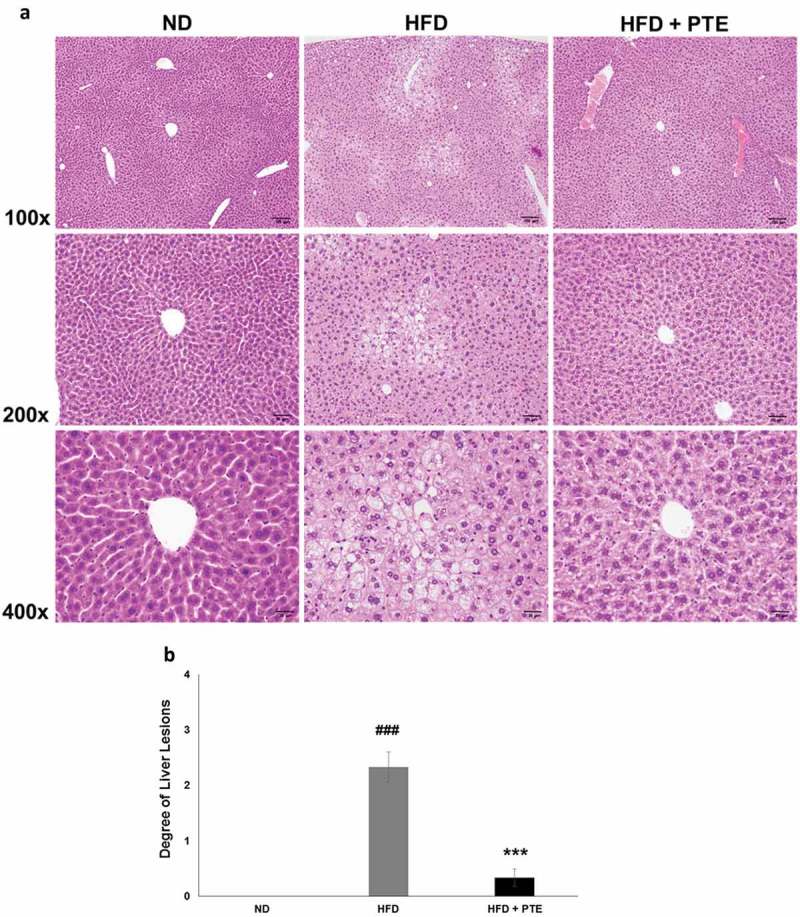
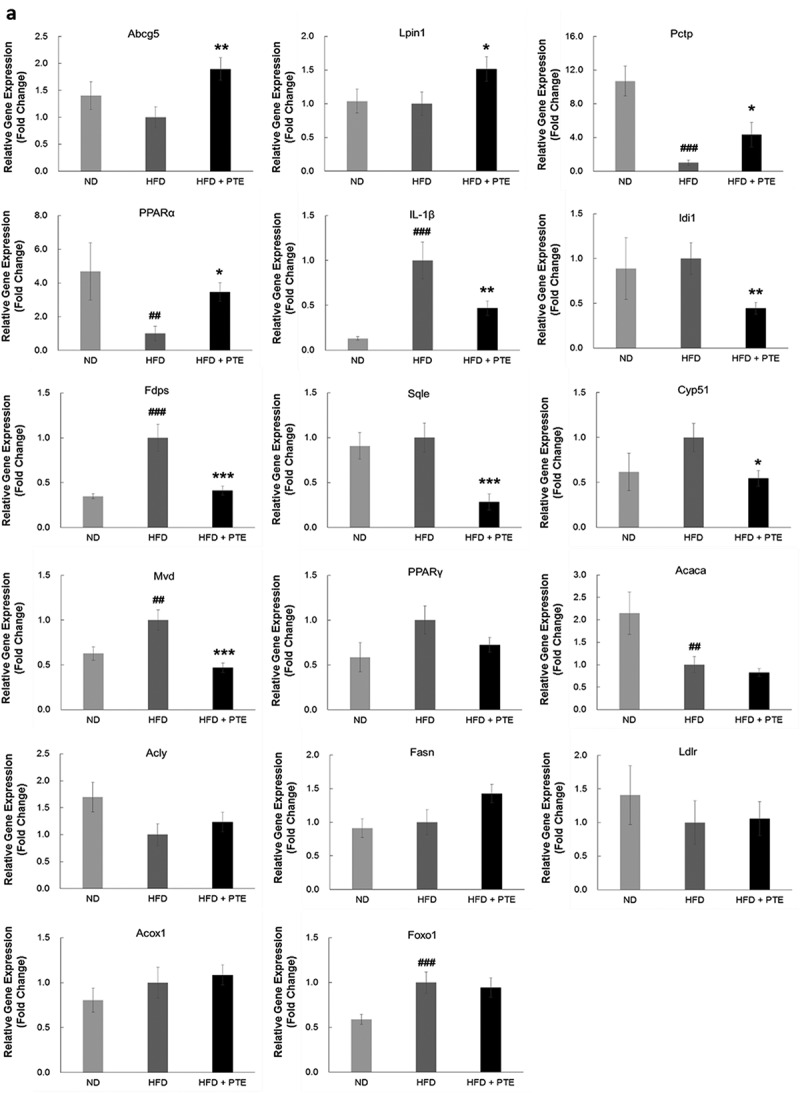
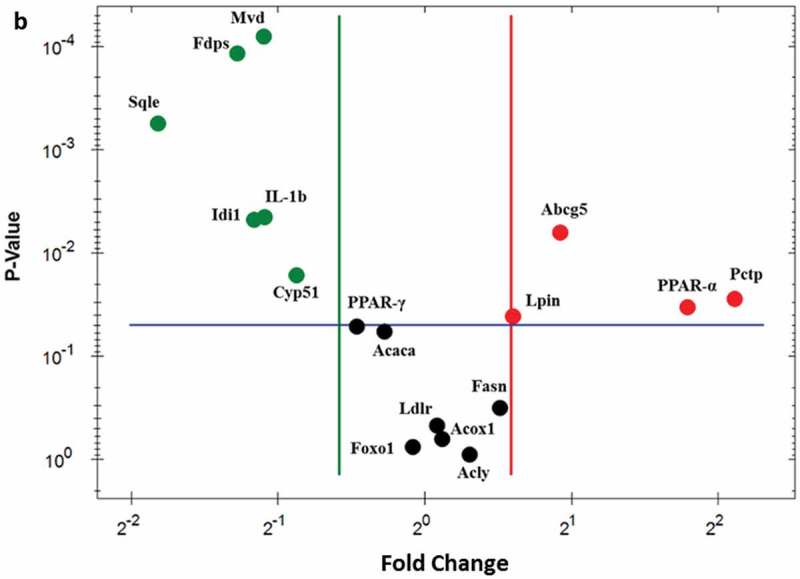
Obesity, the excessive accumulation of lipids in the body, is closely associated with many prevalent human disorders. Continued efforts to identify plant extracts that exhibit anti-obesity effects have drawn much attention. This study investigated whether a extract (PTE) possesses anti-obesity activity and how PTE may affect liver gene expression and gut microbiota. We used 3T3-L1 adipocytes and a high-fat diet-induced obese mouse model to determine the effects of PTE on lipid accumulation. Next-generation sequencing analysis of liver gene expression and gut microbiota profiles following PTE treatment were conducted to elucidate possible mechanisms. We found that treatment of fully differentiated 3T3-L1 adipocytes with PTE inhibited lipid accumulation in the cells through reducing lipid formation and triglyceride content and by increasing lipase activity. No cytotoxicity was observed from the PTE treatment. After 5 weeks of treatment with PTE, the increased body weight, elevated serum triglyceride content, and liver steatosis in the high-fat diet-induced obese mice were each reduced. Liver transcriptomic analysis revealed that expression of genes involved in lipid and cholesterol metabolism was significantly altered. The low-grade chronic inflammation of obesity caused by a high-fat diet was also decreased after PTE treatment. In addition, treatment with PTE improved the relatively low Bacteroidetes/Firmicutes ratio in the gut of high-fat diet-fed mice through enrichment of the Proteobacteria population and reduction of the Deferribacteres population. In conclusion, treatment with PTE inhibited lipid accumulation by inducing the expression of the master transcription factor PPARα, attenuated the low-grade chronic inflammation of obesity, and also altered gut microbiota profiles. These results indicate that PTE has the potential to be developed into an anti-obesity food supplement and therapy. Abcg5: ATP-binding cassette subfamily G member 5; ALT: alanine aminotransferase; AMPK: adenosine monophosphate-activated protein kinase; AST: aspartate aminotransferase; B/F: Bacteroidetes to Firmicutes [ratio]; C/EBPα: CCAAT/enhancer-binding protein alpha; CR: creatinine; Cyp51: cytochrome P450 family 51; DMEM: Dulbecco's modified Eagle's medium; Fabp5: fatty acid-binding protein 5; FBS: fetal bovine serum; Fdps: farnesyl diphosphate synthase; Glc: Glucose; HFD: high-fat diet; GO: gene ontology; HPRT: hypoxanthine guanine phosphoribosyl transferase; IBMS: 3-isobutyl-1-methylxanthine; Idi1: isopentenyl-diphosphate delta isomerase 1; IL-1β: interleukin-1-beta; Lpin1: phosphatidic acid phosphohydrolase; LPS: lipopolysaccharide; Mvd: mevalonate diphosphate decarboxylase; ND: normal diet; OTU: operational taxonomic units; Pcsk9: proprotein convertase subtilisin/kexin 9; Pctp: phosphatidylcholine transfer protein; PPARα: peroxisome proliferator-activated receptor alpha; PPARγ: peroxisome proliferator-activated receptor gamma; PTE: extract; Saa1: serum amyloid A1; SD: standard deviation; SEM: standard error of the mean; Serpina12: serpin family member 12; Sqle: squalene monooxygenase; SREBP1C: sterol regulatory element-binding protein 1C; TCHO: total cholesterol; TG: triglyceride.
肥胖是指体内脂质过度积累,与许多常见的人类疾病密切相关。持续努力寻找具有抗肥胖作用的植物提取物已引起广泛关注。本研究调查了一种提取物(PTE)是否具有抗肥胖活性以及PTE如何影响肝脏基因表达和肠道微生物群。我们使用3T3-L1脂肪细胞和高脂饮食诱导的肥胖小鼠模型来确定PTE对脂质积累的影响。对PTE处理后的肝脏基因表达和肠道微生物群谱进行下一代测序分析,以阐明可能的机制。我们发现,用PTE处理完全分化的3T3-L1脂肪细胞可通过减少脂质形成和甘油三酯含量以及增加脂肪酶活性来抑制细胞内脂质积累。PTE处理未观察到细胞毒性。用PTE处理5周后,高脂饮食诱导的肥胖小鼠体重增加、血清甘油三酯含量升高和肝脏脂肪变性均有所减轻。肝脏转录组分析显示,参与脂质和胆固醇代谢的基因表达发生了显著改变。PTE处理后,高脂饮食引起的肥胖相关低度慢性炎症也有所减轻。此外,PTE处理通过富集变形菌门菌群和减少脱铁杆菌门菌群改善了高脂饮食喂养小鼠肠道中相对较低的拟杆菌门/厚壁菌门比例。总之,PTE处理通过诱导主转录因子PPARα的表达抑制脂质积累,减轻肥胖相关低度慢性炎症,并改变肠道微生物群谱。这些结果表明,PTE有潜力被开发成一种抗肥胖食品补充剂和治疗方法。Abcg5:ATP结合盒亚家族G成员5;ALT:丙氨酸氨基转移酶;AMPK:腺苷单磷酸激活的蛋白激酶;AST:天冬氨酸氨基转移酶;B/F:拟杆菌门与厚壁菌门[比例];C/EBPα:CCAAT/增强子结合蛋白α;CR:肌酐;Cyp51:细胞色素P450家族51;DMEM:杜氏改良 Eagle培养基;Fabp5:脂肪酸结合蛋白5;FBS:胎牛血清;Fdps:法尼基二磷酸合酶;Glc:葡萄糖;HFD:高脂饮食;GO:基因本体论;HPRT:次黄嘌呤鸟嘌呤磷酸核糖基转移酶;IBMS:3-异丁基-1-甲基黄嘌呤;Idi1:异戊烯基二磷酸δ异构酶1;IL-1β:白细胞介素-1β;Lpin1:磷脂酸磷酸水解酶;LPS:脂多糖;Mvd:甲羟戊酸二磷酸脱羧酶;ND:正常饮食;OTU:操作分类单元;Pcsk9:前蛋白转化酶枯草杆菌蛋白酶/kexin 9;Pctp:磷脂酰胆碱转移蛋白;PPARα:过氧化物酶体增殖物激活受体α;PPARγ:过氧化物酶体增殖物激活受体γ;PTE:提取物;Saa1:血清淀粉样蛋白A1;SD:标准差;SEM:均值标准误差;Serpina12:丝氨酸蛋白酶抑制剂家族成员12;Sqle:角鲨烯单加氧酶;SREBP1C:固醇调节元件结合蛋白1C;TCHO:总胆固醇;TG:甘油三酯