
心脏骤停后护理期间吸入氢气对脑缺血后神经功能结局的疗效(HYBRID II试验):一项随机对照试验的研究方案
Efficacy of inhaled HYdrogen on neurological outcome following BRain Ischemia During post-cardiac arrest care (HYBRID II trial): study protocol for a randomized controlled trial.
作者信息
Tamura Tomoyoshi, Hayashida Kei, Sano Motoaki, Onuki Shuko, Suzuki Masaru
机构信息
Department of Emergency and Critical Care Medicine, Keio University School of Medicine, 35 Shinanomachi, Shinkuku-ku, Tokyo, 160-8582, Japan.
The Center for Molecular Hydrogen Medicine, Keio University, 2-15-45 Mita, Minato-ku, Tokyo, 108-8345, Japan.
出版信息
Trials. 2017 Oct 23;18(1):488. doi: 10.1186/s13063-017-2246-3.
BACKGROUND
Hydrogen gas inhalation (HI) improved survival and neurological outcomes in an animal model of post-cardiac arrest syndrome (PCAS). The feasibility and safety of HI for patients with PCAS was confirmed in a pilot study. The objective of this study is to evaluate the efficacy of HI for patients with PCAS.
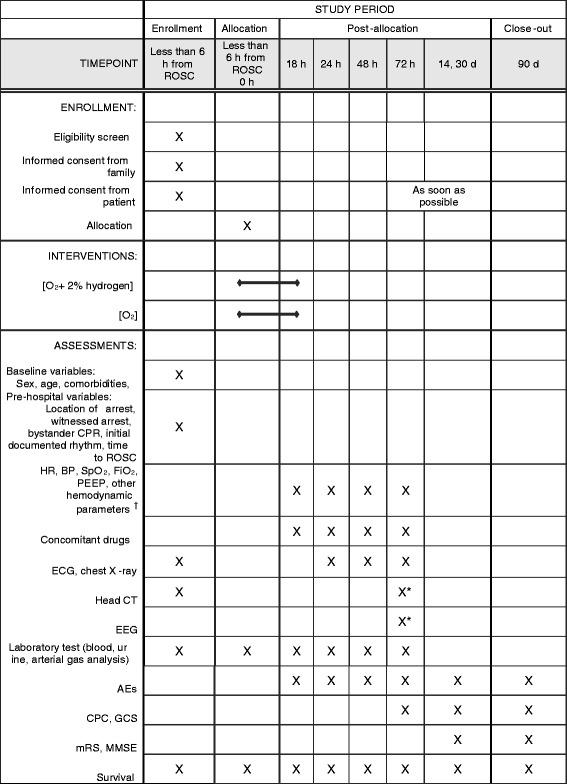
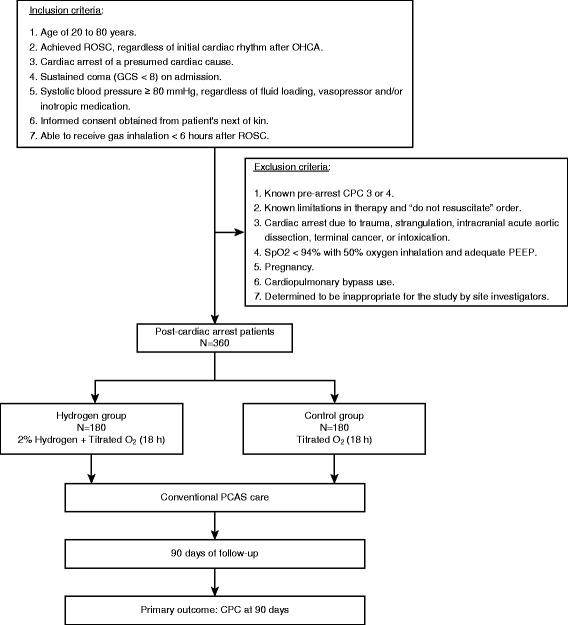
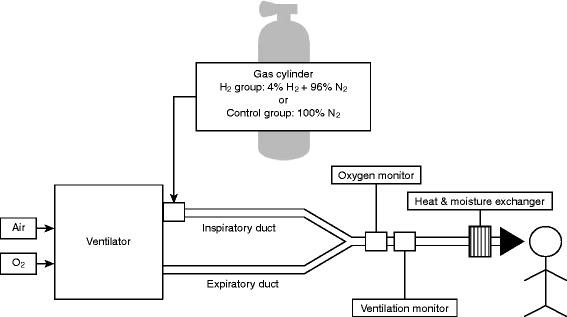
METHODS/DESIGN: The efficacy of inhaled HYdrogen on neurological outcome following BRain Ischemia During post-cardiac arrest care (HYBRID II) trial is an investigator-initiated, randomized, double-blind, placebo-controlled trial designed to enroll 360 adult comatose (Glasgow Coma Scale score < 8) patients who will be resuscitated following an out-of-hospital cardiac arrest of a presumed cardiac cause. The patients will be randomized (1:1) to either the HI or control group. Patients in the HI group will inhale 2% hydrogen with 24% to 50% oxygen, and those in the control group will inhale 24% to 50% oxygen for 18 h after admission via mechanical ventilation. Multidisciplinary post-arrest care, including targeted temperature management (TTM) between 33 °C and 36 °C, will be provided in accordance with the latest guidelines. The primary outcome of interest is the 90-day neurological outcome, as evaluated using the Cerebral Performance Categories scale (CPC). The secondary outcomes of interest are the 90-day survival rate and other neurological outcomes. This study will provide 80% power to detect a 15% change in the proportion of patients with good neurological outcomes (CPCs of 1 and 2), from 50% to 65%, with an overall significance level of 0.05.
DISCUSSION
The first multicenter randomized trial is underway to confirm the efficacy of HI on neurological outcomes in comatose out-of-hospital cardiac arrest survivors. Our study has the potential to address HI as an appealing and innovative therapeutic strategy for PCAS in combination with TTM.
TRIALS REGISTRATION
University Hospital Medical Information Network (UMIN), 000019820 . Registered on 17 November 2015.
背景
在心脏骤停后综合征(PCAS)动物模型中,氢气吸入(HI)可提高生存率并改善神经功能结局。一项初步研究证实了PCAS患者进行HI的可行性和安全性。本研究的目的是评估HI对PCAS患者的疗效。
方法/设计:心脏骤停后护理期间脑缺血后吸入氢气对神经功能结局的影响(HYBRID II)试验是一项由研究者发起的、随机、双盲、安慰剂对照试验,旨在招募360名成年昏迷(格拉斯哥昏迷量表评分<8)患者,这些患者因推测为心脏原因的院外心脏骤停而接受复苏。患者将被随机(1:1)分为HI组或对照组。HI组患者将吸入含2%氢气和24%至50%氧气的混合气体,对照组患者将在入院后通过机械通气吸入24%至50%氧气,持续18小时。将根据最新指南提供多学科的心脏骤停后护理,包括33℃至36℃的目标温度管理(TTM)。主要关注的结局是90天神经功能结局,采用脑功能分类量表(CPC)进行评估。次要关注的结局是90天生存率和其他神经功能结局。本研究将有80%的把握度检测出神经功能结局良好(CPC为1和2)的患者比例从50%提高到65%的15%变化,总体显著性水平为0.05。
讨论
第一项多中心随机试验正在进行中,以证实HI对院外心脏骤停昏迷幸存者神经功能结局的疗效。我们的研究有可能将HI作为一种有吸引力的创新治疗策略,与TTM联合用于PCAS。
试验注册
大学医院医学信息网络(UMIN),000019820。于2015年11月17日注册。
 Zotero 插件