Nutma Sjoukje, le Feber Joost, Hofmeijer Jeannette
Department of Neurology, Medisch Spectrum Twente, Enschede, Netherlands.
Clinical Neurophysiology, University of Twente, Enschede, Netherlands.
Front Neurol. 2021 Feb 18;12:614698. doi: 10.3389/fneur.2021.614698. eCollection 2021.
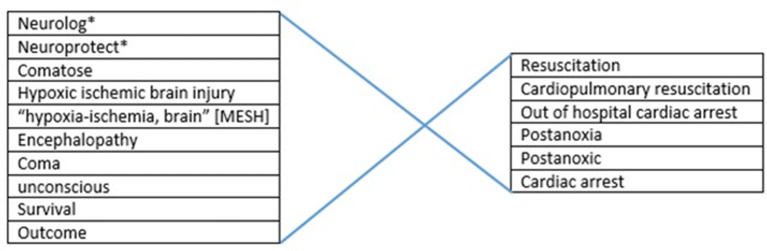
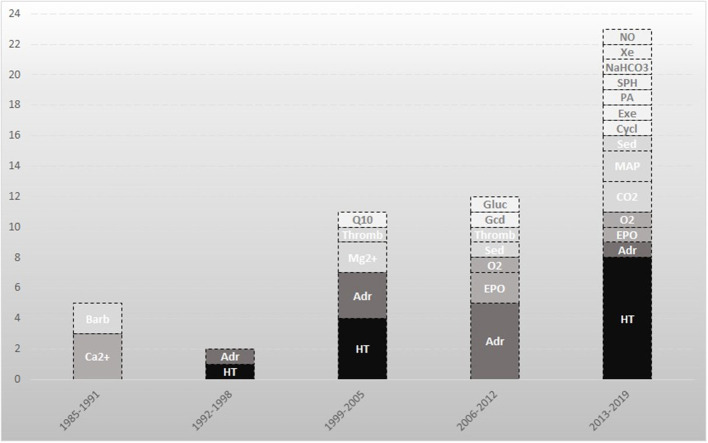
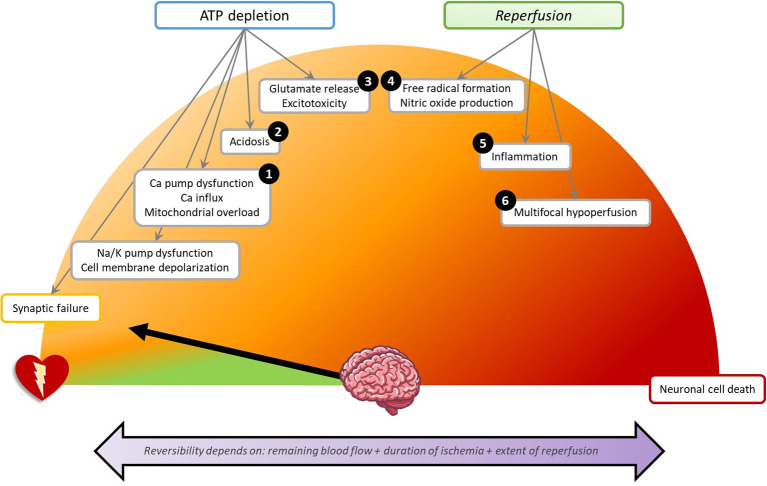
Postanoxic encephalopathy is the key determinant of death or disability after successful cardiopulmonary resuscitation. Animal studies have provided proof-of-principle evidence of efficacy of divergent classes of neuroprotective treatments to promote brain recovery. However, apart from targeted temperature management (TTM), neuroprotective treatments are not included in current care of patients with postanoxic encephalopathy after cardiac arrest. We aimed to review the clinical evidence of efficacy of neuroprotective strategies to improve recovery of comatose patients after cardiac arrest and to propose future directions. We performed a systematic search of the literature to identify prospective, comparative clinical trials on interventions to improve neurological outcome of comatose patients after cardiac arrest. We included 53 studies on 21 interventions. None showed unequivocal benefit. TTM at 33 or 36°C and adrenaline (epinephrine) are studied most, followed by xenon, erythropoietin, and calcium antagonists. Lack of efficacy is associated with heterogeneity of patient groups and limited specificity of outcome measures. Ongoing and future trials will benefit from systematic collection of measures of baseline encephalopathy and sufficiently powered predefined subgroup analyses. Outcome measurement should include comprehensive neuropsychological follow-up, to show treatment effects that are not detectable by gross measures of functional recovery. To enhance translation from animal models to patients, studies under experimental conditions should adhere to strict methodological and publication guidelines.
缺氧后性脑病是心肺复苏成功后死亡或致残的关键决定因素。动物研究已提供了不同类别神经保护治疗促进脑恢复有效性的原理性证据。然而,除了目标温度管理(TTM)外,心脏骤停后缺氧后性脑病患者的当前治疗中并未纳入神经保护治疗。我们旨在回顾神经保护策略改善心脏骤停后昏迷患者恢复有效性的临床证据并提出未来方向。我们对文献进行了系统检索,以确定关于改善心脏骤停后昏迷患者神经学转归干预措施的前瞻性、比较性临床试验。我们纳入了关于21种干预措施的53项研究。没有一项显示出明确的益处。33℃或36℃的目标温度管理以及肾上腺素是研究最多的,其次是氙气、促红细胞生成素和钙拮抗剂。缺乏有效性与患者群体的异质性和结局测量的有限特异性相关。正在进行的和未来的试验将受益于对基线脑病测量的系统收集以及有足够效力的预定义亚组分析。结局测量应包括全面的神经心理学随访,以显示功能恢复的粗略测量无法检测到的治疗效果。为了加强从动物模型到患者群体的转化,实验条件下的研究应遵循严格的方法学和发表指南。