Laboratory of Ischemic and Neurodegenerative Brain Research, Mossakowski Medical Research Institute, Polish Academy of Sciences, 02-106 Warsaw, Poland.
Department of Pathophysiology, Medical University of Lublin, 20-090 Lublin, Poland.
Int J Mol Sci. 2022 Jun 13;23(12):6591. doi: 10.3390/ijms23126591.
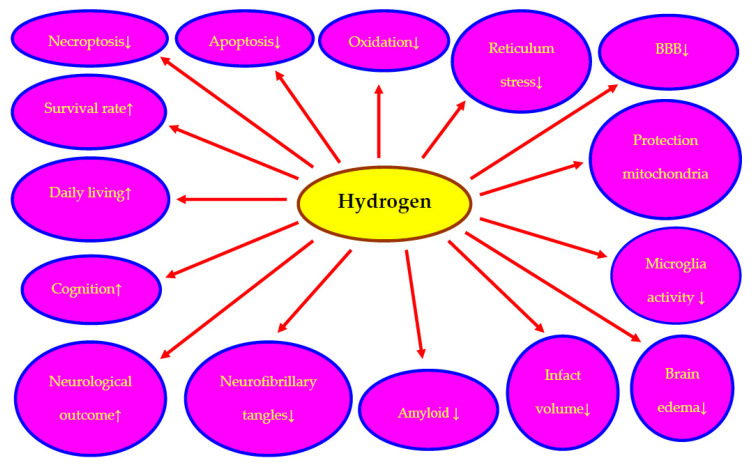
Currently, there is a lot of public interest in naturally occurring substances with medicinal properties that are minimally toxic, readily available and have an impact on health. Over the past decade, molecular hydrogen has gained the attention of both preclinical and clinical researchers. The death of pyramidal neurons in especially the CA1 area of the hippocampus, increased permeability of the blood-brain barrier, neuroinflammation, amyloid accumulation, tau protein dysfunction, brain atrophy, cognitive deficits and dementia are considered an integral part of the phenomena occurring during brain neurodegeneration after ischemia. This review focuses on assessing the current state of knowledge about the neuroprotective effects of molecular hydrogen following ischemic brain injury. Recent studies in animal models of focal or global cerebral ischemia and cerebral ischemia in humans suggest that hydrogen has pleiotropic neuroprotective properties. One potential mechanism explaining some of the general health benefits of using hydrogen is that it may prevent aging-related changes in cellular proteins such as amyloid and tau protein. We also present evidence that, following ischemia, hydrogen improves cognitive and neurological deficits and prevents or delays the onset of neurodegenerative changes in the brain. The available evidence suggests that molecular hydrogen has neuroprotective properties and may be a new therapeutic agent in the treatment of neurodegenerative diseases such as neurodegeneration following cerebral ischemia with progressive dementia. We also present the experimental and clinical evidence for the efficacy and safety of hydrogen use after cerebral ischemia. The therapeutic benefits of gas therapy open up new promising directions in breaking the translational barrier in the treatment of ischemic stroke.
目前,人们对具有药用特性、毒性低、易于获得且对健康有影响的天然物质产生了浓厚的兴趣。在过去的十年中,分子氢引起了临床前和临床研究人员的关注。海马体特别是 CA1 区的锥体神经元死亡、血脑屏障通透性增加、神经炎症、淀粉样蛋白积累、tau 蛋白功能障碍、脑萎缩、认知缺陷和痴呆被认为是缺血后脑神经退行性变过程中发生的现象的一个组成部分。本综述重点评估了分子氢对缺血性脑损伤后神经保护作用的最新知识状态。最近在局灶性或全脑缺血动物模型以及人类脑缺血中的研究表明,氢具有多种神经保护特性。一种解释使用氢的一些一般健康益处的潜在机制是,它可能预防与年龄相关的细胞蛋白(如淀粉样蛋白和 tau 蛋白)变化。我们还提供了证据表明,在缺血后,氢可以改善认知和神经功能缺陷,并预防或延迟大脑中神经退行性变化的发生。现有证据表明,分子氢具有神经保护作用,可能是治疗脑缺血后神经退行性变等神经退行性疾病的新治疗剂。我们还介绍了脑缺血后使用氢的疗效和安全性的实验和临床证据。气体疗法的治疗益处为打破缺血性中风治疗中的转化障碍开辟了新的有前途的方向。