Limoges University, Equipe Accueil 3842, Cellular Homeostasis and Diseases, Faculty of Medicine, Limoges Cedex, France.
Hematology Laboratory, Dupuytren Hospital University Center of Limoges, Limoges Cedex, France.
Oncogene. 2018 Feb 8;37(6):756-767. doi: 10.1038/onc.2017.365. Epub 2017 Oct 23.
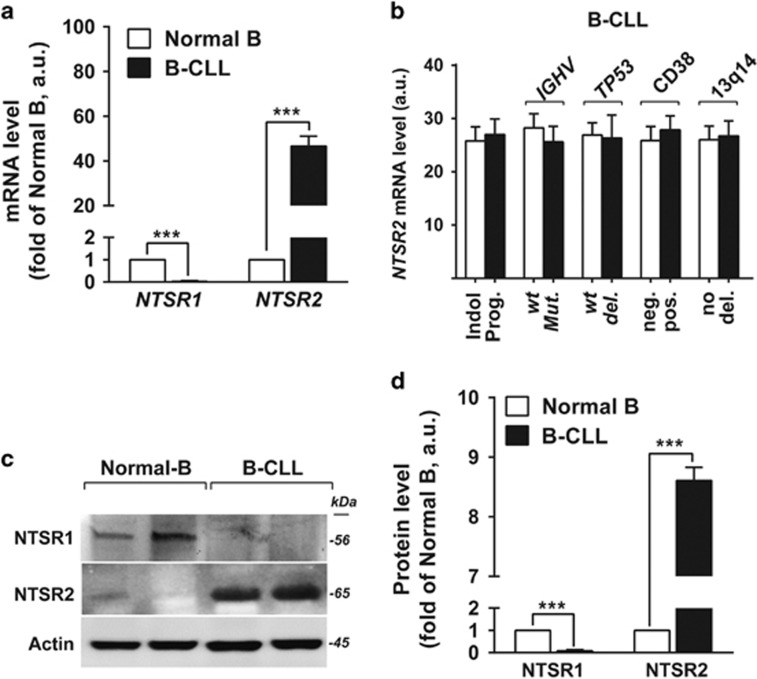
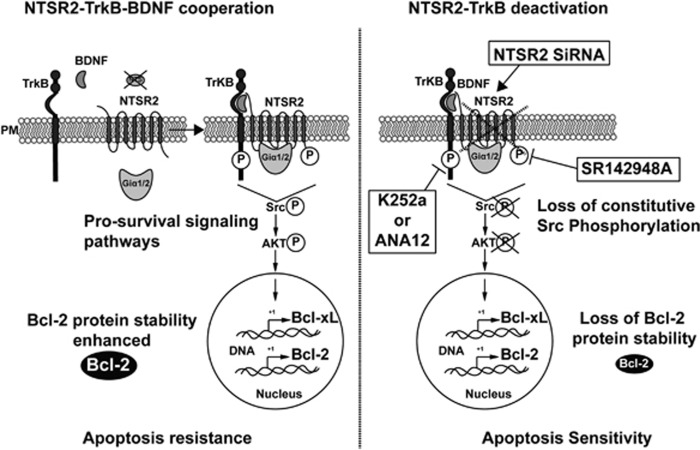
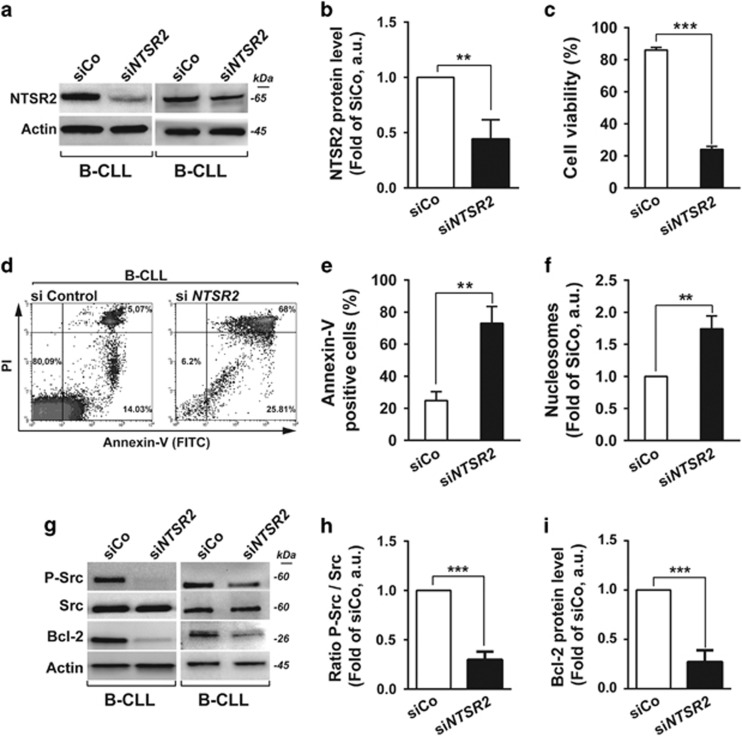
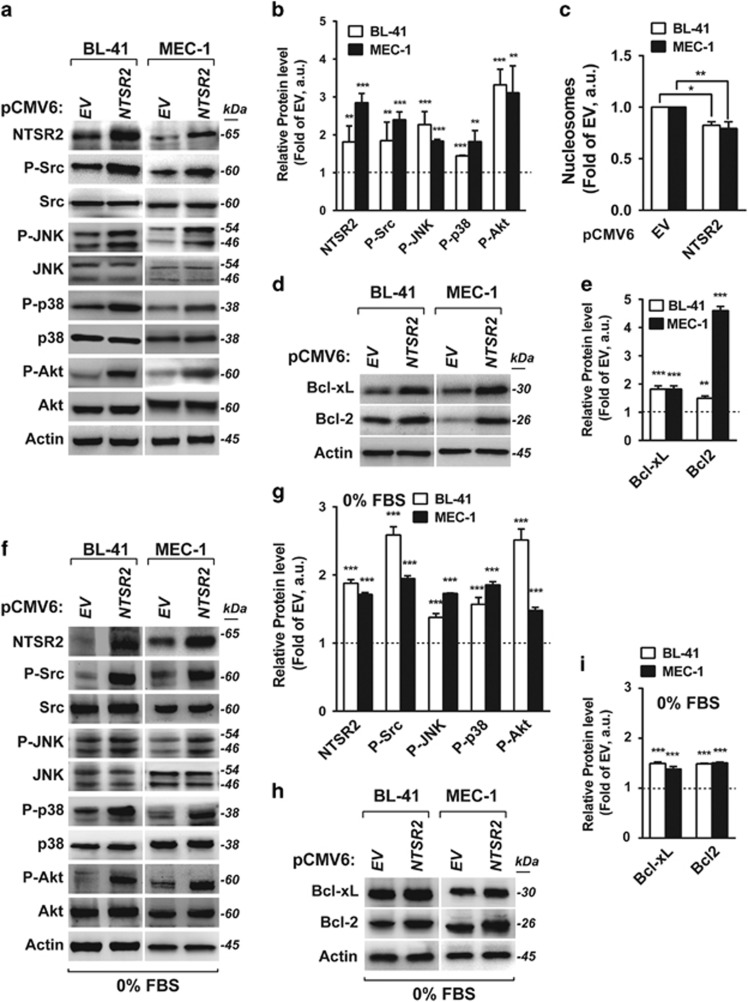
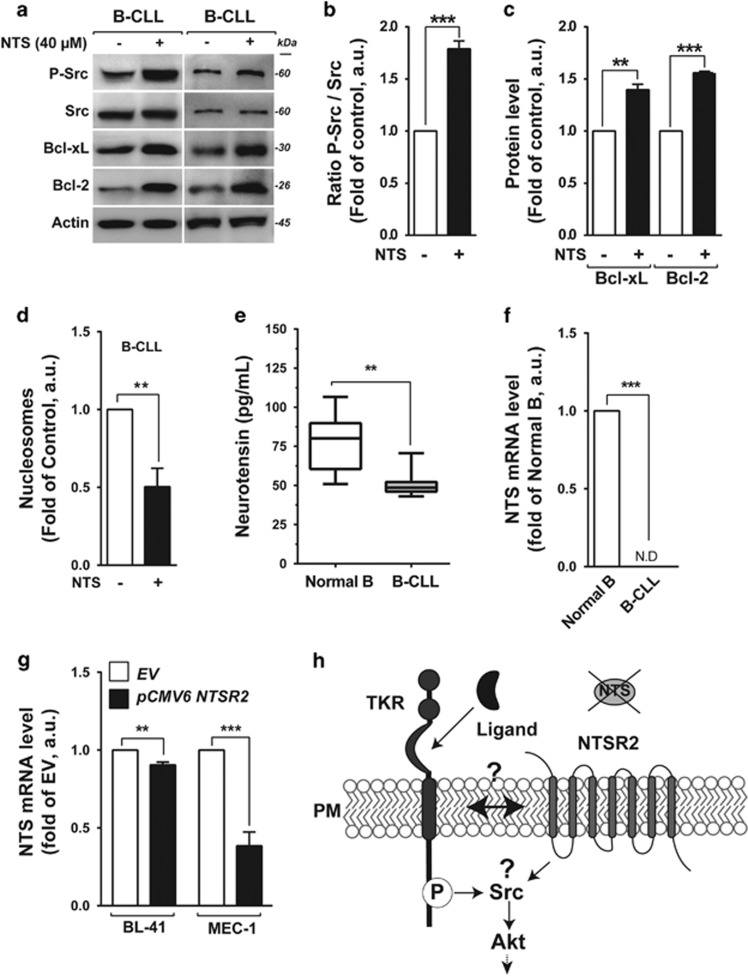
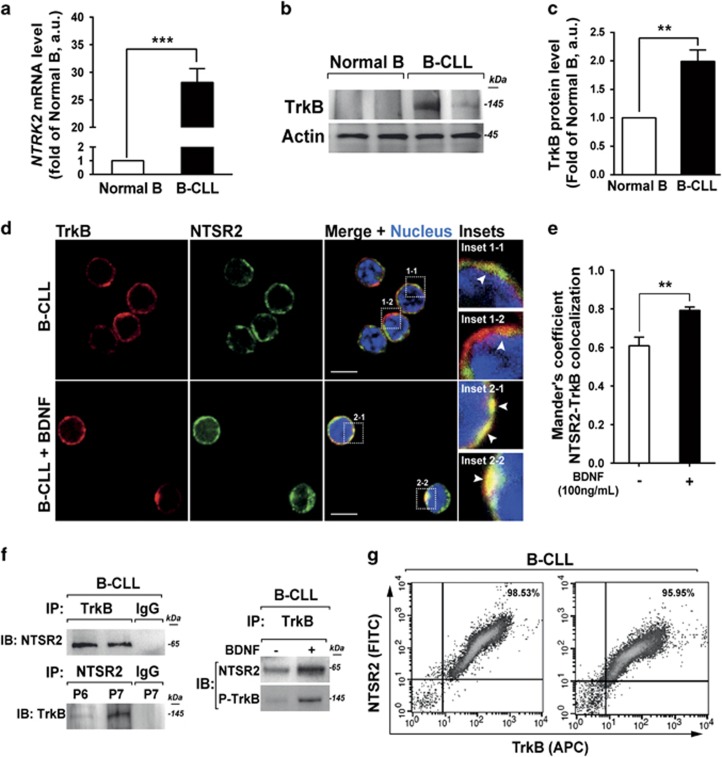
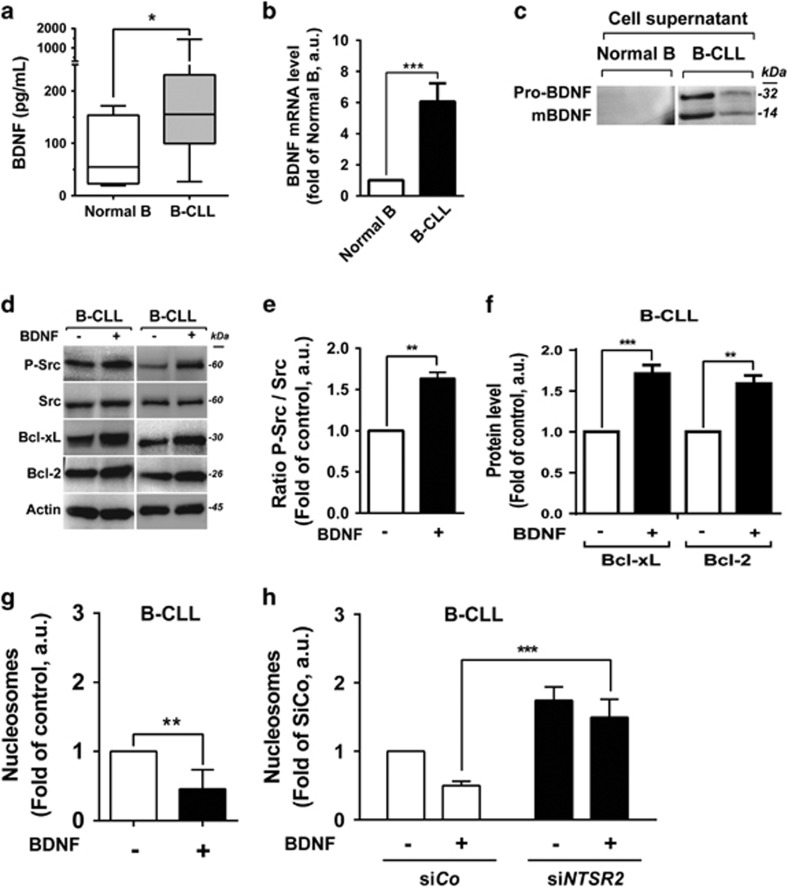
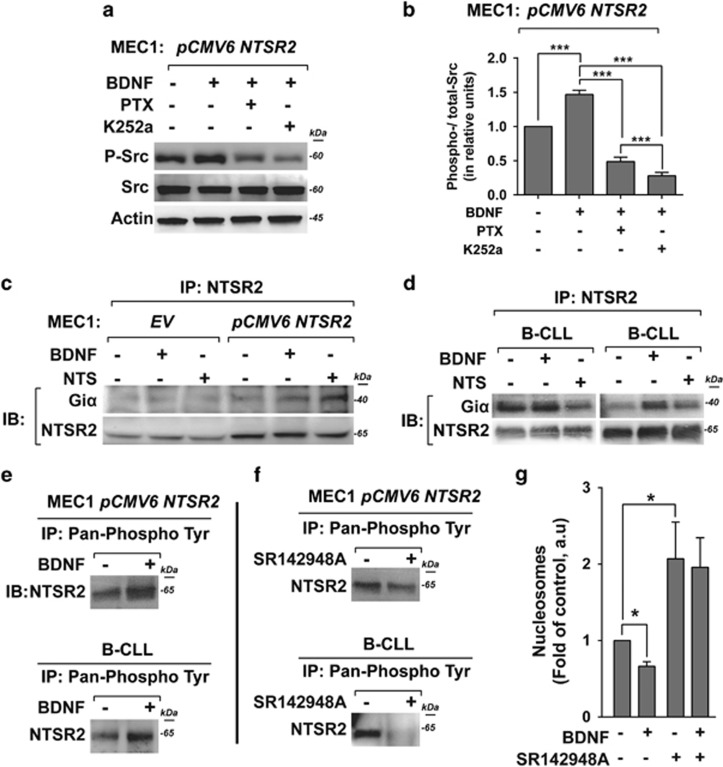
B-cell chronic lymphocytic leukemia (B-CLL) cells are resistant to apoptosis, and consequently accumulate to the detriment of normal B cells and patient immunity. Because current therapies fail to eradicate these apoptosis-resistant cells, it is essential to identify alternative survival pathways as novel targets for anticancer therapies. Overexpression of cell-surface G protein-coupled receptors drives cell transformation, and thus plays a critical role in malignancies. In this study, we identified neurotensin receptor 2 (NTSR2) as an essential driver of apoptosis resistance in B-CLL. NTSR2 was highly expressed in B-CLL cells, whereas expression of its natural ligand, neurotensin (NTS), was minimal in both B-CLL cells and patient plasma. Surprisingly, NTSR2 remained in a constitutively active phosphorylated state, caused not by a mutation-induced gain-of-function but rather by an interaction with the oncogenic tyrosine kinase receptor TrkB. Functional and biochemical characterization revealed that the NTSR2-TrkB interaction acts as a conditional oncogenic driver requiring the TrkB ligand brain-derived neurotrophic factor (BDNF), which unlike NTS is highly expressed in B-CLL cells. Together, NTSR2, TrkB and BDNF induce autocrine and/or paracrine survival pathways that are independent of mutation status and indolent or progressive disease course. The NTSR2-TrkB interaction activates survival signaling pathways, including the Src and AKT kinase pathways, as well as expression of the anti-apoptotic proteins Bcl-2 and Bcl-xL. When NTSR2 was downregulated, TrkB failed to protect B-CLL cells from a drastic decrease in viability via typical apoptotic cell death, reflected by DNA fragmentation and Annexin V presentation. Together, our findings demonstrate that the NTSR2-TrkB interaction plays a crucial role in B-CLL cell survival, suggesting that inhibition of NTSR2 represents a promising targeted strategy for treating B-CLL malignancy.
B 细胞慢性淋巴细胞白血病(B-CLL)细胞对细胞凋亡具有抗性,因此会积累,从而损害正常 B 细胞和患者的免疫力。由于目前的治疗方法无法根除这些抗凋亡细胞,因此确定替代生存途径作为新的抗癌治疗靶点至关重要。细胞表面 G 蛋白偶联受体的过表达会驱动细胞转化,因此在恶性肿瘤中发挥着关键作用。在这项研究中,我们确定神经降压素受体 2(NTSR2)是 B-CLL 细胞凋亡抵抗的重要驱动因素。NTSR2 在 B-CLL 细胞中高度表达,而其天然配体神经降压素(NTS)在 B-CLL 细胞和患者血浆中均很少表达。令人惊讶的是,NTSR2 处于持续激活的磷酸化状态,这不是由突变诱导的功能获得引起的,而是由与致癌酪氨酸激酶受体 TrkB 的相互作用引起的。功能和生化特征表明,NTSR2-TrkB 相互作用作为一种条件性致癌驱动因素起作用,需要 TrkB 配体脑源性神经营养因子(BDNF),而不像 NTS,BDNF 在 B-CLL 细胞中高度表达。NTSR2、TrkB 和 BDNF 共同诱导自分泌和/或旁分泌生存途径,这些途径独立于突变状态和惰性或进行性疾病过程。NTSR2-TrkB 相互作用激活生存信号通路,包括Src 和 AKT 激酶通路,以及抗凋亡蛋白 Bcl-2 和 Bcl-xL 的表达。当 NTSR2 被下调时,TrkB 无法通过典型的凋亡细胞死亡来保护 B-CLL 细胞免受活力的急剧下降,这反映在 DNA 片段化和 Annexin V 呈现上。总之,我们的研究结果表明,NTSR2-TrkB 相互作用在 B-CLL 细胞存活中起着至关重要的作用,这表明抑制 NTSR2 代表治疗 B-CLL 恶性肿瘤的一种有前途的靶向策略。