Potthast Arne Björn, Heuer Theresa, Warneke Simone Johanna, Das Anibh Martin
Clinic for Paediatric Kidney-, Liver-, and Metabolic Diseases, Hannover Medical School, Hannover, Germany.
PLoS One. 2017 Oct 23;12(10):e0186517. doi: 10.1371/journal.pone.0186517. eCollection 2017.
Sirtuins are NAD+ dependent deacetylases, which regulate mitochondrial energy metabolism as well as cellular response to stress. The NAD/NADH-system plays a crucial role in oxidative phosphorylation linking sirtuins and the mitochondrial respiratory chain. Furthermore, sirtuins are able to directly deacetylate and activate different complexes of the respiratory chain. This prompted us to analyse sirtuin levels in skin fibroblasts from patients with cytochrome c-oxidase (COX) deficiency and to test the impact of different pharmaceutical activators of sirtuins (SRT1720, paeonol) to modulate sirtuins and possibly respiratory chain enzymes in patient cells in vitro.
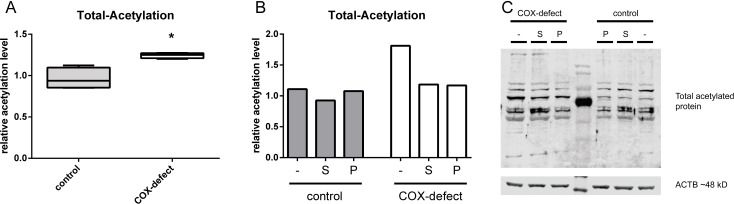
We assayed intracellular levels of sirtuin 1 and the mitochondrial sirtuins SIRT3 and SIRT4 in human fibroblasts from patients with COX- deficiency. Furthermore, sirtuins were measured after inhibiting complex IV in healthy control fibroblasts by cyanide and after incubation with activators SRT1720 and paeonol. To determine the effect of sirtuin inhibition at the cellular level we measured total cellular acetylation (control and patient cells, with and without treatment) by Western blot.
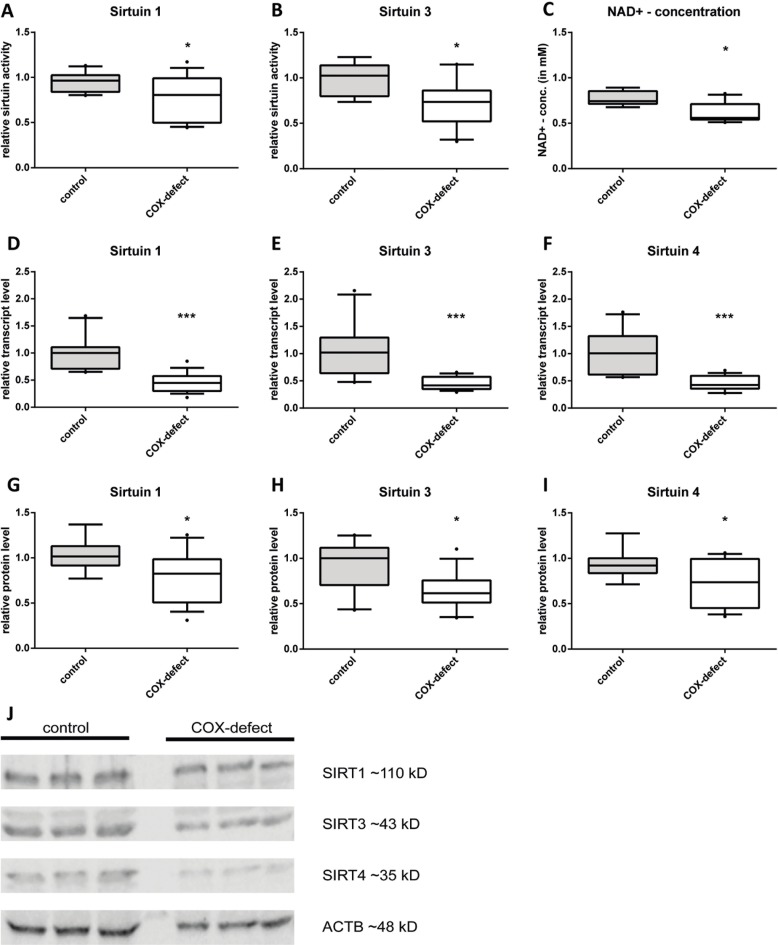
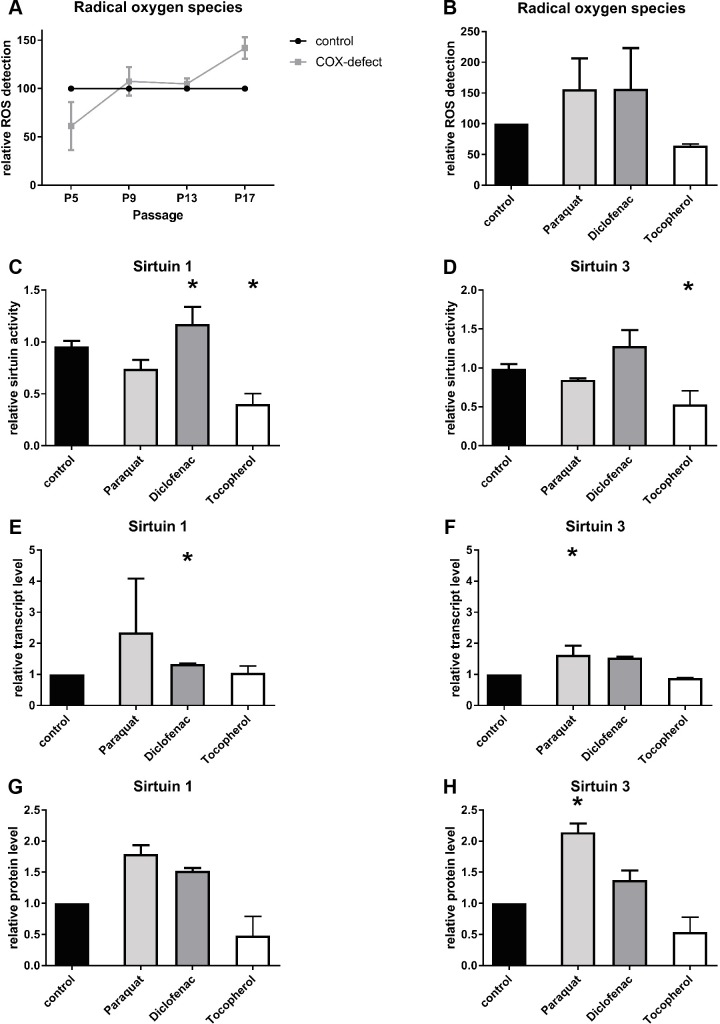
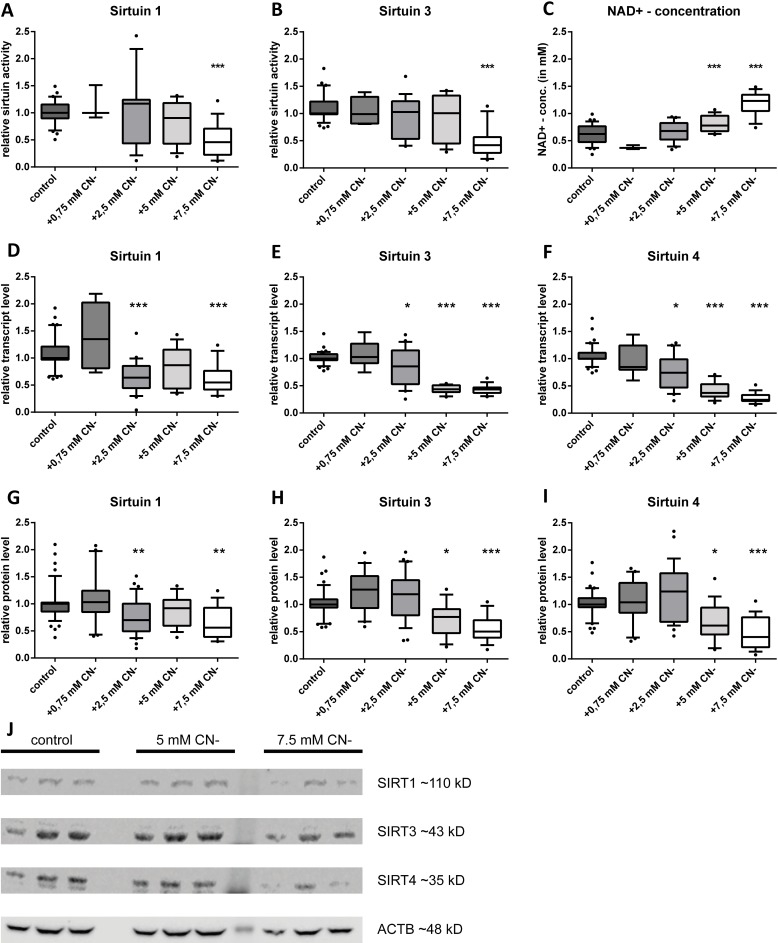
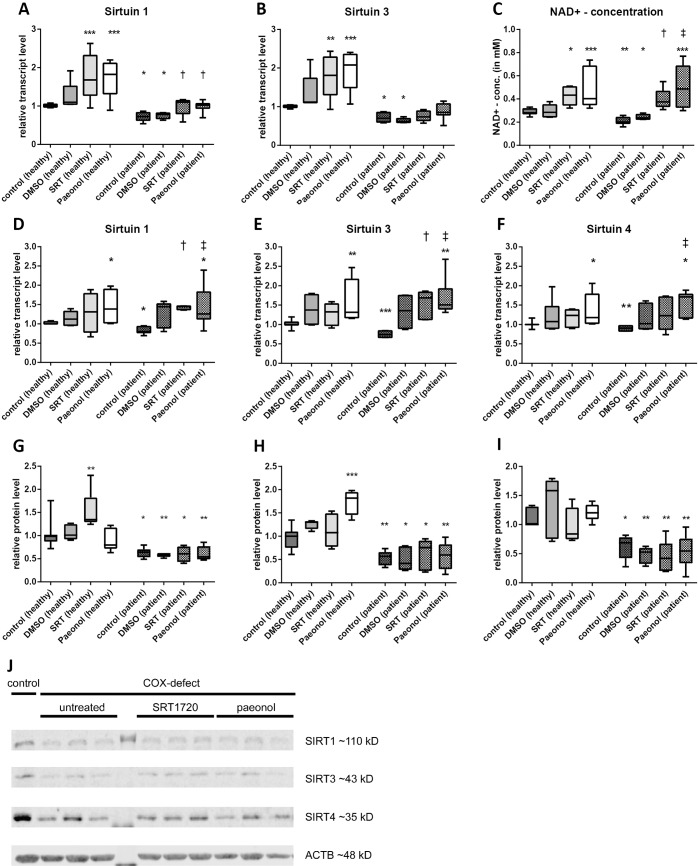
We observed a significant decrease in cellular levels of all three sirtuins at the activity, protein and transcriptional level (by 15% to 50%) in COX-deficient cells. Additionally, the intracellular concentration of NAD+ was reduced in patient cells. We mimicked the biochemical phenotype of COX- deficiency by incubating healthy fibroblasts with cyanide and observed reduced sirtuin levels. A pharmacological activation of sirtuins resulted in normalized sirtuin levels in patient cells. Hyper acetylation was also reversible after treatment with sirtuin activators. Pharmacological modulation of sirtuins resulted in altered respiratory chain complex activities.
We found inhibition of situins 1, 3 and 4 at activity, protein and transcriptional levels in fibroblasts from patient with COX-deficiency. Pharmacological activators were able to restore reduced sirtuin levels and thereby modulate respiratory chain activities.
沉默调节蛋白是依赖烟酰胺腺嘌呤二核苷酸(NAD+)的去乙酰化酶,可调节线粒体能量代谢以及细胞对压力的反应。NAD/NADH系统在连接沉默调节蛋白和线粒体呼吸链的氧化磷酸化过程中起关键作用。此外,沉默调节蛋白能够直接使呼吸链的不同复合物去乙酰化并激活它们。这促使我们分析细胞色素c氧化酶(COX)缺乏症患者皮肤成纤维细胞中沉默调节蛋白的水平,并测试不同的沉默调节蛋白药物激活剂(SRT1720、丹皮酚)对体外调节患者细胞中沉默调节蛋白以及可能的呼吸链酶的影响。
我们检测了COX缺乏症患者人成纤维细胞中沉默调节蛋白1以及线粒体沉默调节蛋白SIRT3和SIRT4的细胞内水平。此外,在健康对照成纤维细胞中用氰化物抑制复合物IV后以及与激活剂SRT1720和丹皮酚孵育后,检测了沉默调节蛋白的水平。为了确定沉默调节蛋白抑制在细胞水平的作用,我们通过蛋白质印迹法测量了总细胞乙酰化水平(对照细胞和患者细胞,有无处理)。
我们观察到COX缺乏细胞中所有三种沉默调节蛋白在活性、蛋白质和转录水平上均显著降低(降低15%至50%)。此外,患者细胞中NAD+的细胞内浓度降低。我们通过用氰化物孵育健康成纤维细胞模拟了COX缺乏的生化表型,并观察到沉默调节蛋白水平降低。沉默调节蛋白的药物激活导致患者细胞中沉默调节蛋白水平恢复正常。用沉默调节蛋白激活剂处理后,高乙酰化也可逆。沉默调节蛋白的药物调节导致呼吸链复合物活性改变。
我们发现COX缺乏症患者的成纤维细胞中沉默调节蛋白1、3和4在活性、蛋白质和转录水平受到抑制。药物激活剂能够恢复降低的沉默调节蛋白水平,从而调节呼吸链活性。