Kim Kyungmin, Pedersen Lars C, Kirby Thomas W, DeRose Eugene F, London Robert E
Genome Integrity and Structural Biology Laboratory, National Institute of Environmental Health Sciences, National Institutes of Health, Research Triangle Park, NC 27709, USA.
Nucleic Acids Res. 2017 Dec 1;45(21):12374-12387. doi: 10.1093/nar/gkx941.
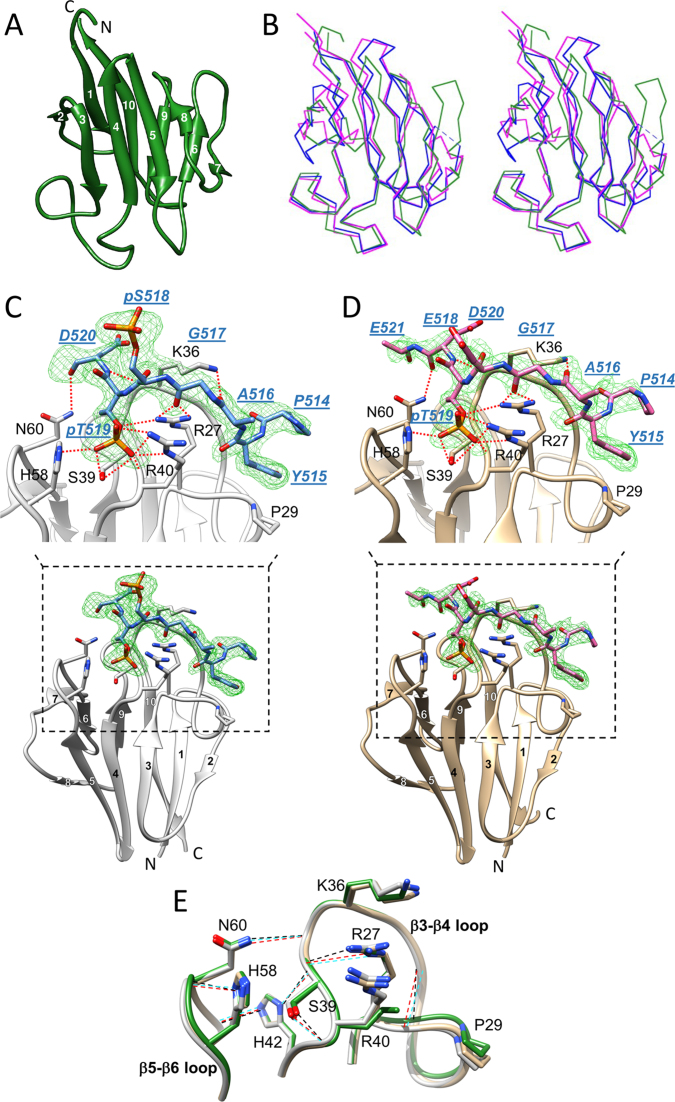
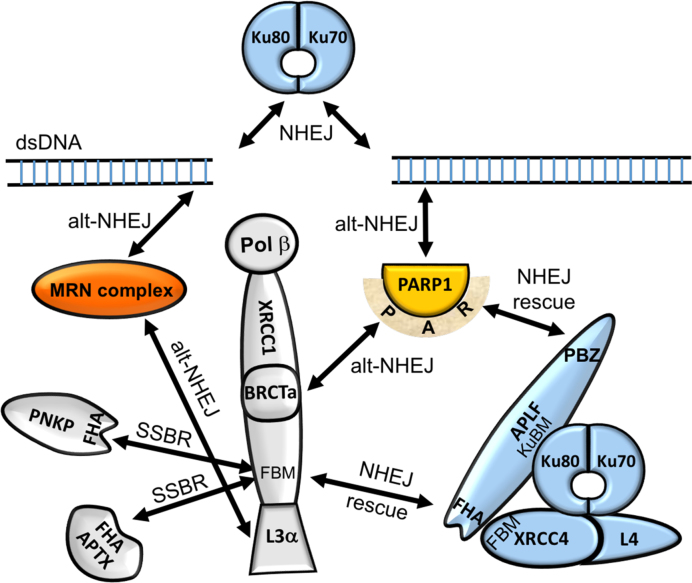
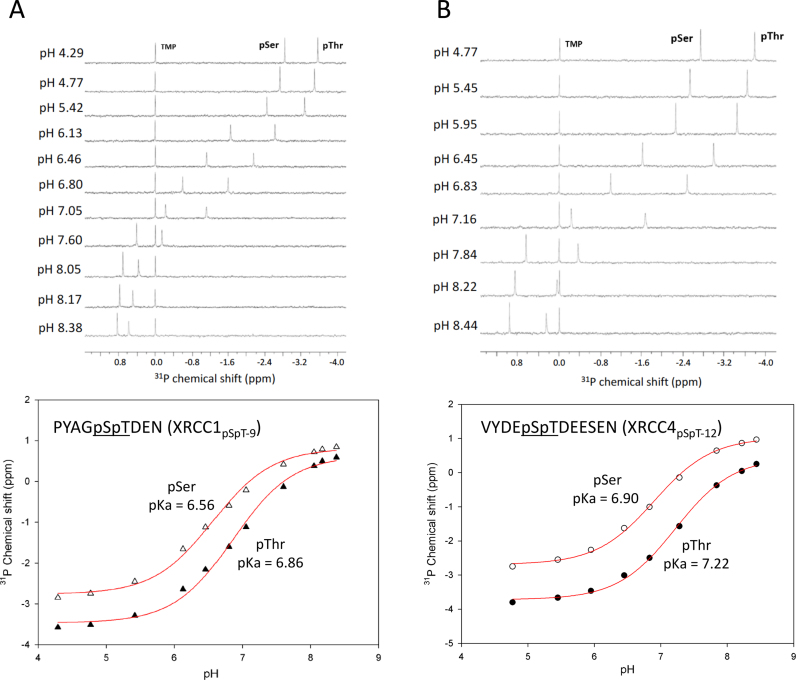
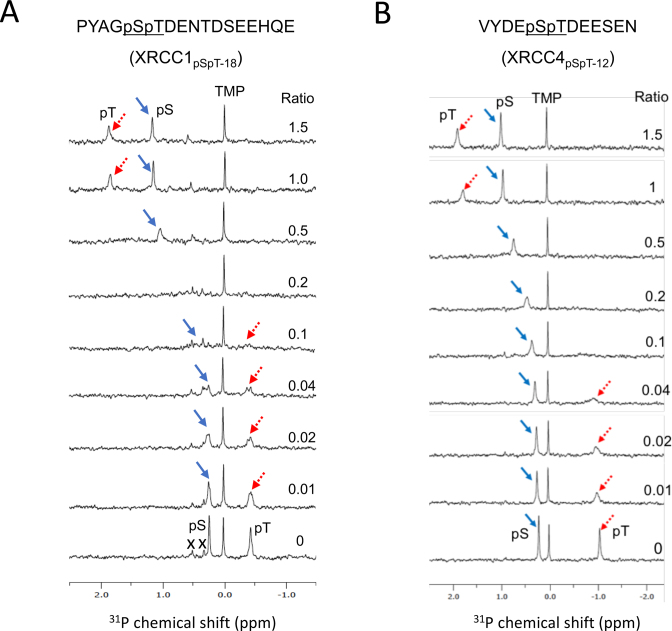
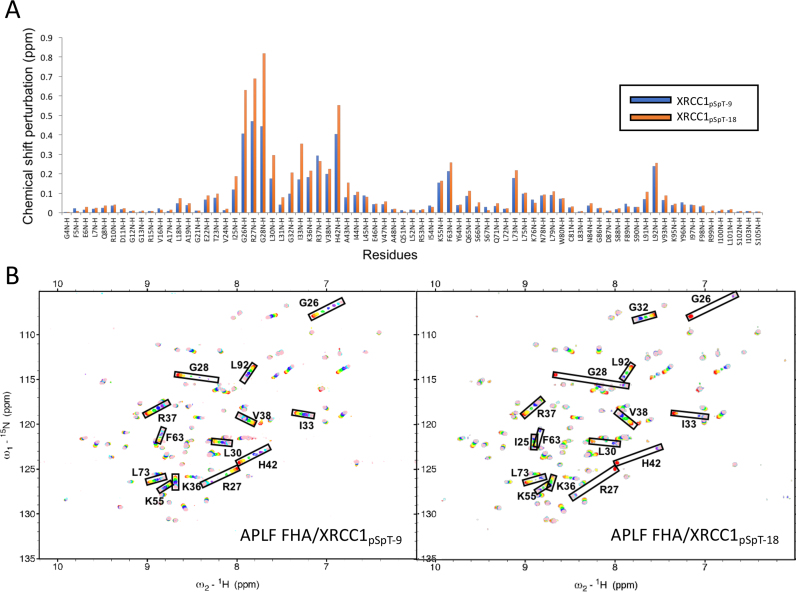
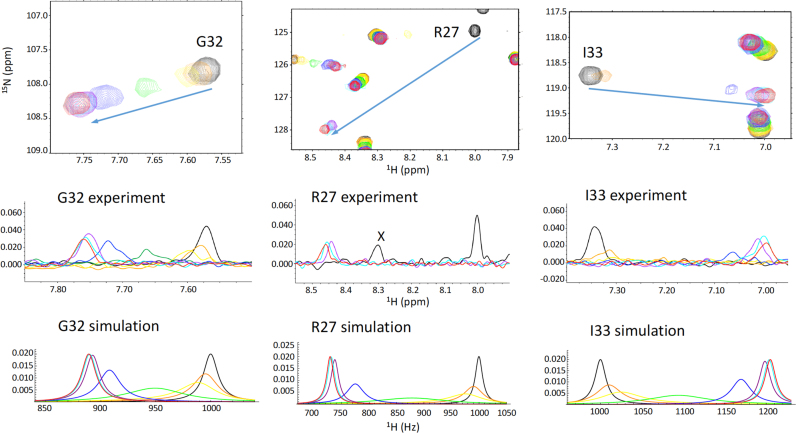
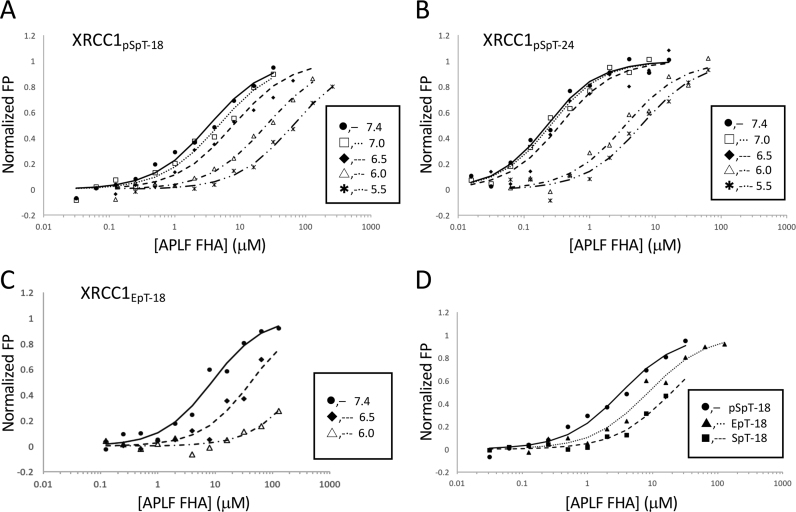
Aprataxin and PNKP-like factor (APLF) is a DNA repair factor containing a forkhead-associated (FHA) domain that supports binding to the phosphorylated FHA domain binding motifs (FBMs) in XRCC1 and XRCC4. We have characterized the interaction of the APLF FHA domain with phosphorylated XRCC1 peptides using crystallographic, NMR, and fluorescence polarization studies. The FHA-FBM interactions exhibit significant pH dependence in the physiological range as a consequence of the atypically high pK values of the phosphoserine and phosphothreonine residues and the preference for a dianionic charge state of FHA-bound pThr. These high pK values are characteristic of the polyanionic peptides typically produced by CK2 phosphorylation. Binding affinity is greatly enhanced by residues flanking the crystallographically-defined recognition motif, apparently as a consequence of non-specific electrostatic interactions, supporting the role of XRCC1 in nuclear cotransport of APLF. The FHA domain-dependent interaction of XRCC1 with APLF joins repair scaffolds that support single-strand break repair and non-homologous end joining (NHEJ). It is suggested that for double-strand DNA breaks that have initially formed a complex with PARP1 and its binding partner XRCC1, this interaction acts as a backup attempt to intercept the more error-prone alternative NHEJ repair pathway by recruiting Ku and associated NHEJ factors.
脱嘌呤嘧啶核酸内切酶及PNKP样因子(APLF)是一种DNA修复因子,含有一个叉头相关(FHA)结构域,可支持与XRCC1和XRCC4中磷酸化的FHA结构域结合基序(FBMs)结合。我们利用晶体学、核磁共振和荧光偏振研究对APLF FHA结构域与磷酸化XRCC1肽段之间的相互作用进行了表征。由于磷酸丝氨酸和磷酸苏氨酸残基的异常高pK值以及FHA结合的pThr对双阴离子电荷状态的偏好,FHA-FBM相互作用在生理范围内表现出显著的pH依赖性。这些高pK值是CK2磷酸化通常产生的多阴离子肽的特征。晶体学定义的识别基序两侧的残基大大增强了结合亲和力,这显然是由于非特异性静电相互作用,支持了XRCC1在APLF核共转运中的作用。XRCC1与APLF的FHA结构域依赖性相互作用连接了支持单链断裂修复和非同源末端连接(NHEJ)的修复支架。有人提出,对于最初与PARP1及其结合伙伴XRCC1形成复合物的双链DNA断裂,这种相互作用作为一种备用尝试,通过招募Ku和相关的NHEJ因子来拦截更容易出错的替代NHEJ修复途径。