Nielsen Jens Christian, Nielsen Jens
Chalmers University of Technology, Kemivägen 10, Sweden.
Synth Syst Biotechnol. 2017 Feb 28;2(1):5-12. doi: 10.1016/j.synbio.2017.02.002. eCollection 2017 Mar.
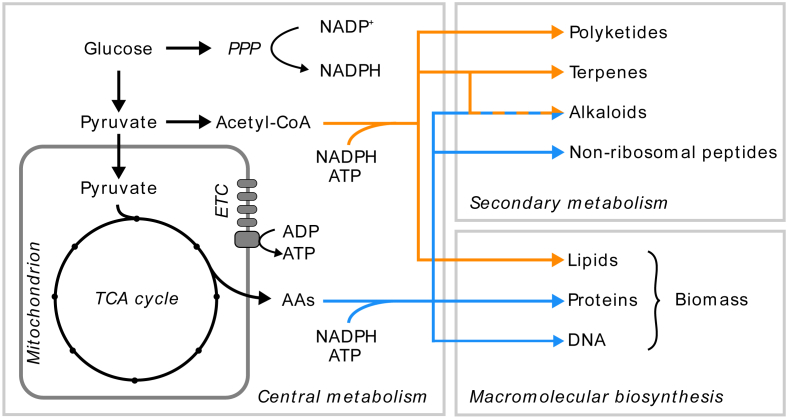
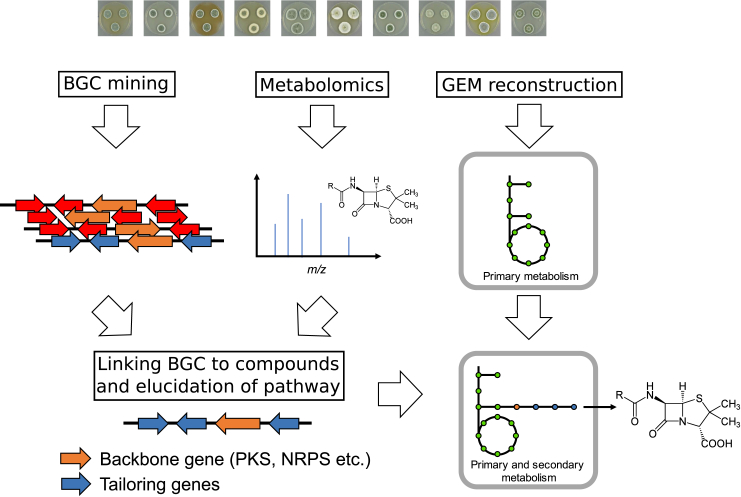
The genomic era has revolutionized research on secondary metabolites and bioinformatics methods have in recent years revived the antibiotic discovery process after decades with only few new active molecules being identified. New computational tools are driven by genomics and metabolomics analysis, and enables rapid identification of novel secondary metabolites. To translate this increased discovery rate into industrial exploitation, it is necessary to integrate secondary metabolite pathways in the metabolic engineering process. In this review, we will describe the novel advances in discovery of secondary metabolites produced by filamentous fungi, highlight the utilization of genome-scale metabolic models (GEMs) in the design of fungal cell factories for the production of secondary metabolites and review strategies for optimizing secondary metabolite production through the construction of high yielding platform cell factories.
基因组时代彻底改变了对次生代谢产物的研究,近年来生物信息学方法使抗生素发现过程得以复兴,此前几十年仅有少数新的活性分子被鉴定出来。新的计算工具由基因组学和代谢组学分析驱动,能够快速鉴定新型次生代谢产物。为了将这种提高的发现率转化为工业应用,有必要在代谢工程过程中整合次生代谢产物途径。在本综述中,我们将描述丝状真菌产生的次生代谢产物发现方面的新进展,强调基因组规模代谢模型(GEMs)在设计用于生产次生代谢产物的真菌细胞工厂中的应用,并综述通过构建高产平台细胞工厂来优化次生代谢产物生产的策略。