Department of Pathophysiology, Jagiellonian University Medical College, Czysta 18, 30-121, Krakow, Poland.
Department of Anatomy and Neuroscience Centre, University of Helsinki, Helsinki, Finland.
Neurotox Res. 2018 Feb;33(2):485-514. doi: 10.1007/s12640-017-9818-6. Epub 2017 Oct 23.
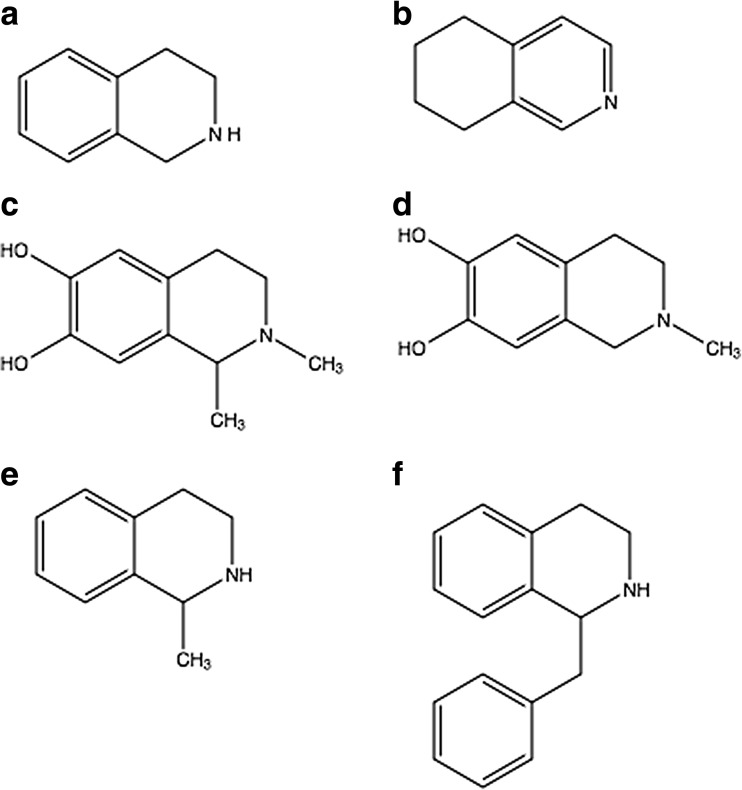
Salsolinol (1-methyl-6,7-dihydroxy-1,2,3,4-tetrahydroisoquinoline) is a tetrahydroisoquinoline derivative whose presence in humans was first detected in the urine of Parkinsonian patients on L-DOPA (L-dihydroxyphenylalanine) medication. Thus far, multiple hypotheses regarding its physiological/pathophysiological roles have been proposed, especially related to Parkinson's disease or alcohol addiction. The aim of this review was to outline studies related to salsolinol, with special focus on in vivo and in vitro experimental models. To begin with, the chemical structure of salsolinol together with its biochemical implications and the role in neurotransmission are discussed. Numerous experimental studies are summarized in tables and the most relevant ones are stressed. Finally, the ability of salsolinol to cross the blood-brain barrier and its possible double-faced neurobiological potential are reviewed.
萨索林醇(1-甲基-6,7-二羟基-1,2,3,4-四氢异喹啉)是一种四氢异喹啉衍生物,其在人类体内的存在最早是在接受 L-DOPA(L-二羟苯丙氨酸)药物治疗的帕金森病患者的尿液中检测到的。到目前为止,已经提出了多种关于其生理/病理生理作用的假说,特别是与帕金森病或酒精成瘾有关。本综述的目的是概述与萨索林醇相关的研究,特别关注体内和体外实验模型。首先,讨论了萨索林醇的化学结构及其生化意义以及在神经传递中的作用。大量的实验研究以表格形式进行了总结,并强调了最相关的研究。最后,综述了萨索林醇穿过血脑屏障的能力及其可能的双重神经生物学潜能。