Lima Rui, Monteiro Susana, Lopes José P, Barradas Pedro, Vasconcelos Natália L, Gomes Eduardo D, Assunção-Silva Rita C, Teixeira Fábio G, Morais Mónica, Sousa Nuno, Salgado António J, Silva Nuno A
Life and Health Sciences Research Institute (ICVS), School of Medicine, University of Minho, Campus de Gualtar, 4710-057 Braga, Portugal.
ICVS/3B's-PT Government Associate Laboratory, Braga/Guimaraes, Portugal.
Pharmaceuticals (Basel). 2017 Oct 24;10(4):83. doi: 10.3390/ph10040083.
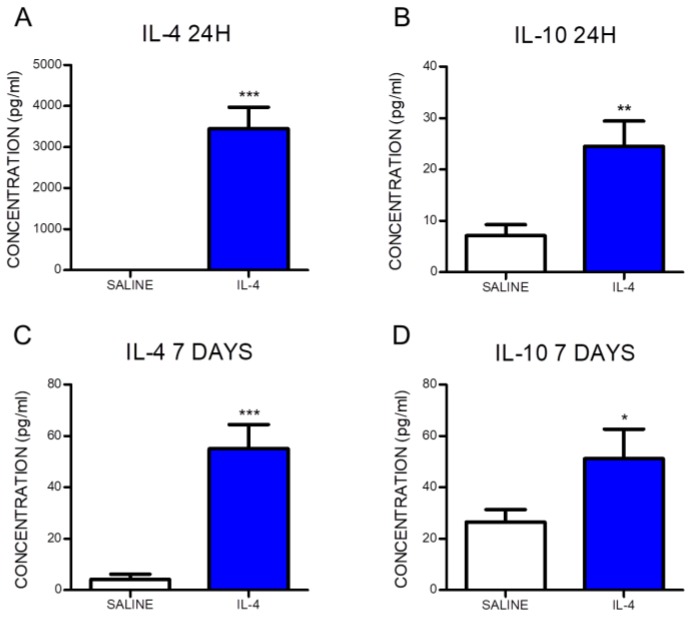
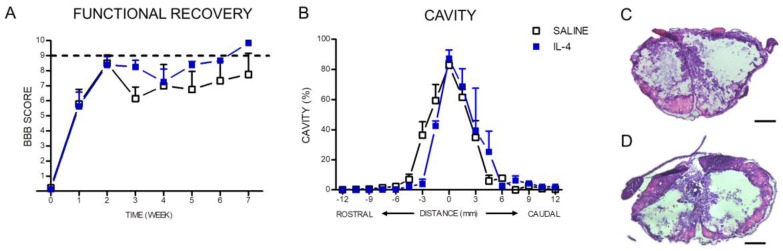
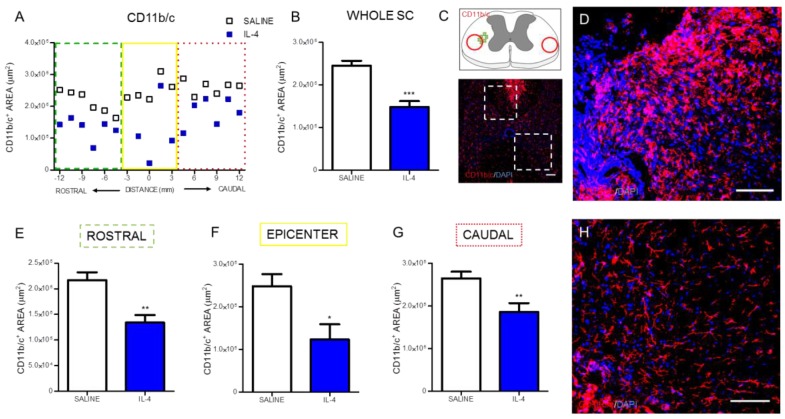
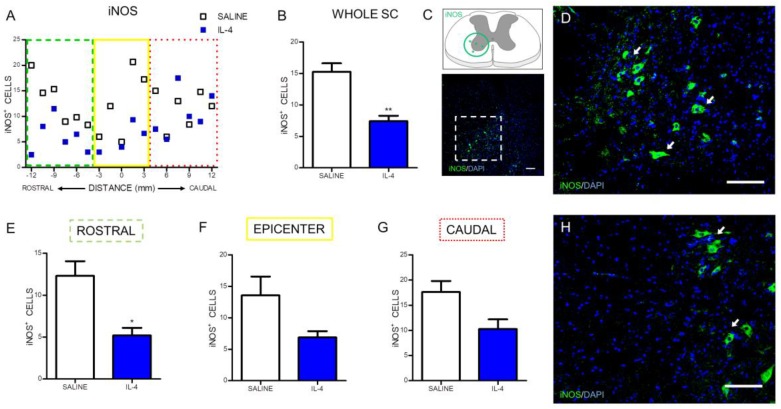
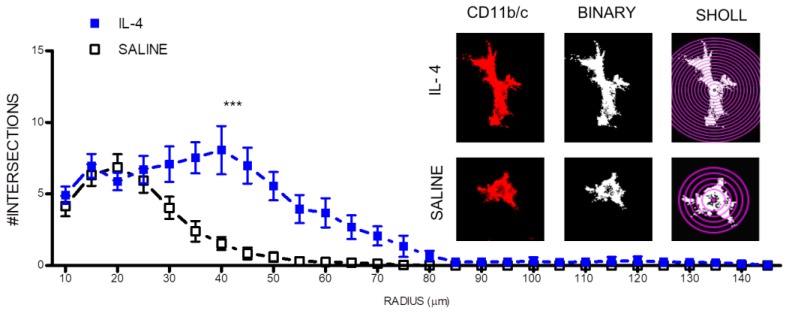
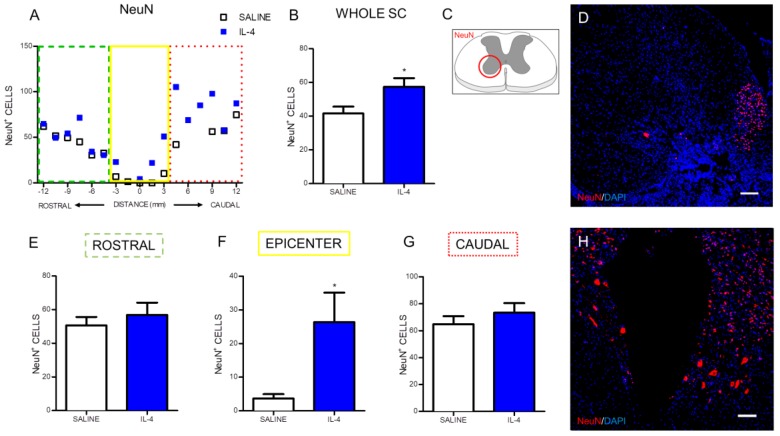
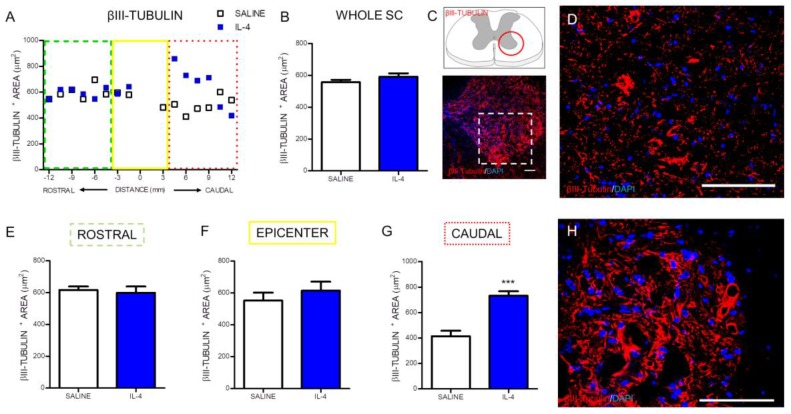
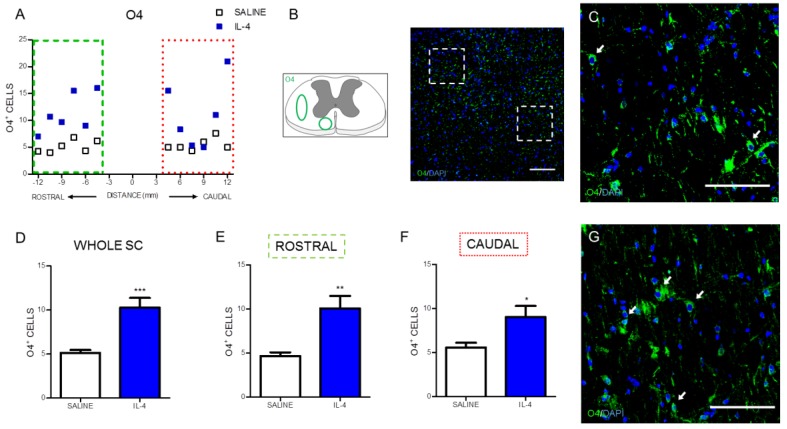
Traumatic spinal cord injury (SCI) causes dramatic disability and dysfunction in the motor, sensory and autonomic systems. The severe inflammatory reaction that occurs after SCI is strongly associated with further tissue damage. As such, immunomodulatory strategies have been developed, aimed at reducing inflammation, but also at shaping the immune response in order to protect, repair and promote regeneration of spared neural tissue. One of those promising strategies is the intraspinal administration of the cytokine interleukin-4 (IL-4) that was shown to promote a phenotype on specific immune cells associated with neuroprotection and repair. In this work, we evaluated if a systemic delivery of IL-4 for a 7-days period was also capable of promoting neuroprotection after SCI by analyzing different neural cells populations and motor recovery. IL-4 treatment promoted an elevation of the anti-inflammatory cytokine IL-10 in the serum both at 24 h and 7 days after injury. Locally, treatment with IL-4 led to a reduction on cells expressing markers associated with inflammation, CD11b/c and iNOS. Importantly, IL-4 treatment increased the neuronal markers βIII-tubulin and NeuN, and the oligodendrocyte marker O4, suggesting a neuroprotective effect. Moreover, 100% of the animals treated with IL-4 were able to recover weight support against only 33% of saline treated animals. Overall, these results show that systemic administration of IL-4 positively impacts different aspects of spinal cord injury, creating a more favorable environment for recovery to take place.
创伤性脊髓损伤(SCI)会导致运动、感觉和自主神经系统出现严重残疾和功能障碍。SCI后发生的严重炎症反应与进一步的组织损伤密切相关。因此,已经开发出免疫调节策略,旨在减轻炎症,同时塑造免疫反应,以保护、修复和促进残留神经组织的再生。其中一种有前景的策略是脊髓内注射细胞因子白细胞介素-4(IL-4),研究表明其可促进特定免疫细胞上与神经保护和修复相关的表型。在这项研究中,我们通过分析不同神经细胞群体和运动恢复情况,评估了连续7天全身递送IL-4是否也能够促进SCI后的神经保护作用。IL-4治疗在损伤后24小时和7天时均促进了血清中抗炎细胞因子IL-10的升高。在局部,IL-4治疗导致表达与炎症相关标志物CD11b/c和诱导型一氧化氮合酶(iNOS)的细胞减少。重要的是,IL-4治疗增加了神经元标志物βIII-微管蛋白和NeuN以及少突胶质细胞标志物O4,表明具有神经保护作用。此外,接受IL-4治疗的动物中有100%能够恢复体重支撑,而接受生理盐水治疗的动物中只有33%能够恢复。总体而言,这些结果表明全身给予IL-4对脊髓损伤的不同方面产生积极影响,为恢复创造了更有利的环境。