Department of Obstetrics, Gynecology, and Reproductive Sciences, Yale School of Medicine, P.O. Box 208063, New Haven, CT 06520, USA.
Int J Mol Sci. 2017 Oct 24;18(10):2224. doi: 10.3390/ijms18102224.
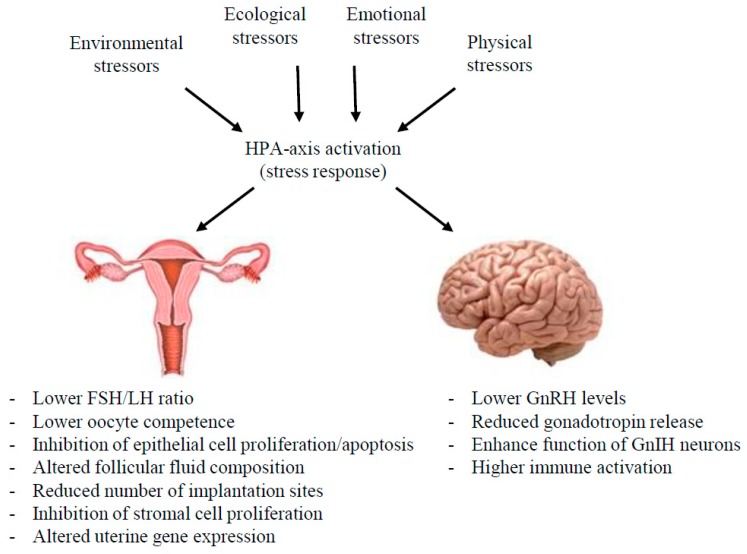
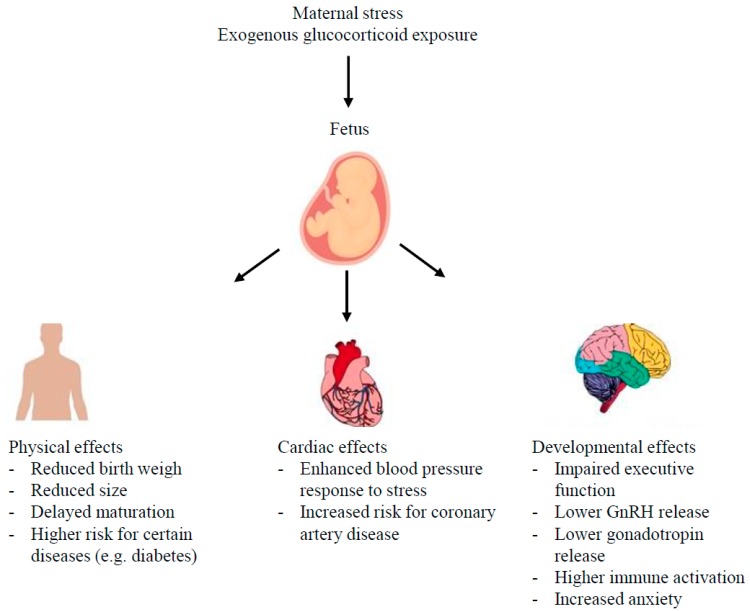
An organism's reproductive fitness is sensitive to the environment, integrating cues of resource availability, ecological factors, and hazards within its habitat. Events that challenge the environment of an organism activate the central stress response system, which is primarily mediated by the hypothalamic-pituitary-adrenal (HPA) axis. The regulatory functions of the HPA axis govern the cardiovascular and metabolic system, immune functions, behavior, and reproduction. Activation of the HPA axis by various stressors primarily inhibits reproductive function and is able to alter fetal development, imparting a biological record of stress experienced in utero. Clinical studies and experimental data indicate that stress signaling can mediate these effects through direct actions in the brain, gonads, and embryonic tissues. This review focuses on the mechanisms by which stress activation of the HPA axis impacts fertility and fetal development.
生物体的生殖适应性对环境敏感,整合了其栖息地中资源可用性、生态因素和危害的线索。挑战生物体环境的事件会激活中枢应激反应系统,该系统主要由下丘脑-垂体-肾上腺 (HPA) 轴介导。HPA 轴的调节功能控制心血管和代谢系统、免疫功能、行为和生殖。各种应激源对 HPA 轴的激活主要抑制生殖功能,并能够改变胎儿发育,赋予子宫内经历的应激的生物学记录。临床研究和实验数据表明,应激信号可以通过大脑、性腺和胚胎组织中的直接作用来介导这些效应。本综述重点介绍了 HPA 轴应激激活对生育力和胎儿发育的影响的机制。