Department of Pharmaceutical Engineering, Soon Chun Hyang University, Asan 31538, Korea.
BMB Rep. 2017 Nov;50(11):572-577. doi: 10.5483/bmbrep.2017.50.11.174.
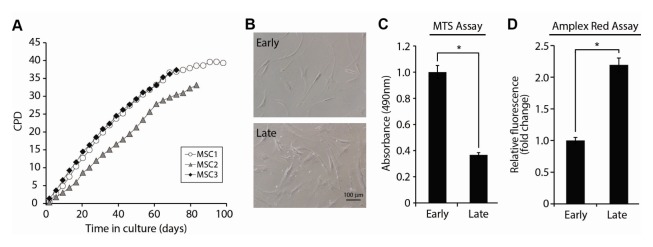
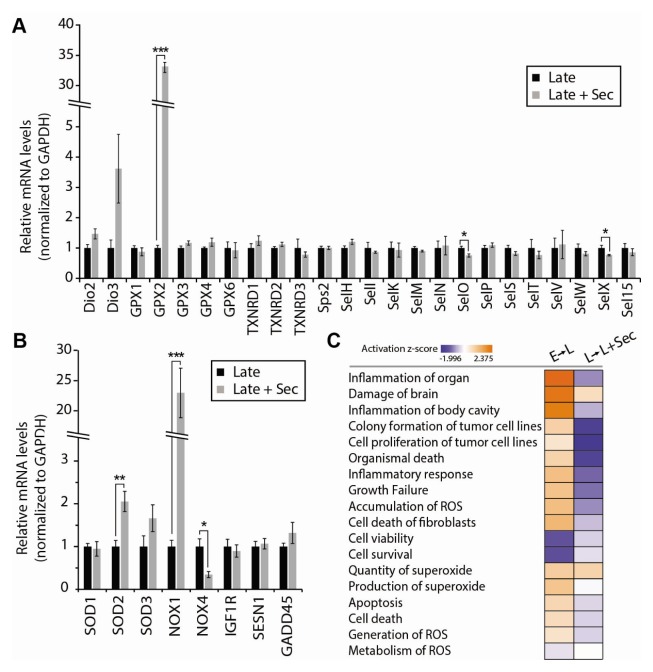
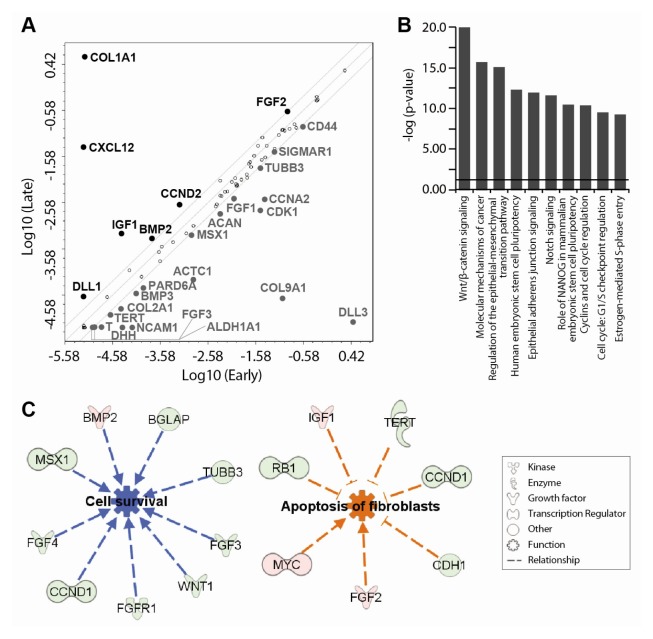
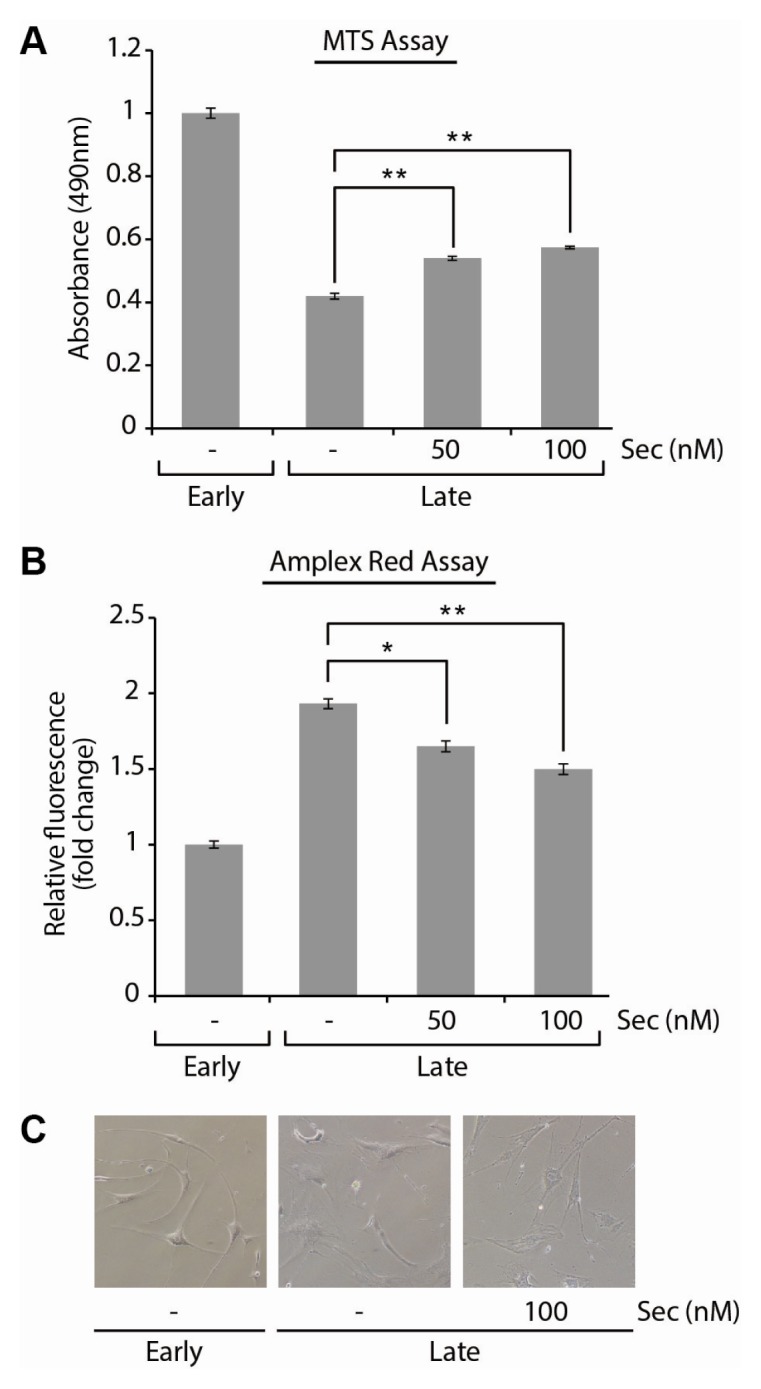
In most clinical applications, human mesenchymal stem cells (hMSCs) are expanded in large scale before their administration. Prolonged culture in vitro results in cellular senescenceassociated phenotypes, including accumulation of reactive oxygen species (ROS) and decreased cell viabilities. Profiling of stem cell-related genes during in vitro expansion revealed that numerous canonical pathways were significantly changed. To determine the effect of selenocysteine (Sec), a rare amino acid found in several antioxidant enzymes, on the replicative senescence in hMSCs, we treated senescent hMSCs with Sec. Supplementation of Sec in the culture medium in late-passage hMSCs reduced ROS levels and improved the survival of hMSCs. In addition, a subset of key antioxidant genes and Sec-containing selenoproteins showed increased mRNA levels after Sec treatment. Furthermore, ROS metabolism and inflammation pathways were predicted to be downregulated. Taken together, our results suggest that Sec has antioxidant effects on the replicative senescence of hMSCs. [BMB Reports 2017; 50(11): 572-577].
在大多数临床应用中,人骨髓间充质干细胞(hMSCs)在给药前都要进行大规模扩增。体外长时间培养会导致与衰老相关的表型,包括活性氧(ROS)的积累和细胞活力的降低。对体外扩增过程中与干细胞相关的基因进行分析表明,许多经典途径发生了显著变化。为了确定硒代半胱氨酸(Sec)对 hMSCs 复制性衰老的影响,我们用 Sec 处理衰老的 hMSCs。在高传代 hMSCs 的培养基中补充 Sec 可降低 ROS 水平并提高 hMSCs 的存活率。此外,Sec 处理后,一组关键的抗氧化基因和含 Sec 的硒蛋白的 mRNA 水平增加。此外,预测 ROS 代谢和炎症途径被下调。总之,我们的结果表明 Sec 对 hMSCs 的复制性衰老具有抗氧化作用。[BMB 报告 2017;50(11): 572-577]。