Faculdade de Ciências da Saúde do Trairi (FACISA), Universidade Federal do Rio Grande do Norte (UFRN), Rua Traíri, S/N, Centro, Santa Cruz, Rio Grande do Norte (RN), 59200-000, Brazil.
Laboratório de Biologia Molecular e Genômica, Centro de Biociências, UFRN, Campus Universitário, Avenida Senador Salgado Filho, 3000, Lagoa nova, Natal, RN, 59078-900, Brazil.
Sci Rep. 2017 Dec 19;7(1):17837. doi: 10.1038/s41598-017-16224-5.
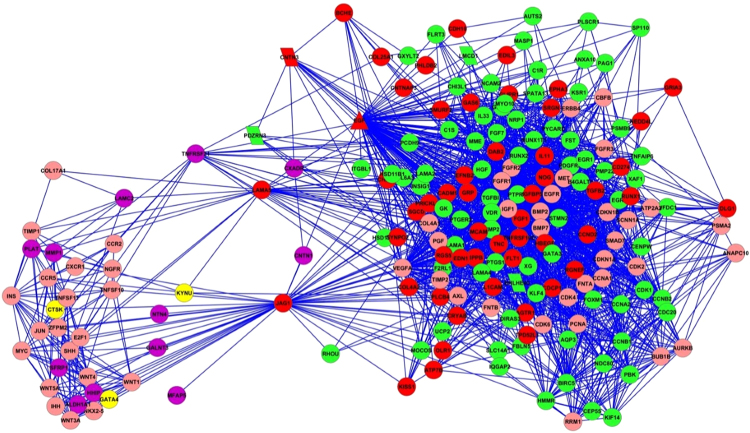
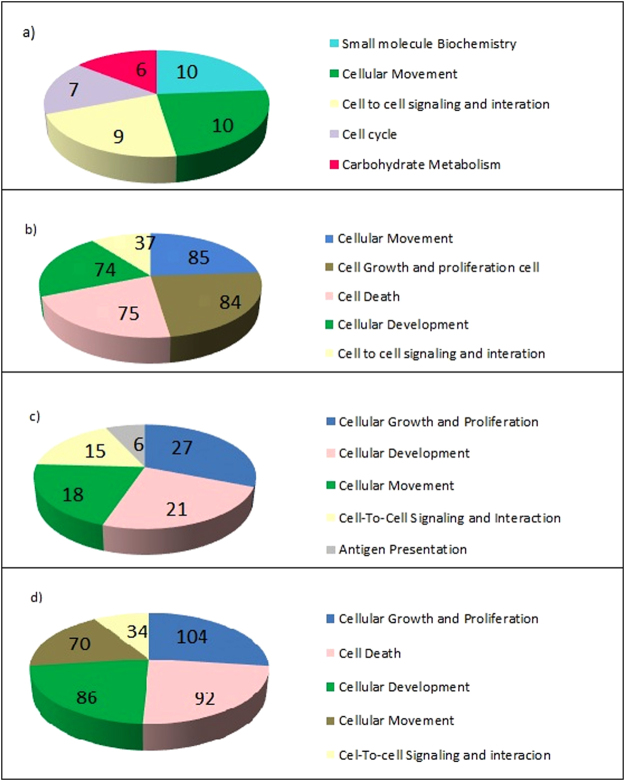
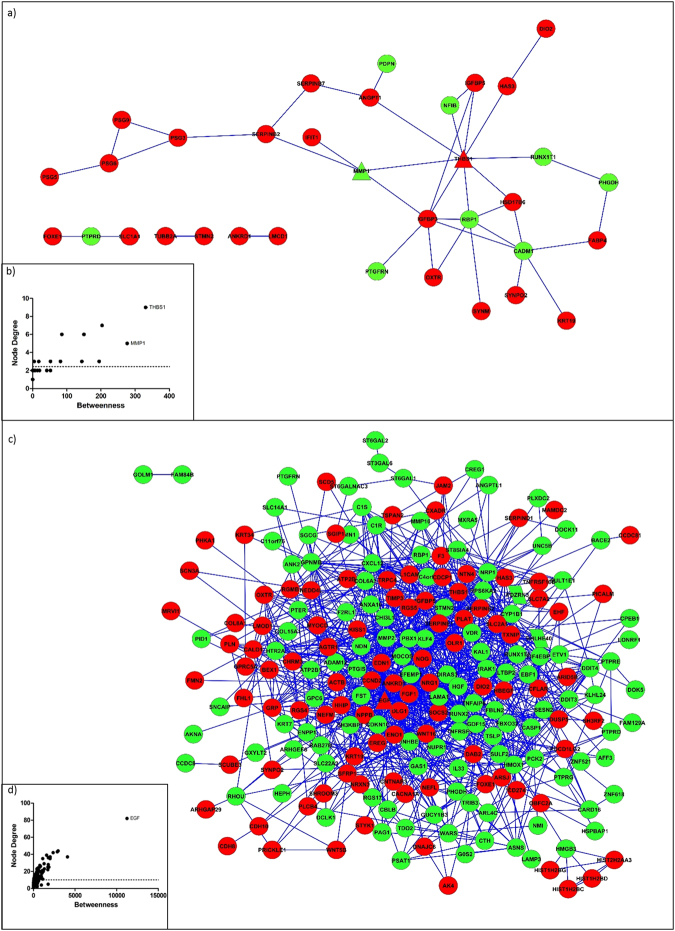
Although human mesenchymal stem cells (hMSCs) are a powerful tool for cell therapy, prolonged culture times result in replicative senescence or acquisition of tumorigenic features. To identify a molecular signature for senescence, we compared the transcriptome of senescent and young hMSCs with normal karyotype (hMSCs/n) and with a constitutional inversion of chromosome 3 (hMSC/inv). Senescent and young cells from both lineages showed differentially expressed genes (DEGs), with higher levels in senescent hMSCs/inv. Among the 30 DEGs in senescent hMSC/inv, 11 are new candidates for biomarkers of cellular senescence. The functional categories most represented in senescent hMSCs were related to cellular development, cell growth/proliferation, cell death, cell signaling/interaction, and cell movement. Mapping of DEGs onto biological networks revealed matrix metalloproteinase-1, thrombospondin 1, and epidermal growth factor acting as topological bottlenecks. In the comparison between senescent hMSCs/n and senescent hMSCs/inv, other functional annotations such as segregation of chromosomes, mitotic spindle formation, and mitosis and proliferation of tumor lines were most represented. We found that many genes categorized into functional annotations related to tumors in both comparisons, with relation to tumors being highest in senescent hMSCs/inv. The data presented here improves our understanding of the molecular mechanisms underlying the onset of cellular senescence as well as tumorigenesis.
虽然人类间充质干细胞(hMSCs)是细胞治疗的有力工具,但长时间培养会导致复制衰老或获得致瘤特征。为了鉴定衰老的分子特征,我们比较了具有正常核型(hMSCs/n)和染色体 3 结构重排(hMSC/inv)的衰老和年轻 hMSCs 的转录组。来自这两种谱系的衰老和年轻细胞都表现出差异表达基因(DEGs),衰老 hMSC/inv 中的基因水平更高。在衰老 hMSC/inv 的 30 个 DEGs 中,有 11 个是细胞衰老生物标志物的新候选者。在衰老 hMSCs 中代表性最强的功能类别与细胞发育、细胞生长/增殖、细胞死亡、细胞信号转导/相互作用和细胞运动有关。将 DEGs 映射到生物网络上显示,基质金属蛋白酶 1、血小板反应蛋白 1 和表皮生长因子作为拓扑瓶颈。在衰老 hMSCs/n 和衰老 hMSCs/inv 之间的比较中,其他功能注释,如染色体分离、有丝分裂纺锤体形成以及肿瘤系的有丝分裂和增殖,最为突出。我们发现,在这两种比较中,许多被归类为与肿瘤相关的功能注释的基因与肿瘤有关,而衰老 hMSC/inv 中的肿瘤相关性最高。本研究提高了我们对细胞衰老和肿瘤发生起始的分子机制的理解。