School of Chemistry and Molecular Biosciences, University of Queensland, Brisbane, Queensland, Australia.
Australian Infectious Diseases Research Centre, University of Queensland, Brisbane, Queensland, Australia.
mBio. 2017 Oct 24;8(5):e01558-17. doi: 10.1128/mBio.01558-17.
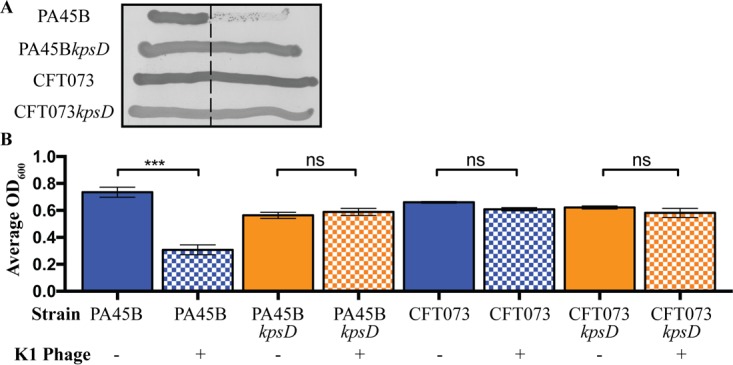
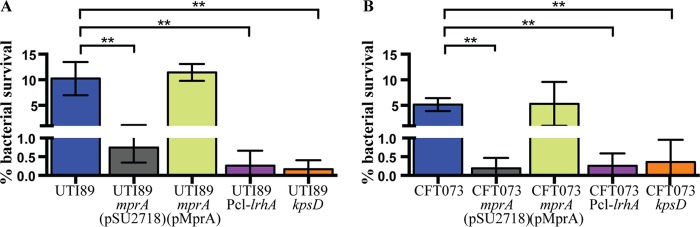
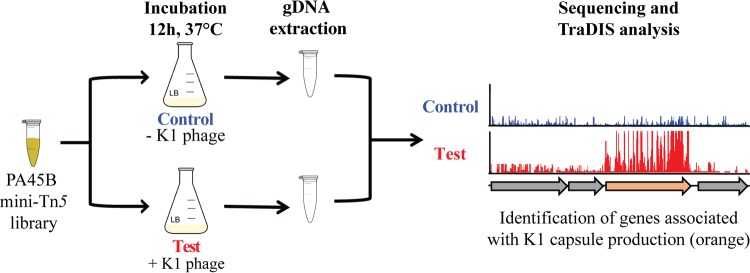
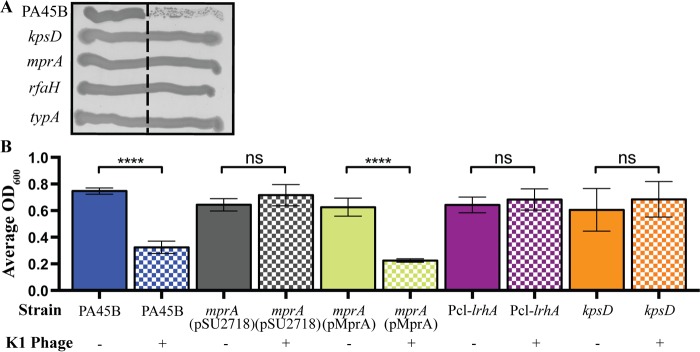
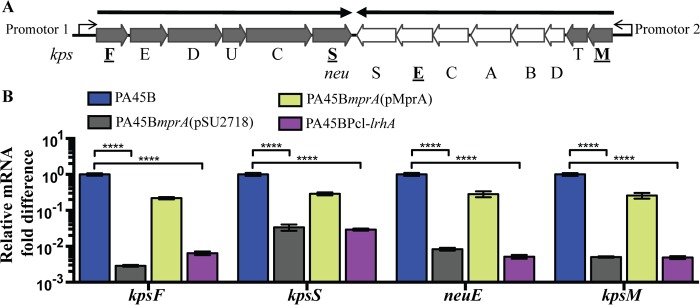
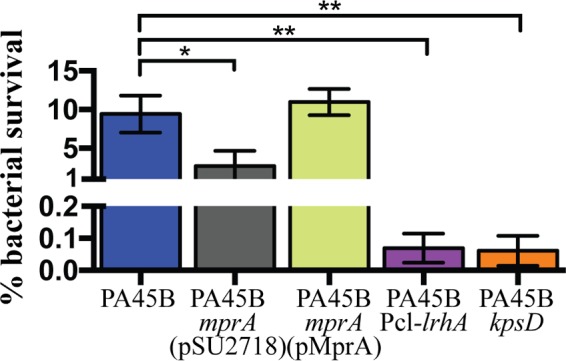
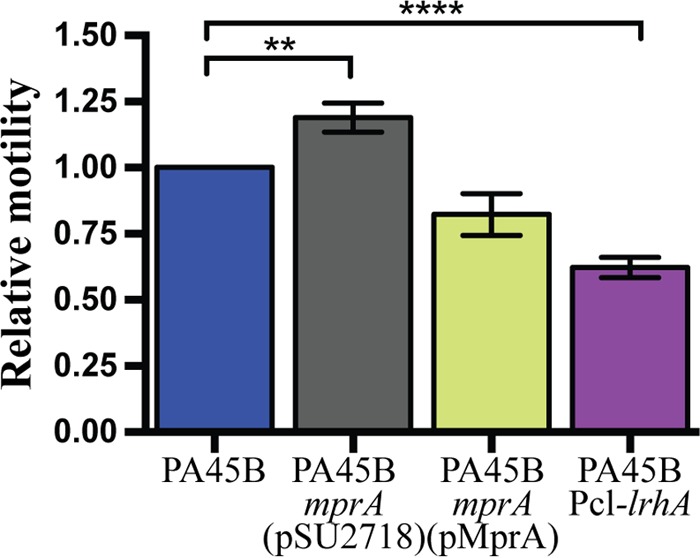
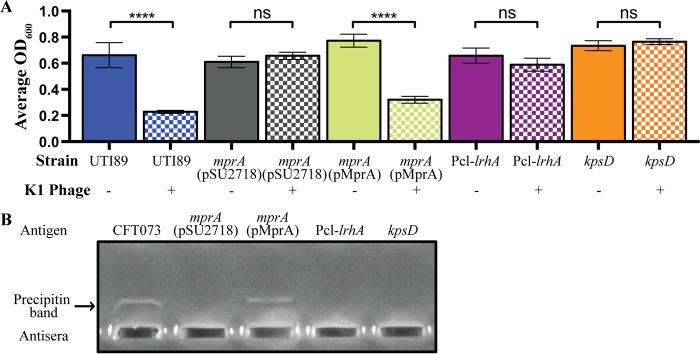
Uropathogenic (UPEC) is a major cause of urinary tract and bloodstream infections and possesses an array of virulence factors for colonization, survival, and persistence. One such factor is the polysaccharide K capsule. Among the different K capsule types, the K1 serotype is strongly associated with UPEC infection. In this study, we completely sequenced the K1 UPEC urosepsis strain PA45B and employed a novel combination of a lytic K1 capsule-specific phage, saturated Tn transposon mutagenesis, and high-throughput transposon-directed insertion site sequencing (TraDIS) to identify the complement of genes required for capsule production. Our analysis identified known genes involved in capsule biosynthesis, as well as two additional regulatory genes ( and ) that we characterized at the molecular level. Mutation of resulted in protection against K1 phage-mediated killing, a phenotype restored by complementation. We also identified a significantly increased unidirectional Tn insertion frequency upstream of the gene and showed that strong expression of LrhA induced by a constitutive Pcl promoter led to loss of capsule production. Further analysis revealed loss of MprA or overexpression of LrhA affected the transcription of capsule biosynthesis genes in PA45B and increased sensitivity to killing in whole blood. Similar phenotypes were also observed in UPEC strains UTI89 (K1) and CFT073 (K2), demonstrating that the effects were neither strain nor capsule type specific. Overall, this study defined the genome of a UPEC urosepsis isolate and identified and characterized two new regulatory factors that affect UPEC capsule production. Urinary tract infections (UTIs) are among the most common bacterial infections in humans and are primarily caused by uropathogenic (UPEC). Many UPEC strains express a polysaccharide K capsule that provides protection against host innate immune factors and contributes to survival and persistence during infection. The K1 serotype is one example of a polysaccharide capsule type and is strongly associated with UPEC strains that cause UTIs, bloodstream infections, and meningitis. The number of UTIs caused by antibiotic-resistant UPEC is steadily increasing, highlighting the need to better understand factors (e.g., the capsule) that contribute to UPEC pathogenesis. This study describes the original and novel application of lytic capsule-specific phage killing, saturated Tn transposon mutagenesis, and high-throughput transposon-directed insertion site sequencing to define the entire complement of genes required for capsule production in UPEC. Our comprehensive approach uncovered new genes involved in the regulation of this key virulence determinant.
尿路致病性 (UPEC)是尿路感染和血流感染的主要原因,具有一系列定植、存活和持续存在的毒力因子。其中一个因素是多糖 K 荚膜。在不同的 K 荚膜类型中,K1 血清型与 UPEC 感染强烈相关。在这项研究中,我们完全测序了 K1 UPEC 菌血症菌株 PA45B,并采用了一种新型的溶 K1 荚膜特异性噬菌体、饱和 Tn 转座子诱变和高通量转座子定向插入位点测序(TraDIS)的组合,以鉴定产生荚膜所需的基因。我们的分析鉴定了参与荚膜生物合成的已知基因,以及两个额外的调节基因(和),我们在分子水平上对其进行了表征。突变导致对 K1 噬菌体介导的杀伤有保护作用,通过互补恢复表型。我们还发现上游基因的 Tn 插入频率明显增加,并表明组成型 Pcl 启动子诱导的 LrhA 强表达导致荚膜产生丧失。进一步分析表明,MprA 缺失或 LrhA 过表达影响 PA45B 中荚膜生物合成基因的转录,并增加全血杀伤敏感性。在 UPEC 菌株 UTI89(K1)和 CFT073(K2)中也观察到类似的表型,表明这些影响既不是菌株特异性也不是荚膜类型特异性。总体而言,这项研究定义了 UPEC 菌血症分离株的基因组,并鉴定和表征了两个影响 UPEC 荚膜产生的新调节因子。尿路感染(UTIs)是人类最常见的细菌感染之一,主要由尿路致病性 (UPEC)引起。许多 UPEC 菌株表达多糖 K 荚膜,可提供对宿主先天免疫因素的保护,并有助于感染过程中的存活和持续存在。K1 血清型是多糖荚膜类型的一个例子,与引起 UTIs、血流感染和脑膜炎的 UPEC 菌株强烈相关。由抗生素耐药 UPEC 引起的 UTIs 数量稳步增加,这突显了更好地了解导致 UPEC 发病机制的因素(例如荚膜)的必要性。本研究描述了溶 K 荚膜特异性噬菌体杀伤、饱和 Tn 转座子诱变和高通量转座子定向插入位点测序的原始和新颖应用,以定义 UPEC 荚膜产生所需的整个基因。我们的综合方法揭示了参与该关键毒力决定因素调节的新基因。