Department of Dermatology, Ruijin Hospital, Shanghai Jiao Tong University School of Medicine, 200025, Shanghai, P. R. China.
Shanghai Institute of Immunology, Shanghai Jiao Tong University School of Medicine, 200025, Shanghai, P. R. China.
Sci Rep. 2017 Oct 24;7(1):13921. doi: 10.1038/s41598-017-14089-2.
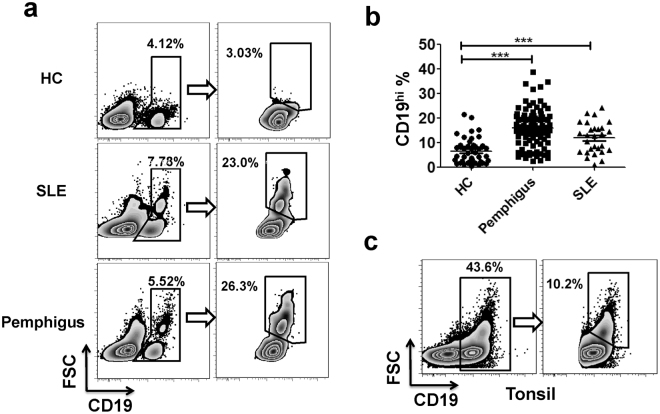
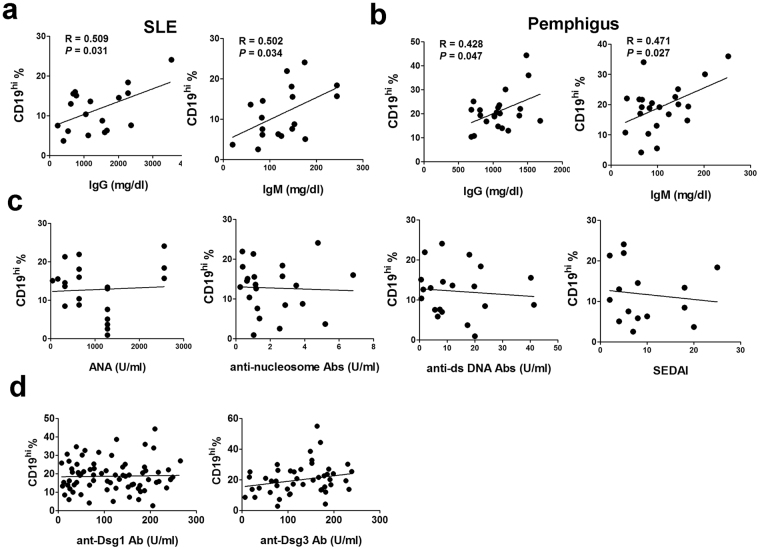
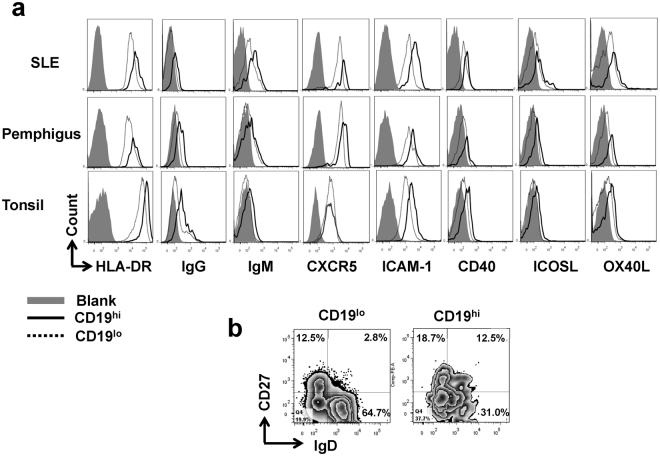
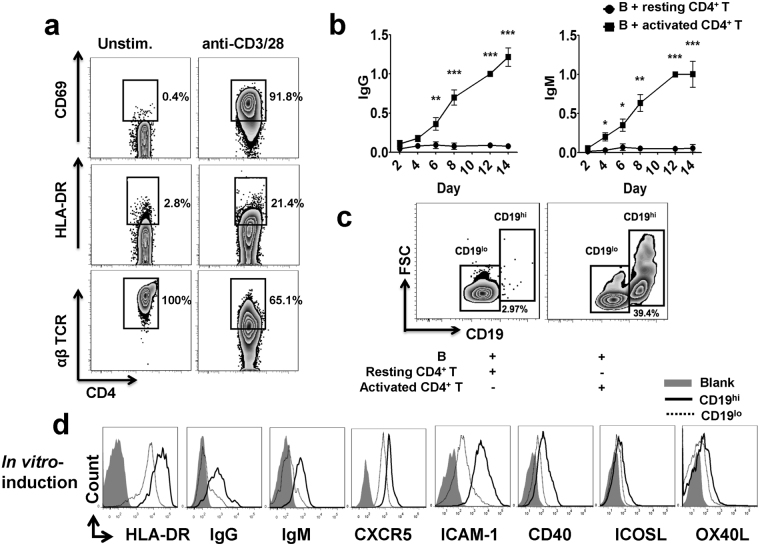
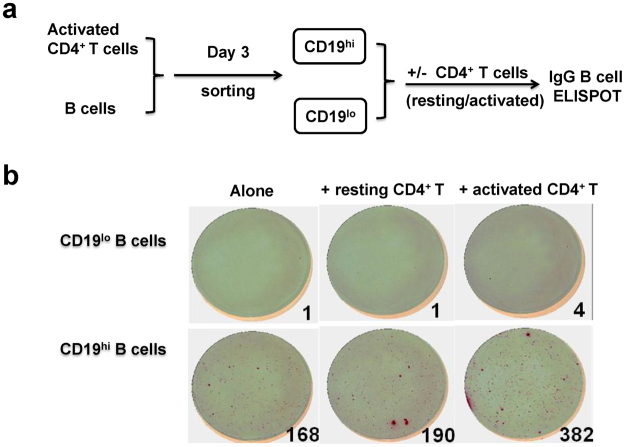
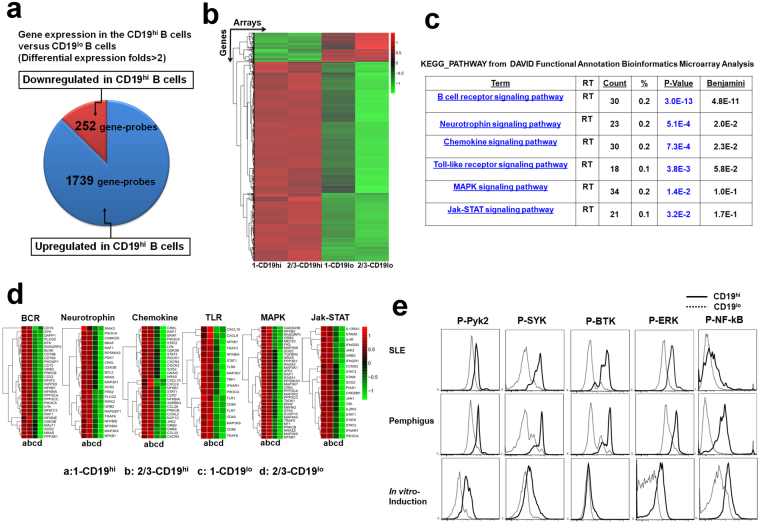
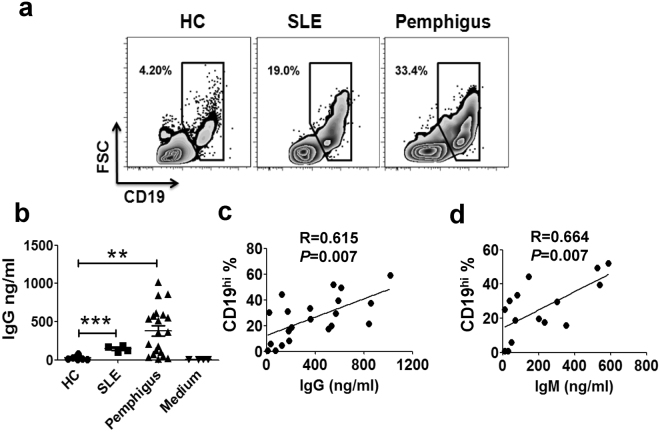
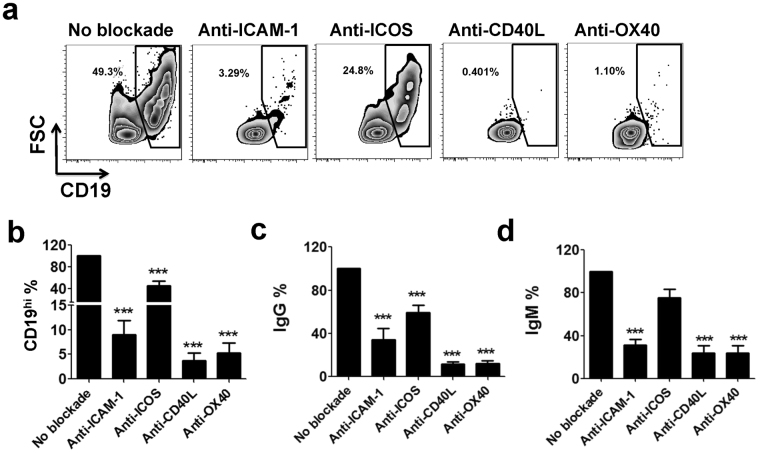
Systemic Lupus Erythematosus (SLE) and pemphigus are two representative autoimmune diseases driven by pathogenic autoantibody systemically and organ-specifically, respectively. Given the involvement of antibody in the pathogenesis, B cells are inclined to differentiate and function in an abnormal activation model. Here we defined a unique CD19 B cell population existing in the periphery of SLE and pemphigus patients as well as in human tonsils. CD19 B cells could be induced in vitro after co-culturing fully activated CD4 T cells with autologous B cells. They expressed high levels of HLA-DR, IgG, IgM and multiple ligands of costimulatory molecules with the capacity to produce extra IgG and IgM. Transcirptome assay revealed that genes involved in B-cell activation and differentiation were up-regulated in CD19 B cells. Antibody blockade experiments showed that the interactions between costimulatory molecules contributed to CD19 B-cell generation and IgG/IgM production. What is more, frequencies of peripheral CD19 B cells from SLE and pemphigus patients were correlated with serum total IgG and IgM, but not with autoantigen-specific antibodies and disease severity. Therefore, our investigation demonstrates that CD19 B cells might contain B cell precursors for terminal differentiation and contribute to total IgG/IgM production in human autoimmune diseases.
系统性红斑狼疮(SLE)和天疱疮是两种代表性的自身免疫性疾病,分别由致病性自身抗体在全身和器官特异性驱动。鉴于抗体在发病机制中的参与,B 细胞倾向于以异常激活的模式分化和功能。在这里,我们定义了一种独特的 CD19 B 细胞群体,存在于 SLE 和天疱疮患者以及人扁桃体的外周血中。在将完全激活的 CD4 T 细胞与自体 B 细胞共培养后,可在体外诱导 CD19 B 细胞。它们表达高水平的 HLA-DR、IgG、IgM 和多种共刺激分子配体,具有产生额外 IgG 和 IgM 的能力。转录组分析显示,CD19 B 细胞中参与 B 细胞激活和分化的基因上调。抗体阻断实验表明,共刺激分子之间的相互作用有助于 CD19 B 细胞的产生和 IgG/IgM 的产生。更重要的是,SLE 和天疱疮患者外周血 CD19 B 细胞的频率与血清总 IgG 和 IgM 相关,但与自身抗原特异性抗体和疾病严重程度无关。因此,我们的研究表明,CD19 B 细胞可能包含终末分化的 B 细胞前体,并有助于人类自身免疫性疾病中总 IgG/IgM 的产生。