Narr Anja, Nawaz Ali, Wick Lukas Y, Harms Hauke, Chatzinotas Antonis
Department of Environmental Microbiology, Helmholtz Centre for Environmental Research-UFZ, Leipzig, Germany.
Department of Soil Ecology, Helmholtz Centre for Environmental Research-UFZ, Halle/Saale, Germany.
Front Microbiol. 2017 Oct 10;8:1975. doi: 10.3389/fmicb.2017.01975. eCollection 2017.
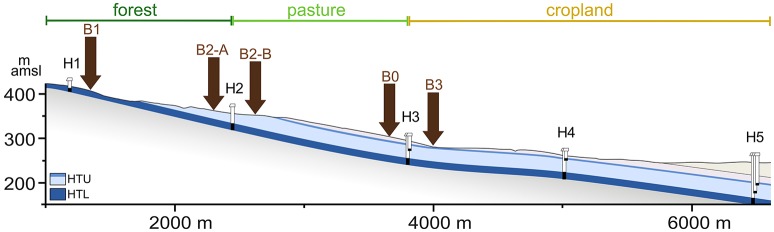
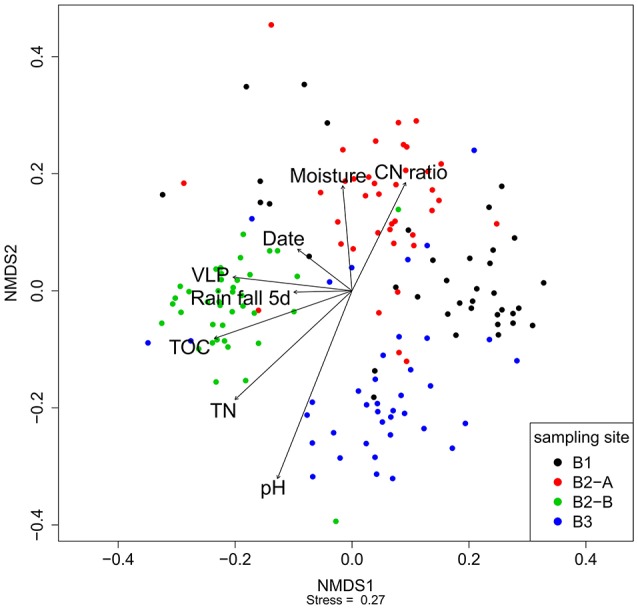
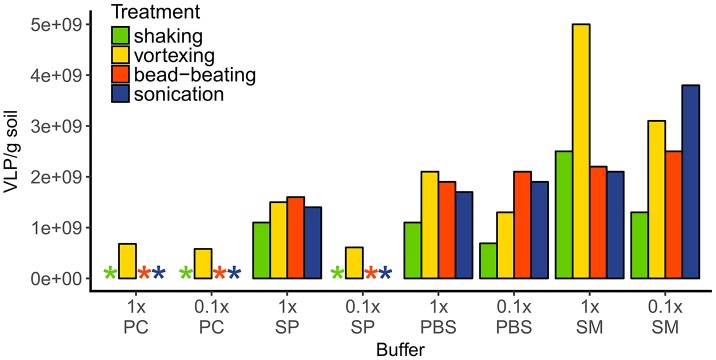
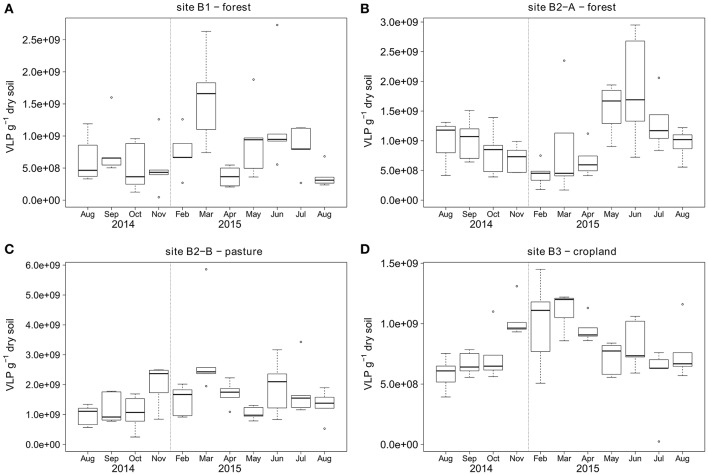
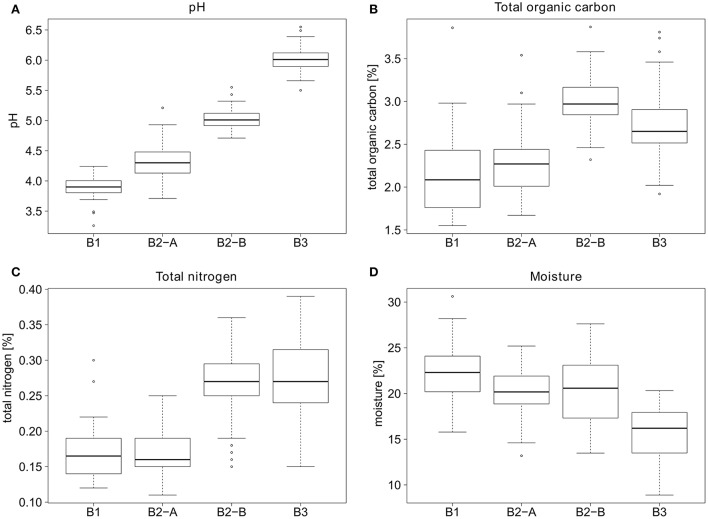
Environmental surveys on soil viruses are still rare and mostly anecdotal, i. e., they mostly report on viruses at one location or for only a few sampling dates. Detailed time-series analysis with multiple samples can reveal the spatio-temporal dynamics of viral communities and provide important input as to how viruses interact with their potential hosts and the environment. Such surveys, however, require fast, easy-to-apply and reliable methods. In the present study we surveyed monthly across 13 months the abundance of virus-like particles (VLP) and the structure of the viral communities in soils along a land use transect (i.e., forest, pasture, and cropland). We evaluated 32 procedures to extract VLP from soil using different buffers and mechanical methods. The most efficient extraction was achieved with 1× saline magnesium buffer in combination with 20 min vortexing. For community structure analysis we developed an optimized fingerprinting approach (fluorescent RAPD-PCR; fRAPD) by combining RAPD-PCR with fluorescently labeled primers in order to size the obtained fragments on a capillary sequencing machine. With the concomitantly collected data of soil specific factors and weather data, we were able to find correlations of viral abundance and community structure with environmental variables and sampling site. More specifically, we found that soil specific factors such as pH and total nitrogen content played a significant role in shaping both soil viral abundance and community structure. The fRAPD analysis revealed high temporal changes and clustered the viral communities according to sampling sites. In particular we observed that temperature and rainfall shaped soil viral communities in non-forest sites. In summary our findings suggest that sampling site was a key factor for shaping the abundance and community structure of soil viruses, and when site vegetation was reduced, temperature and rainfall were also important factors.
关于土壤病毒的环境调查仍然很少,而且大多是零散的,也就是说,这些调查大多只报告一个地点或仅几个采样日期的病毒情况。对多个样本进行详细的时间序列分析可以揭示病毒群落的时空动态,并为病毒如何与其潜在宿主和环境相互作用提供重要信息。然而,这样的调查需要快速、易于应用且可靠的方法。在本研究中,我们在13个月的时间里每月对沿土地利用样带(即森林、牧场和农田)的土壤中类病毒颗粒(VLP)的丰度和病毒群落结构进行了调查。我们评估了32种使用不同缓冲液和机械方法从土壤中提取VLP的程序。使用1×盐镁缓冲液并结合20分钟涡旋处理可实现最有效的提取。对于群落结构分析,我们通过将随机扩增多态性DNA聚合酶链反应(RAPD-PCR)与荧光标记引物相结合,开发了一种优化的指纹图谱方法(荧光RAPD-PCR;fRAPD),以便在毛细管测序仪上对获得的片段进行大小测定。通过同时收集的土壤特定因素数据和气象数据,我们能够发现病毒丰度和群落结构与环境变量及采样地点之间的相关性。更具体地说,我们发现土壤特定因素如pH值和总氮含量在塑造土壤病毒丰度和群落结构方面都起着重要作用。fRAPD分析揭示了病毒群落的高度时间变化,并根据采样地点进行了聚类。特别是我们观察到温度和降雨在非森林地点塑造了土壤病毒群落。总之,我们的研究结果表明,采样地点是塑造土壤病毒丰度和群落结构的关键因素,当场地植被减少时,温度和降雨也是重要因素。