Eli and Edythe Broad Center for Regenerative Medicine and Stem Cell Research, University of Southern California, Los Angeles, United States.
Lakeland Applied Sciences LLC, Altadena, United States.
Elife. 2017 Oct 25;6:e29144. doi: 10.7554/eLife.29144.
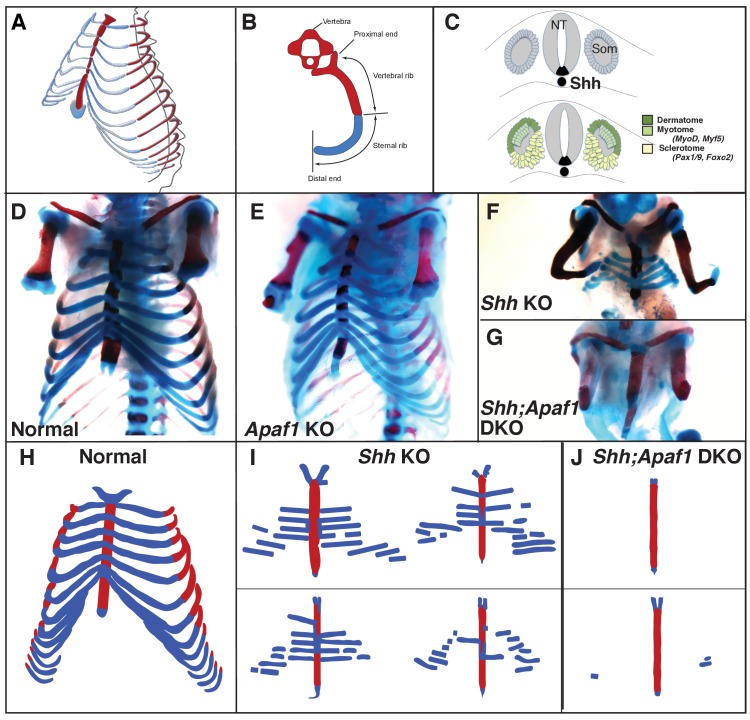
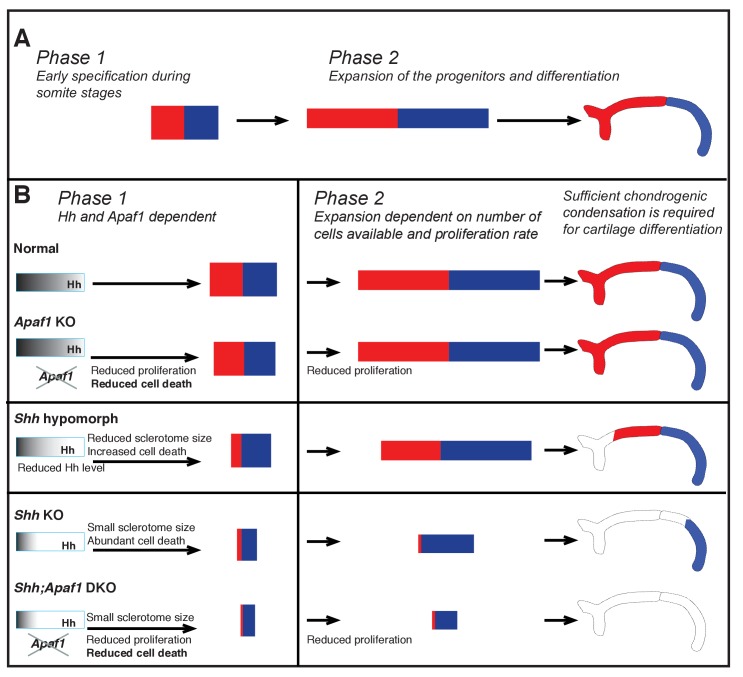
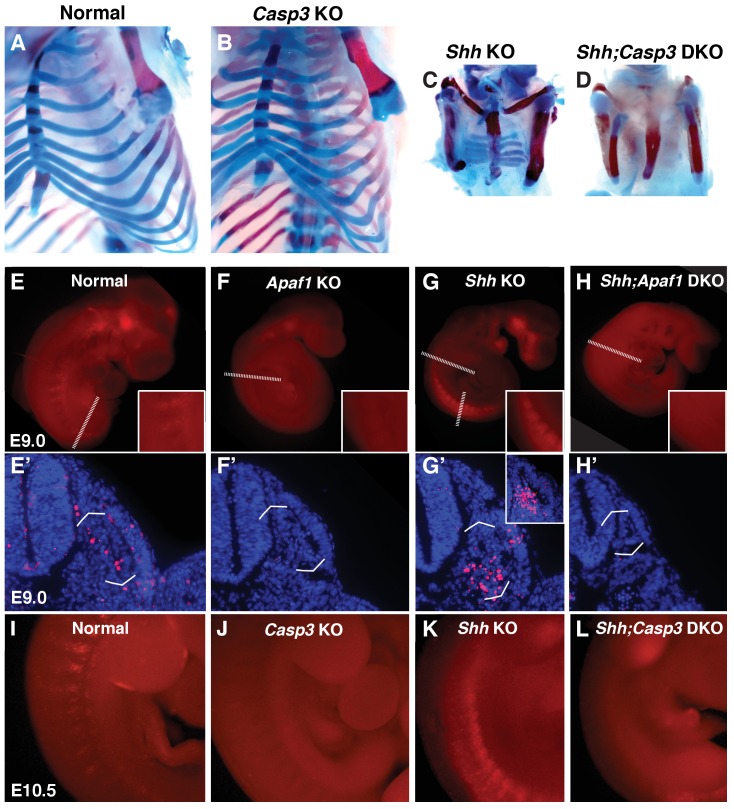
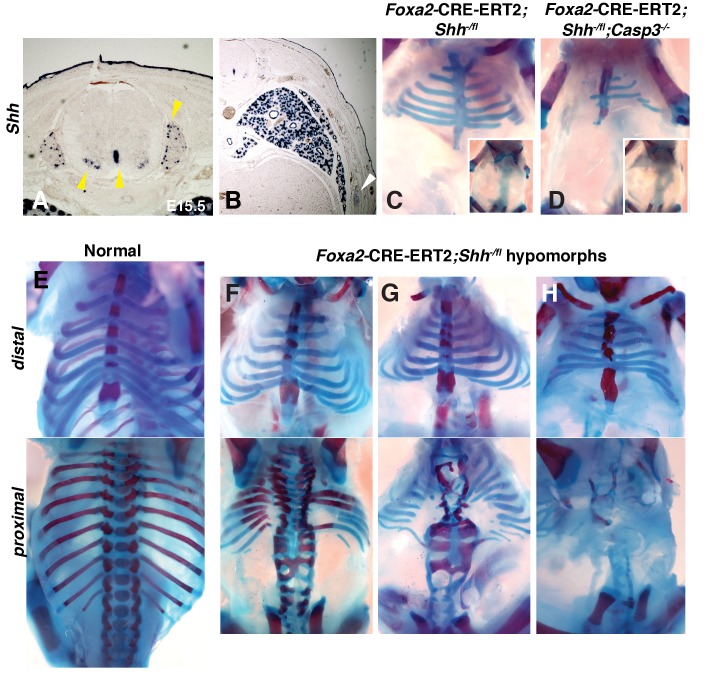
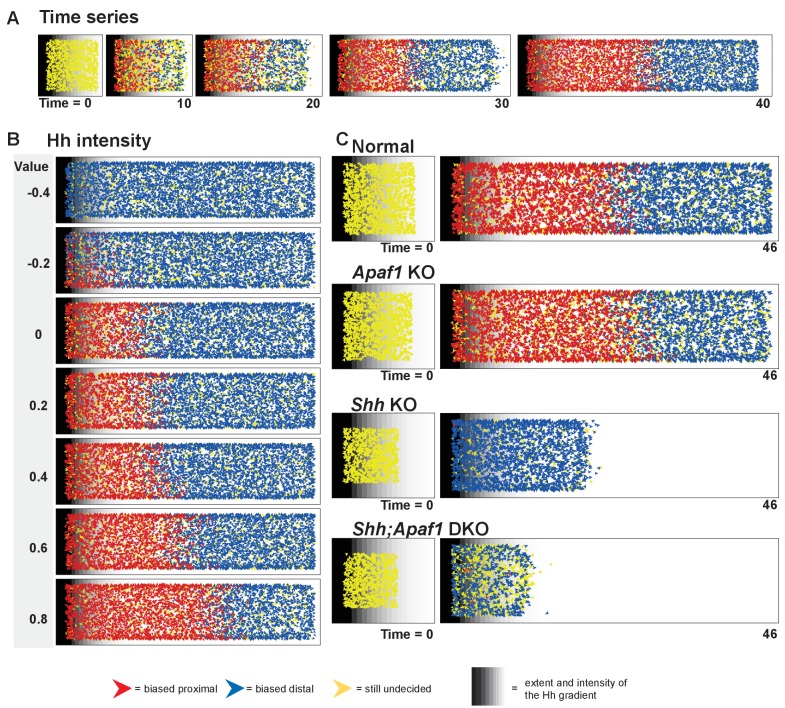
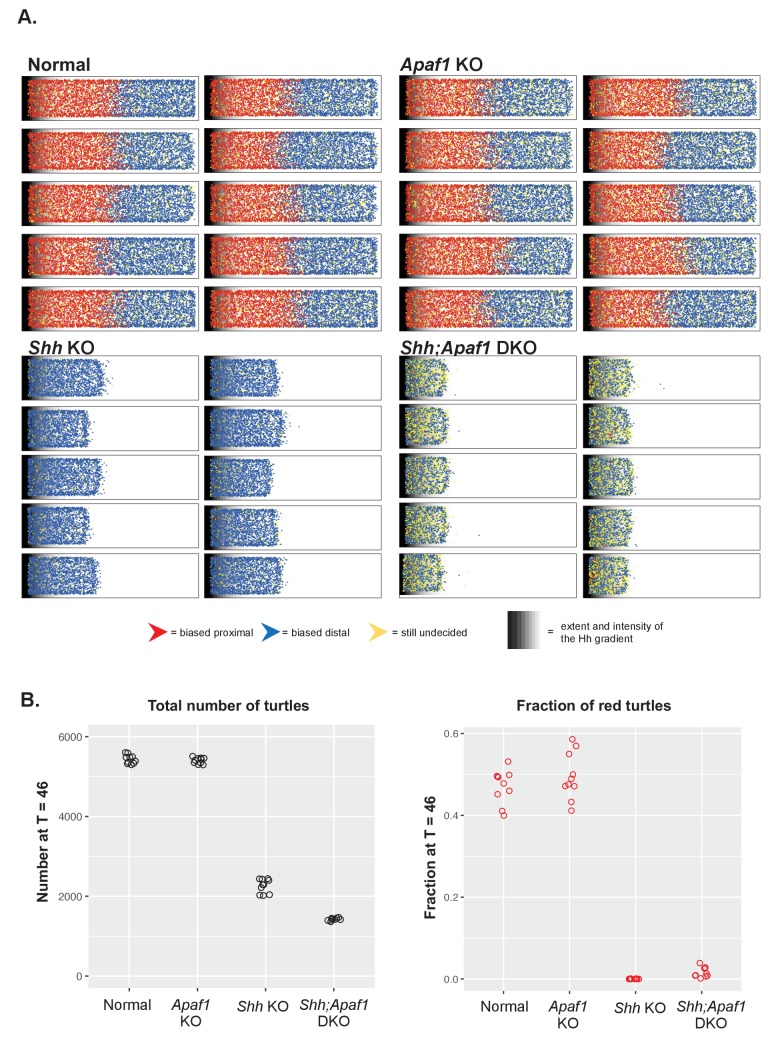
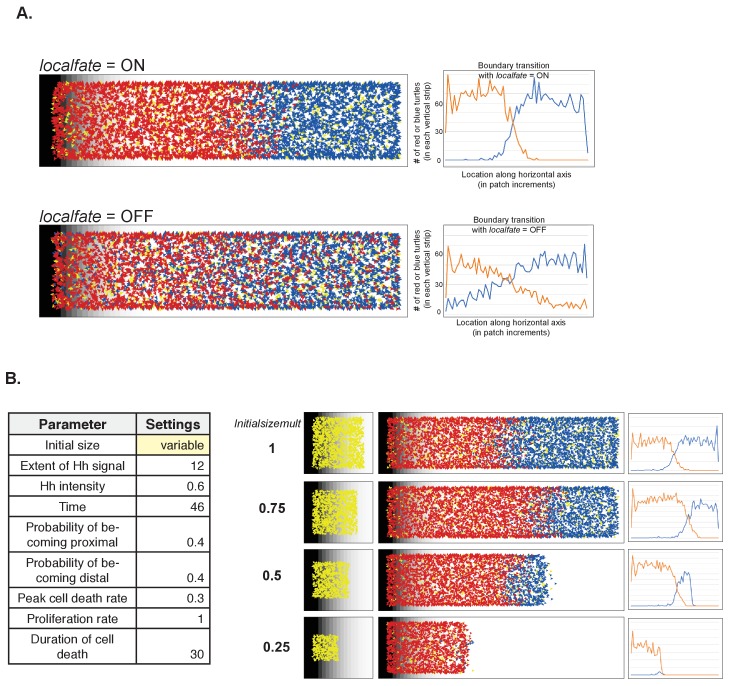
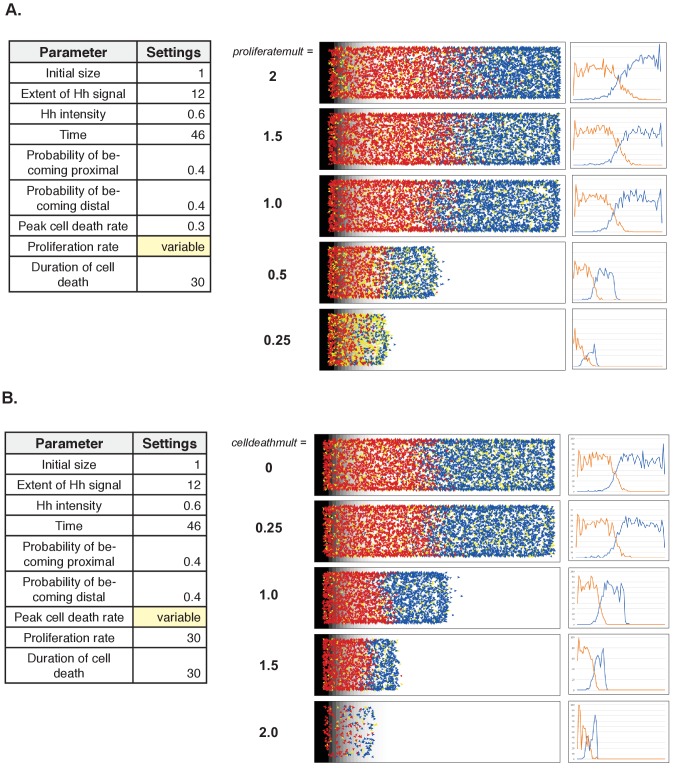
For decades, the mechanism of skeletal patterning along a proximal-distal axis has been an area of intense inquiry. Here, we examine the development of the ribs, simple structures that in most terrestrial vertebrates consist of two skeletal elements-a proximal bone and a distal cartilage portion. While the ribs have been shown to arise from the somites, little is known about how the two segments are specified. During our examination of genetically modified mice, we discovered a series of progressively worsening phenotypes that could not be easily explained. Here, we combine genetic analysis of rib development with agent-based simulations to conclude that proximal-distal patterning and outgrowth could occur based on simple rules. In our model, specification occurs during somite stages due to varying Hedgehog protein levels, while later expansion refines the pattern. This framework is broadly applicable for understanding the mechanisms of skeletal patterning along a proximal-distal axis.
几十年来,沿着近-远轴的骨骼模式形成的机制一直是一个研究热点。在这里,我们研究了肋骨的发育,肋骨是一种简单的结构,在大多数陆地脊椎动物中由两个骨骼元素组成-一个近端骨骼和一个远端软骨部分。虽然肋骨已经被证明是从体节中产生的,但对于如何指定这两个部分知之甚少。在对基因修饰小鼠的研究中,我们发现了一系列逐渐恶化的表型,这些表型很难用简单的解释来解释。在这里,我们结合肋骨发育的遗传分析和基于主体的模拟,得出结论,近-远模式形成和生长可以基于简单的规则发生。在我们的模型中,由于 Hedgehog 蛋白水平的变化,在体节阶段就发生了指定,而后期的扩展则细化了模式。这个框架广泛适用于理解沿近-远轴的骨骼模式形成的机制。