Serowoky Maxwell A, Kuwahara Stephanie T, Liu Shuwan, Vakhshori Venus, Lieberman Jay R, Mariani Francesca V
Department of Stem Cell Biology and Regenerative Medicine, Keck School of Medicine, University of Southern California, 1425 San Pablo Street, Los Angeles, CA, 90089, USA.
Department of Orthopaedic Surgery, Keck School of Medicine, University of Southern California, 1520 San Pablo Street, Los Angeles, CA, 90089, USA.
NPJ Regen Med. 2022 May 17;7(1):30. doi: 10.1038/s41536-022-00225-8.
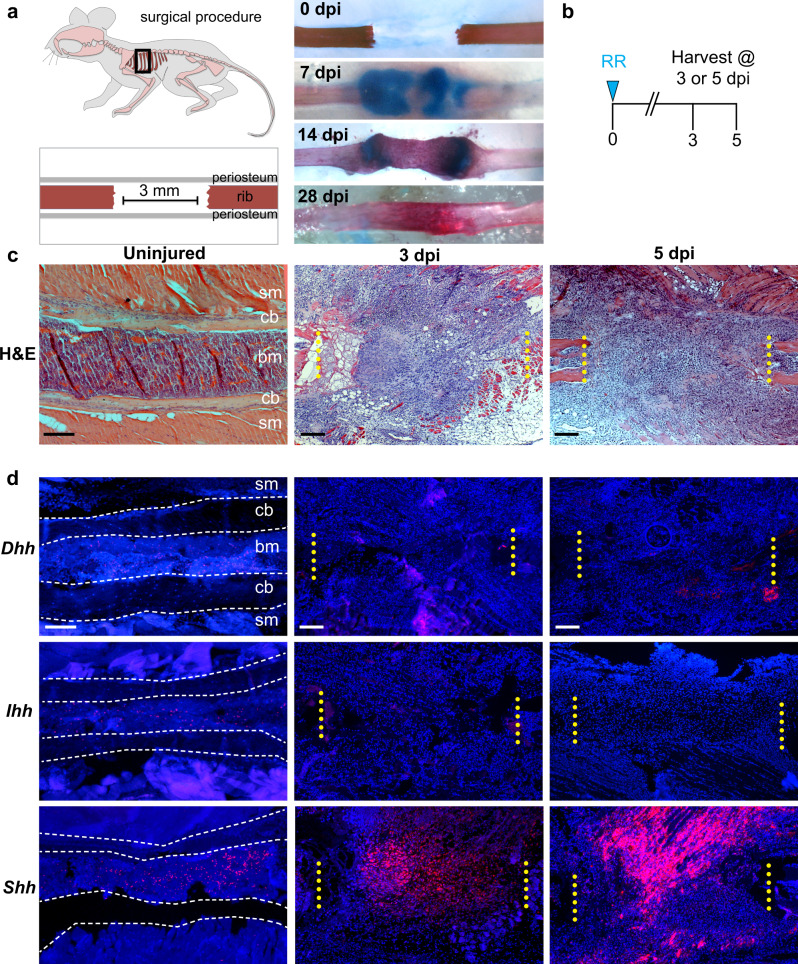
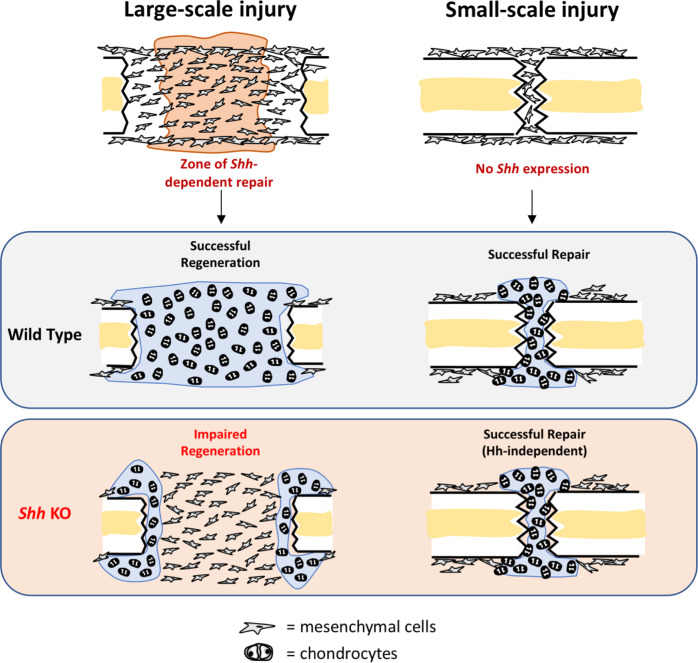
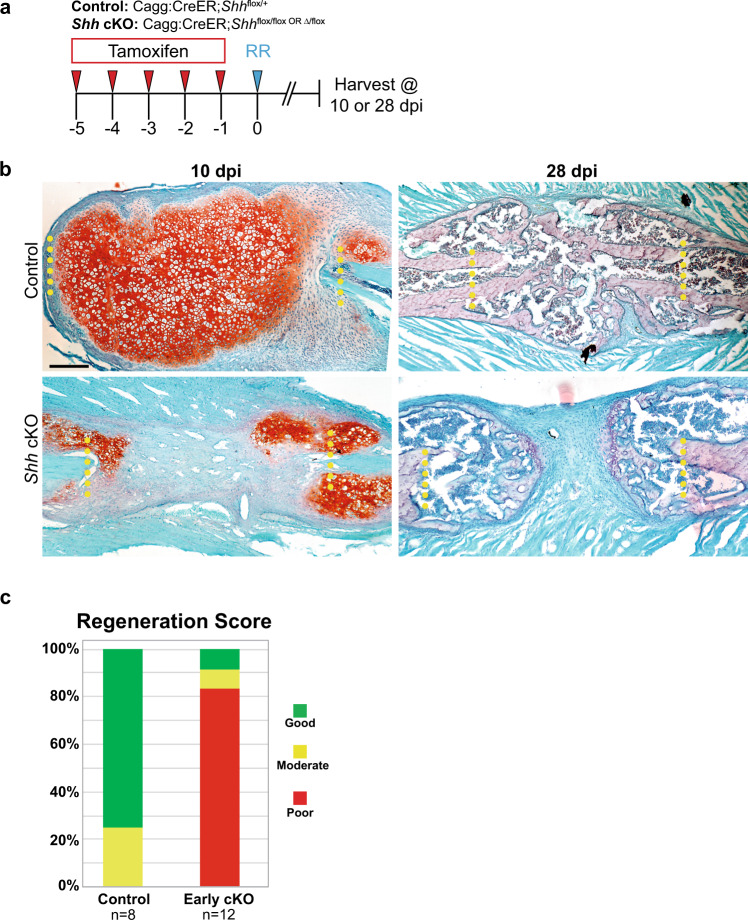
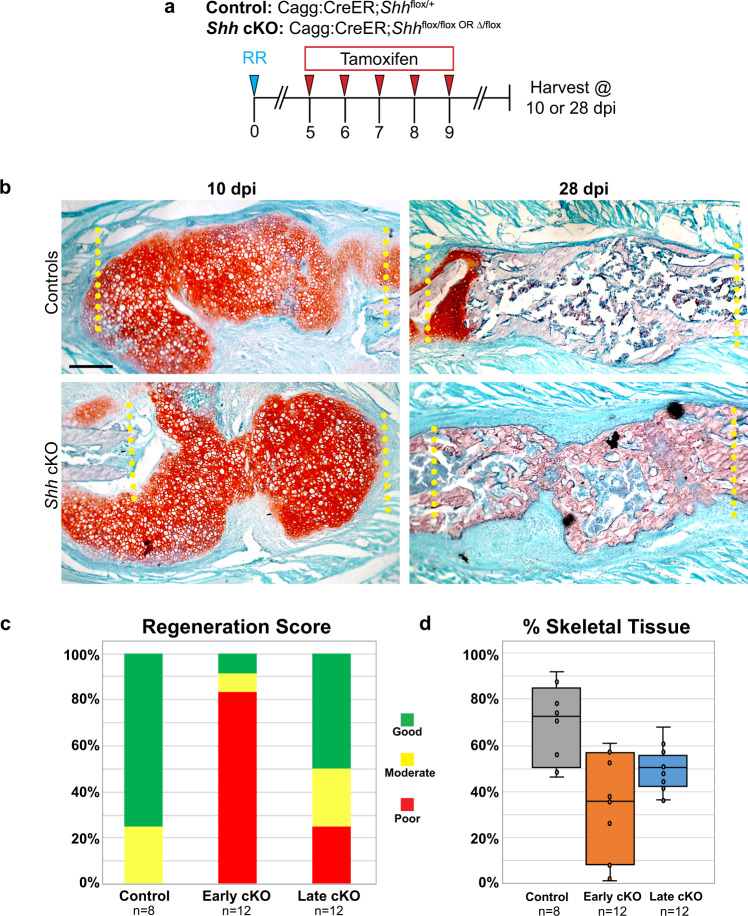
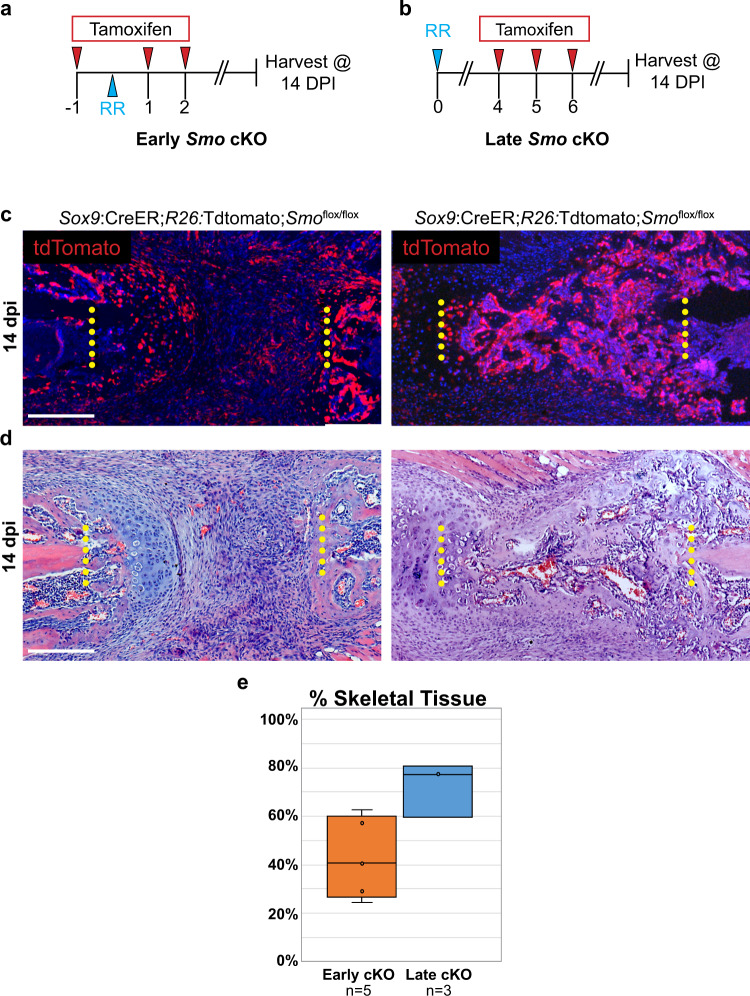
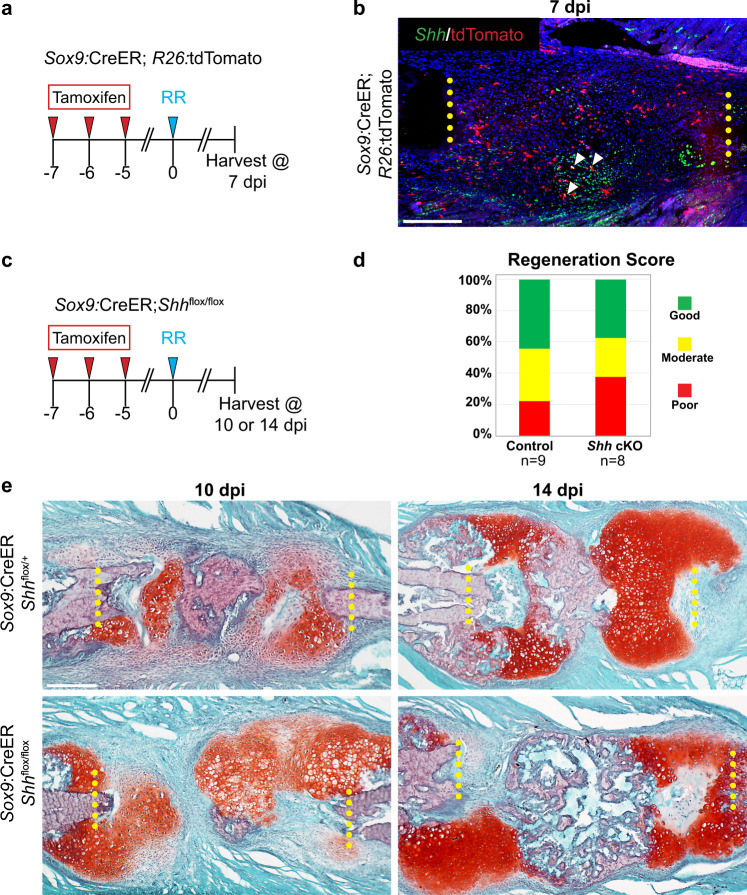
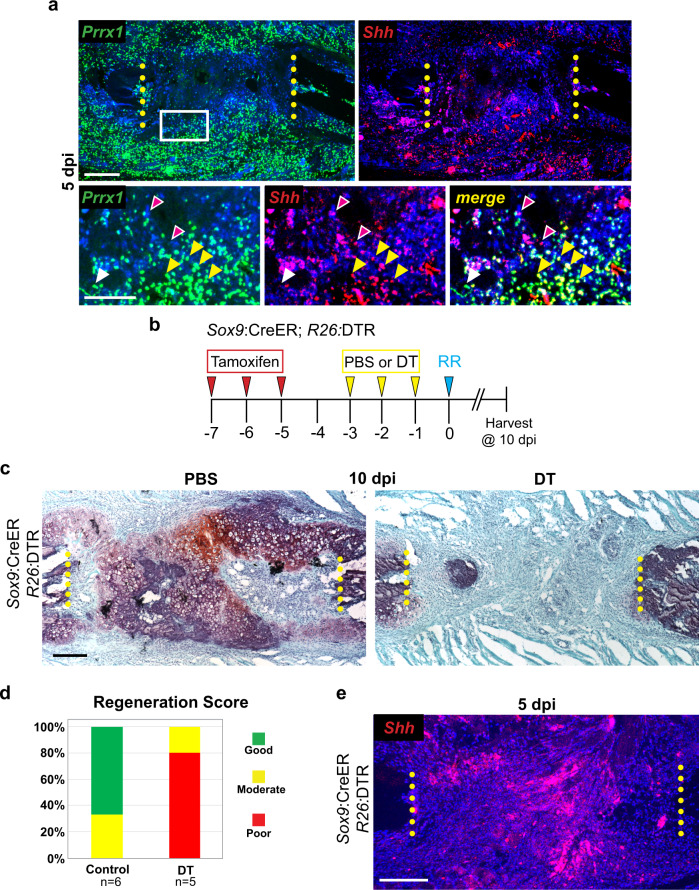
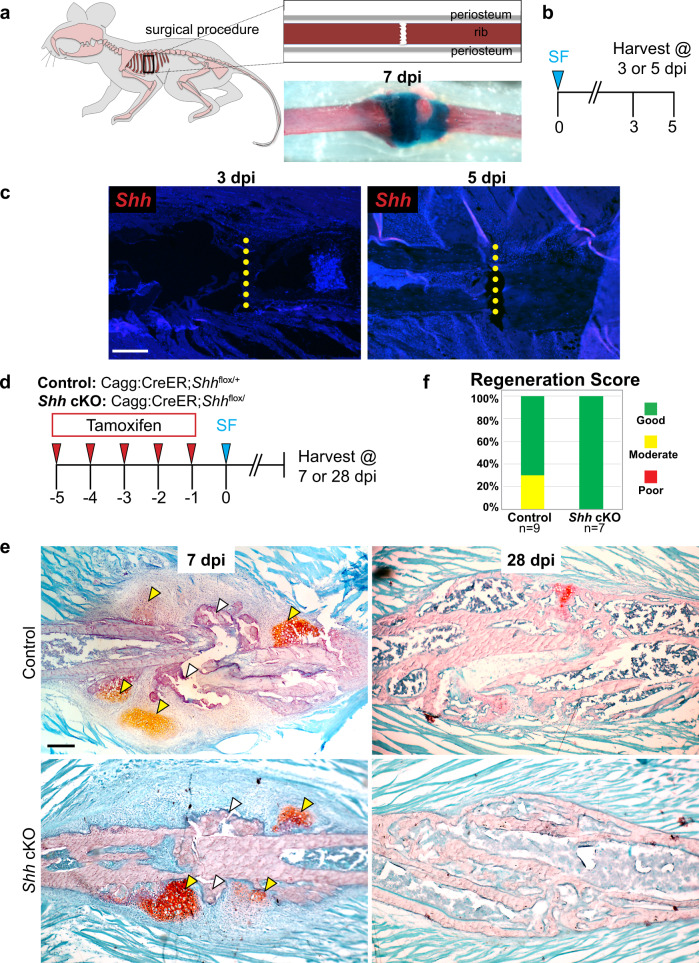
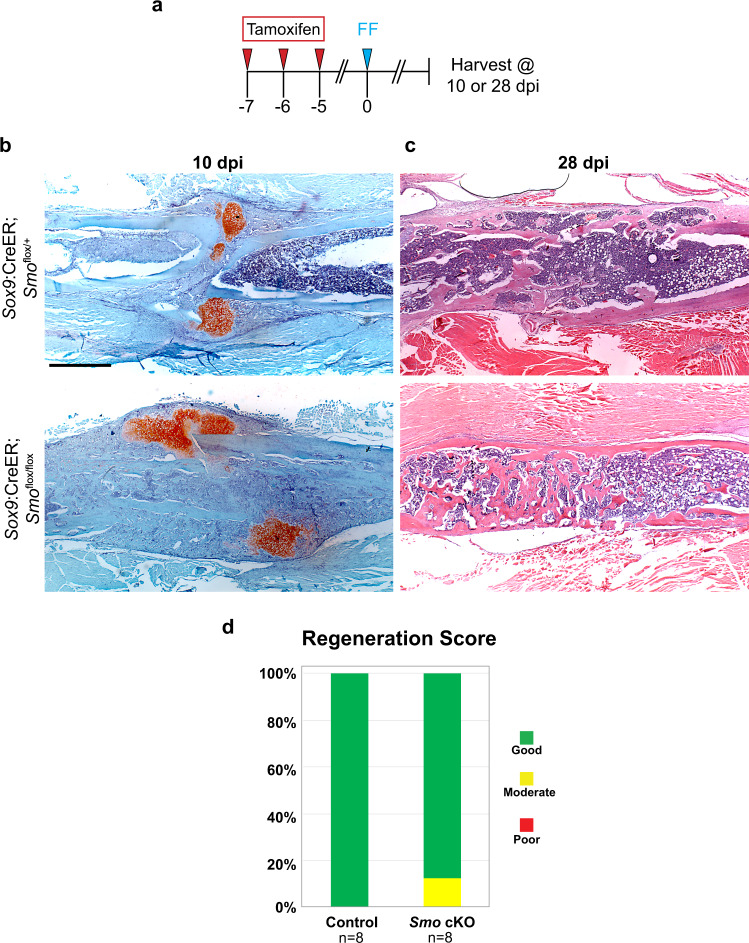
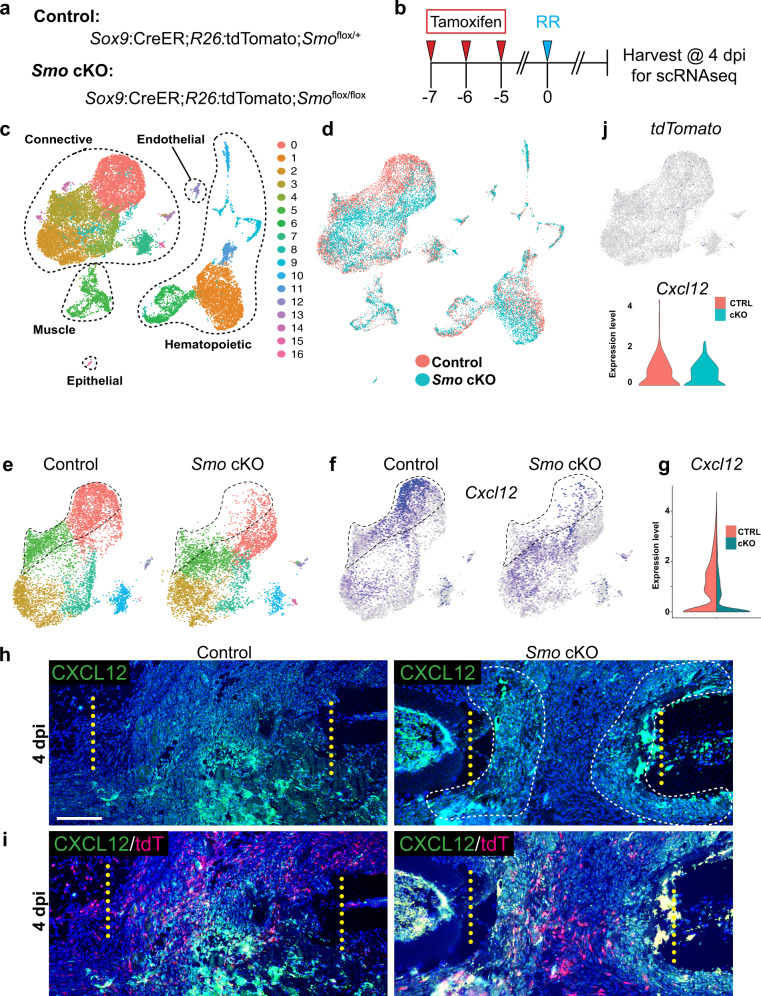
Building and maintaining skeletal tissue requires the activity of skeletal stem and progenitor cells (SSPCs). Following injury, local pools of these SSPCs become active and coordinate to build new cartilage and bone tissues. While recent studies have identified specific markers for these SSPCs, how they become activated in different injury contexts is not well-understood. Here, using a model of large-scale rib bone regeneration in mice, we demonstrate that the growth factor, Sonic Hedgehog (SHH), is an early and essential driver of large-scale bone healing. Shh expression is broadly upregulated in the first few days following rib bone resection, and conditional knockout of Shh at early but not late post-injury stages severely inhibits cartilage callus formation and later bone regeneration. Whereas Smoothened (Smo), a key transmembrane component of the Hh pathway, is required in Sox9+ lineage cells for rib regeneration, we find that Shh is required in a Prrx1-expressing, Sox9-negative mesenchymal population. Intriguingly, upregulation of Shh expression and requirements for Shh and Smo may be unique to large-scale injuries, as they are dispensable for both complete rib and femur fracture repair. In addition, single-cell RNA sequencing of callus tissue from animals with deficient Hedgehog signaling reveals a depletion of Cxcl12-expressing cells, which may indicate failed recruitment of Cxcl12-expressing SSPCs during the regenerative response. These results reveal a mechanism by which Shh expression in the local injury environment unleashes large-scale regenerative abilities in the murine rib.
构建和维持骨骼组织需要骨骼干细胞和祖细胞(SSPCs)的活动。受伤后,这些SSPCs的局部细胞群会变得活跃并协同构建新的软骨和骨组织。虽然最近的研究已经确定了这些SSPCs的特定标志物,但它们在不同损伤情况下如何被激活尚不清楚。在这里,我们使用小鼠大规模肋骨再生模型,证明生长因子音猬因子(SHH)是大规模骨愈合的早期关键驱动因素。肋骨切除后的头几天,Shh表达广泛上调,在损伤后早期而非晚期条件性敲除Shh会严重抑制软骨痂形成和随后的骨再生。虽然Hh信号通路的关键跨膜成分Smoothened(Smo)在Sox9+谱系细胞中对肋骨再生是必需的,但我们发现Shh在表达Prrx1、Sox9阴性的间充质细胞群中是必需的。有趣的是,Shh表达的上调以及对Shh和Smo的需求可能是大规模损伤所特有的,因为它们对于完全肋骨和股骨骨折修复都是可有可无的。此外,对刺猬信号通路缺陷动物的痂组织进行单细胞RNA测序发现,表达Cxcl12的细胞减少,这可能表明在再生反应过程中表达Cxcl12的SSPCs招募失败。这些结果揭示了一种机制,即局部损伤环境中的Shh表达释放了小鼠肋骨的大规模再生能力。