Laboratorio de Patogénesis e Inmunología de Procesos Infecciosos, Instituto de Medicina Experimental, Consejo Nacional de Investigaciones Científicas y Técnicas-Academia Nacional de Medicina, 1425 Buenos Aires, Argentina.
Laboratorio de Fisiopatogenia, Departamento de Fisiología, Instituto de Fisiología y Biofísica "Bernardo Houssay", Facultad de Medicina-Consejo Nacional de Investigaciones Científicas y Técnicas, Universidad de Buenos Aires, 1121 Buenos Aires, Argentina.
Toxins (Basel). 2017 Oct 25;9(11):331. doi: 10.3390/toxins9110331.
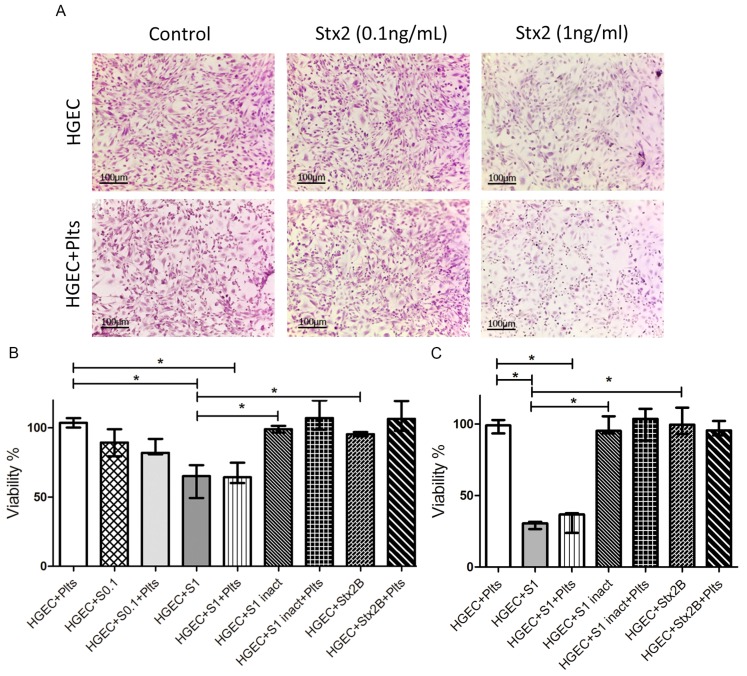
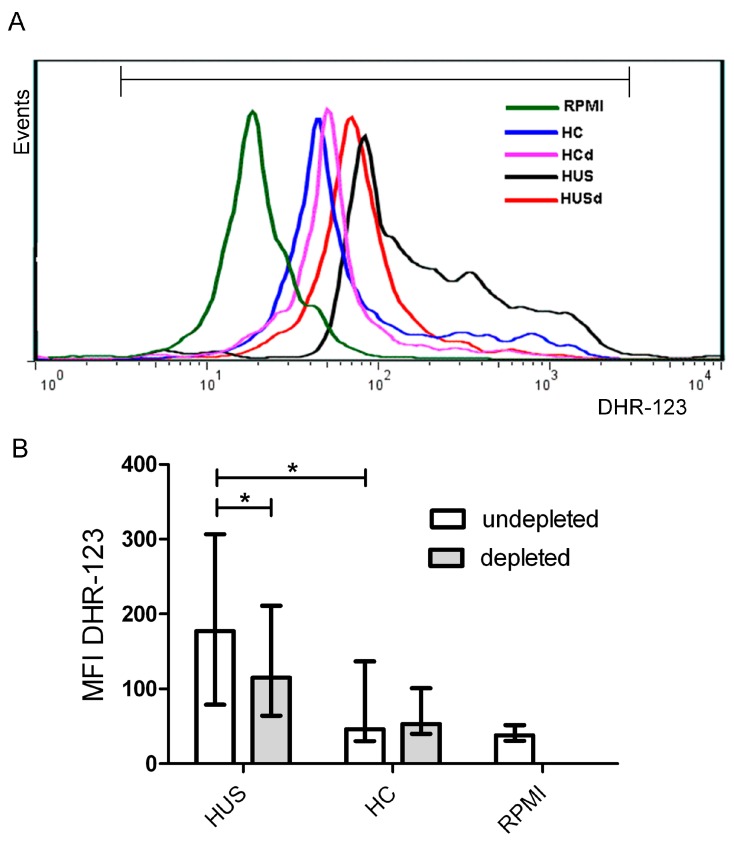
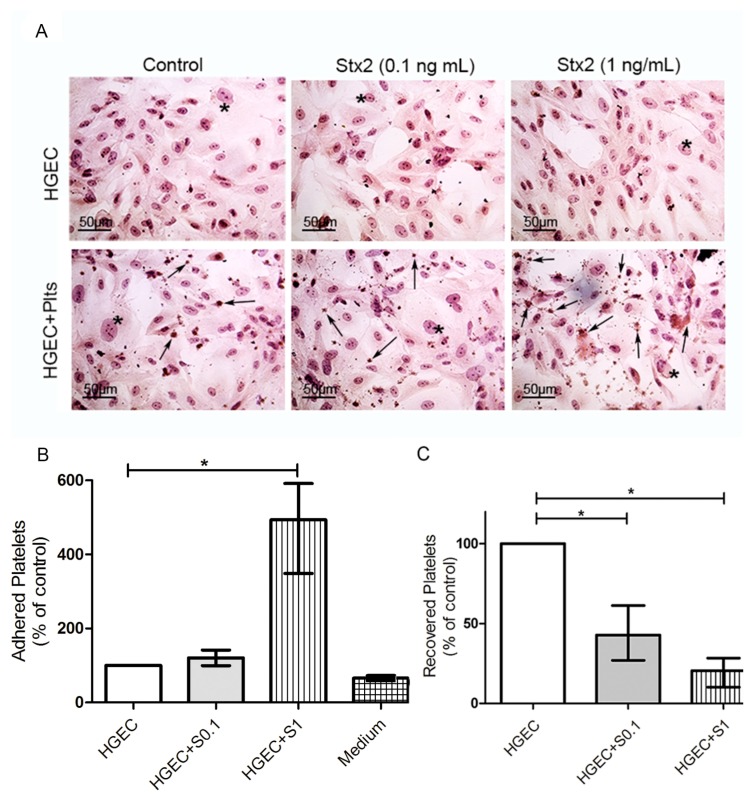
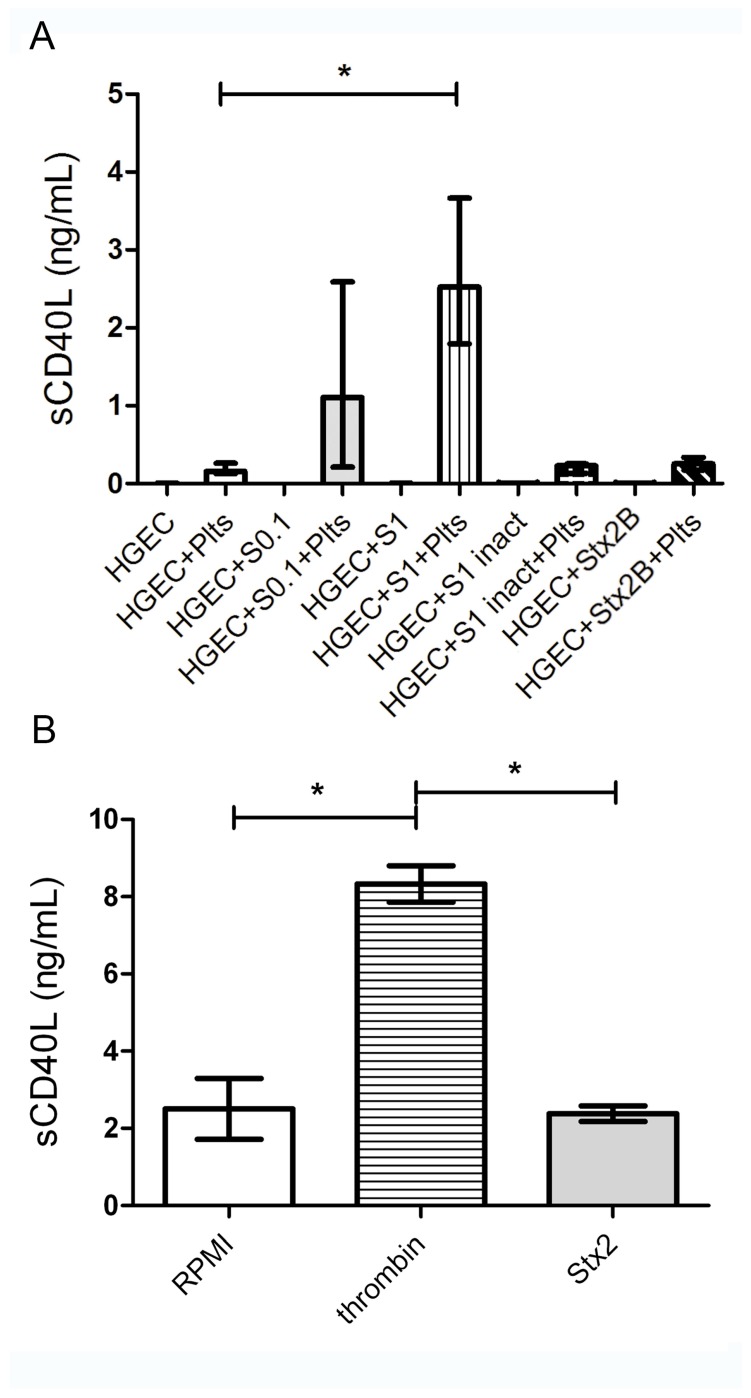
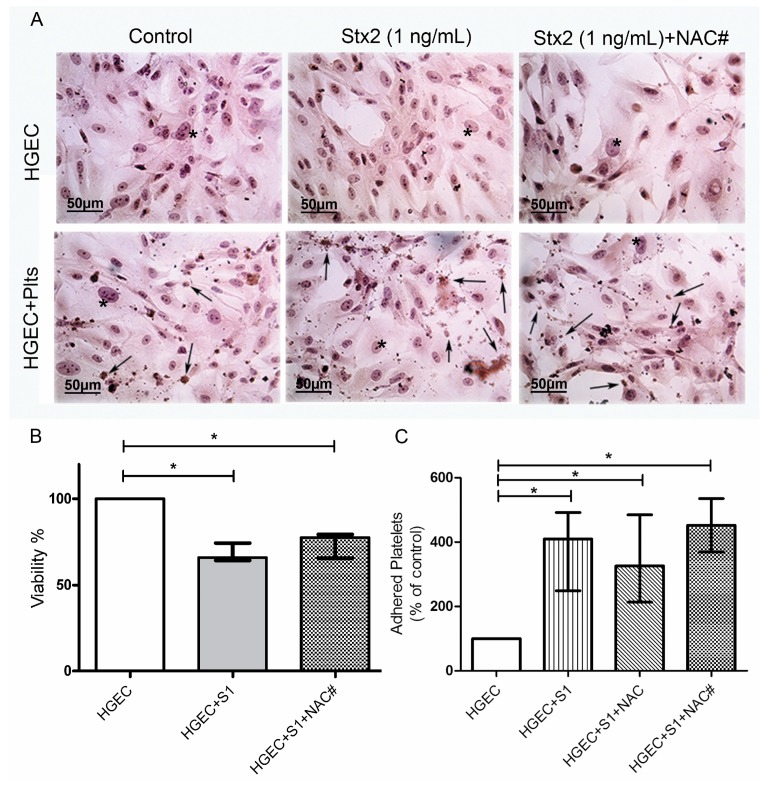
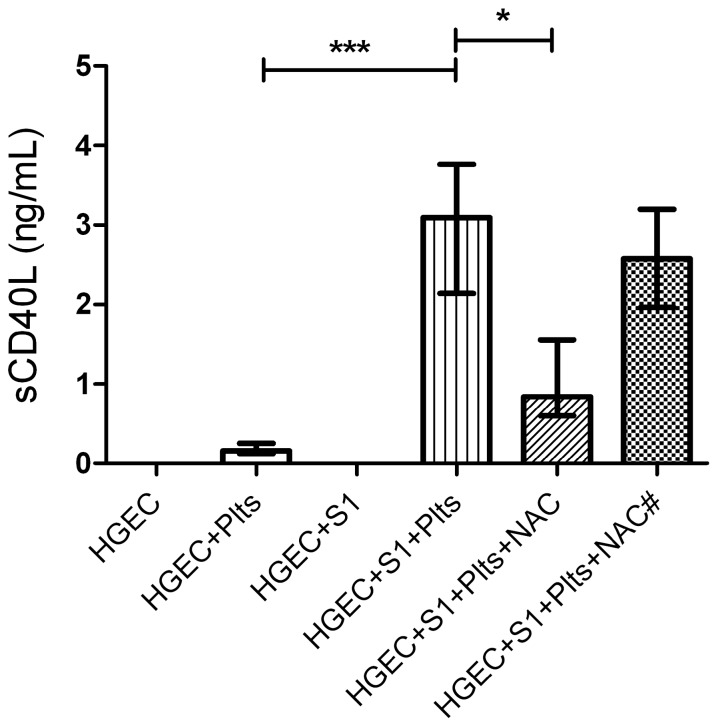
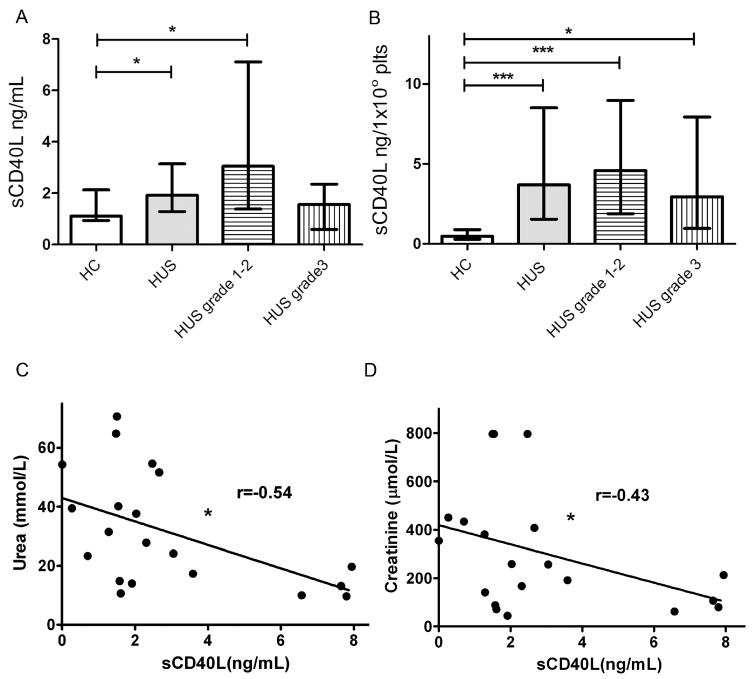
Shiga toxin (Stx), produced by , is the main pathogenic factor of diarrhea-associated hemolytic uremic syndrome (HUS), which is characterized by the obstruction of renal microvasculature by platelet-fibrin thrombi. It is well known that the oxidative imbalance generated by Stx induces platelet activation, contributing to thrombus formation. Moreover, activated platelets release soluble CD40 ligand (sCD40L), which in turn contributes to oxidative imbalance, triggering the release of reactive oxidative species (ROS) on various cellular types. The aim of this work was to determine if the interaction between the oxidative response and platelet-derived sCD40L, as consequence of Stx-induced endothelium damage, participates in the pathogenic mechanism during HUS. Activated human glomerular endothelial cells (HGEC) by Stx2 induced platelets to adhere to them. Although platelet adhesion did not contribute to endothelial damage, high levels of sCD40L were released to the medium. The release of sCD40L by activated platelets was inhibited by antioxidant treatment. Furthermore, we found increased levels of sCD40L in plasma from HUS patients, which were also able to trigger the respiratory burst in monocytes in a sCD40L-dependent manner. Thus, we concluded that platelet-derived sCD40L and the oxidative response are reciprocally stimulated during Stx2-associated HUS. This process may contribute to the evolution of glomerular occlusion and the microangiopathic lesions.
志贺毒素(Stx)由 产生,是腹泻相关溶血尿毒综合征(HUS)的主要致病因子,其特征是血小板-纤维蛋白血栓阻塞肾微血管。众所周知,Stx 产生的氧化失衡会诱导血小板活化,导致血栓形成。此外,活化的血小板释放可溶性 CD40 配体(sCD40L),这反过来又会导致氧化失衡,触发各种细胞类型释放活性氧化物质(ROS)。本工作旨在确定 Stx 诱导的内皮损伤引起的氧化反应和血小板衍生的 sCD40L 之间的相互作用是否参与 HUS 发病机制。Stx2 激活的人肾小球内皮细胞(HGEC)可诱导血小板黏附于其上。尽管血小板黏附不会导致内皮损伤,但会有大量 sCD40L 释放到培养基中。抗氧化剂处理可抑制活化血小板释放 sCD40L。此外,我们发现 HUS 患者血浆中 sCD40L 水平升高,并且 sCD40L 还可以依赖 sCD40L 的方式触发单核细胞的呼吸爆发。因此,我们得出结论,血小板衍生的 sCD40L 和氧化反应在 Stx2 相关的 HUS 中是相互刺激的。这个过程可能有助于肾小球闭塞和微血管病变的进展。