Biomedical Dept of Internal and Specialistic Medicine (DiBiMIS), University of Palermo, Palermo, Italy
Institute of Biomedicine and Molecular Immunology (IBIM), National Research Council (CNR), Palermo, Italy.
Eur Respir Rev. 2017 Oct 25;26(146). doi: 10.1183/16000617.0069-2017. Print 2017 Dec 31.
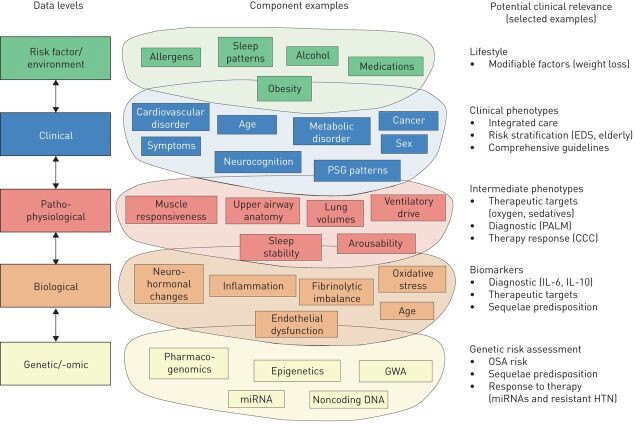
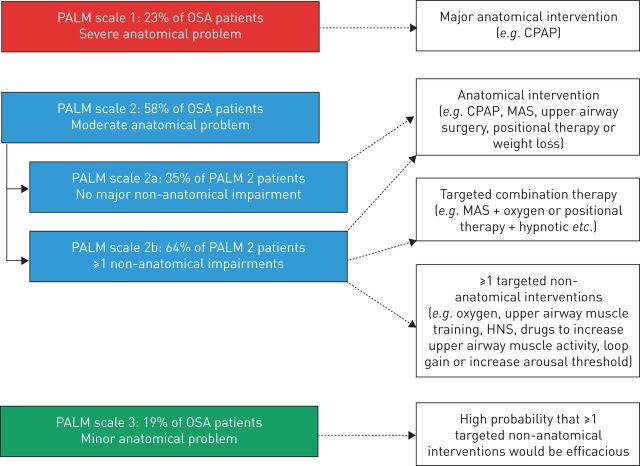
In all fields of medicine, major efforts are currently dedicated to improve the clinical, physiological and therapeutic understanding of disease, and obstructive sleep apnoea (OSA) is no exception. The personalised medicine approach is relevant for OSA, given its complex pathophysiology and variable clinical presentation, the interactions with comorbid conditions and its possible contribution to poor outcomes. Treatment with continuous positive airway pressure (CPAP) is effective, but CPAP is poorly tolerated or not accepted in a considerable proportion of OSA patients. This review summarises the available studies on the physiological phenotypes of upper airway response to obstruction during sleep, and the clinical presentations of OSA (phenotypes and clusters) with a special focus on our changing attitudes towards approaches to treatment. Such major efforts are likely to change and expand treatment options for OSA beyond the most common current choices ( CPAP, mandibular advancement devices, positional treatment, lifestyle changes or upper airway surgery). More importantly, treatment for OSA may become more effective, being tailored to each patient's need.
在医学的各个领域,人们目前都在努力提高对疾病的临床、生理和治疗的理解,阻塞性睡眠呼吸暂停(OSA)也不例外。鉴于其复杂的病理生理学和不同的临床表现、与合并症的相互作用以及对不良结局的可能贡献,个性化医疗方法与 OSA 相关。持续气道正压通气(CPAP)治疗有效,但相当一部分 OSA 患者对 CPAP 耐受性差或无法接受。这篇综述总结了关于睡眠期间上气道对阻塞反应的生理表型以及 OSA 的临床表现(表型和聚类)的现有研究,特别关注我们对治疗方法的态度变化。这些努力很可能会改变和扩大 OSA 的治疗选择,超出目前最常见的选择(CPAP、下颌前伸装置、体位治疗、生活方式改变或上气道手术)。更重要的是,OSA 的治疗可能会更加有效,根据每个患者的需要进行定制。