Department of Neurology, University of Ulm, Germany.
Neuroimaging Research Unit, Institute of Experimental Neurology, Division of Neuroscience, San Raffaele Scientific Institute, Vita-Salute San Raffaele University, Milan, Italy.
Neuroimage Clin. 2017 Oct 14;17:145-152. doi: 10.1016/j.nicl.2017.10.008. eCollection 2018.
The criteria for assessing upper motor neuron pathology in pure lower motor neuron disease (LMND) still remain a major issue of debate with respect to the clinical classification as an amyotrophic lateral sclerosis (ALS) variant.
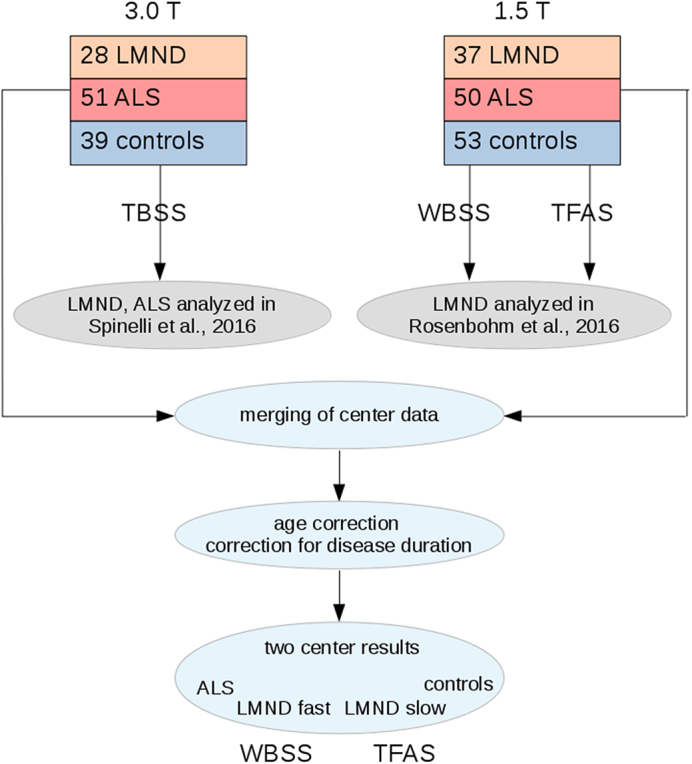
The study was designed to investigate white matter damage by a hypothesis-guided tract-of-interest-based approach in patients with LMND compared with healthy controls and ´classical´ ALS patients in order to identify in vivo brain structural changes according to the neuropathologically defined ALS affectation pattern. Data were pooled from two previous studies at two different study sites (Ulm, Germany and Milano, Italy).
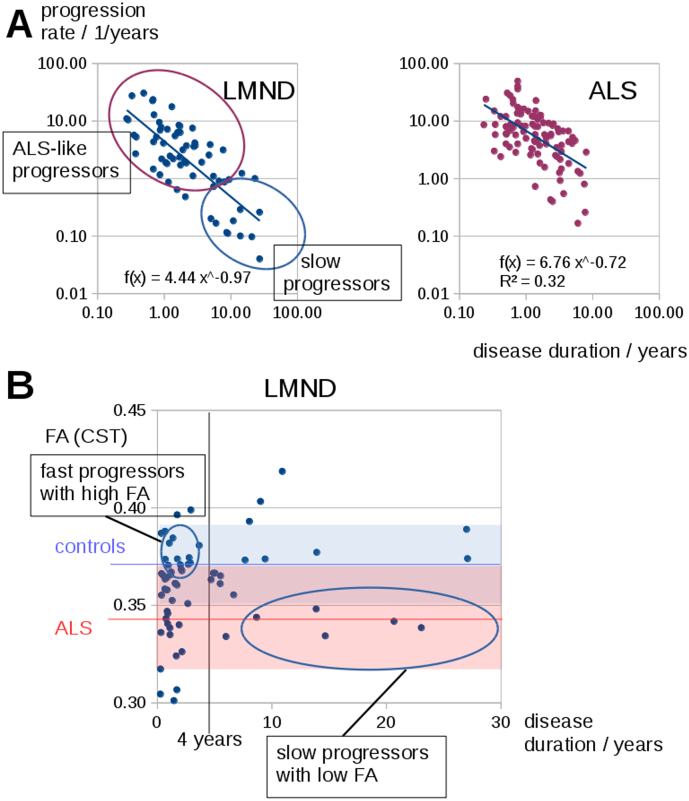
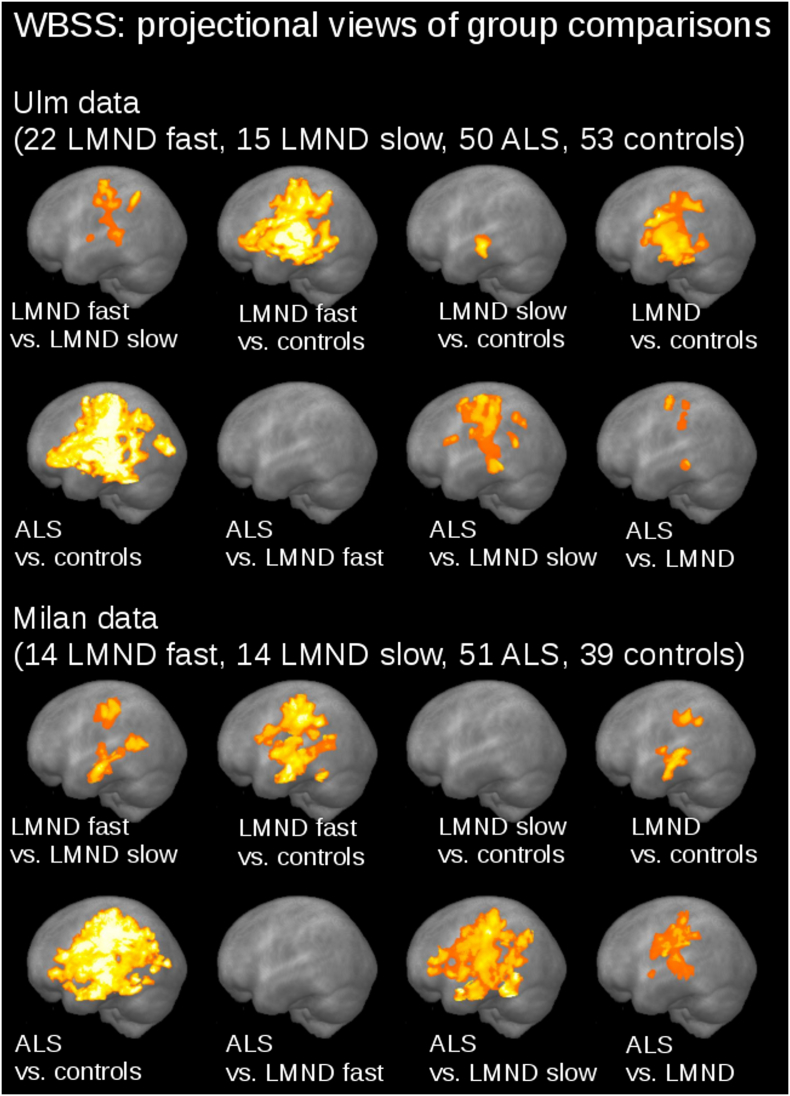
DTI-based white matter integrity mapping was performed by voxelwise statistical comparison and by a tractwise analysis of fractional anisotropy (FA) maps according to the ALS-staging pattern for 65 LMND patients (clinically differentiated in fast and slow progressors) vs. 92 matched controls and 101 ALS patients with a 'classical' phenotype to identify white matter structural alterations.
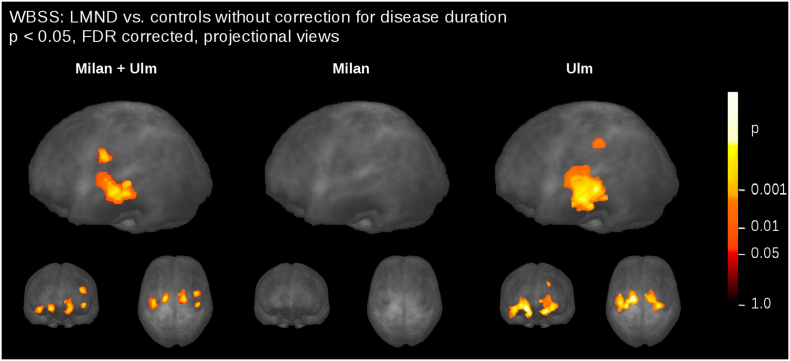
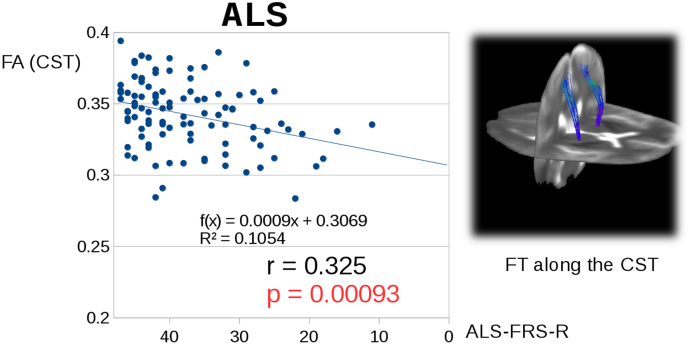
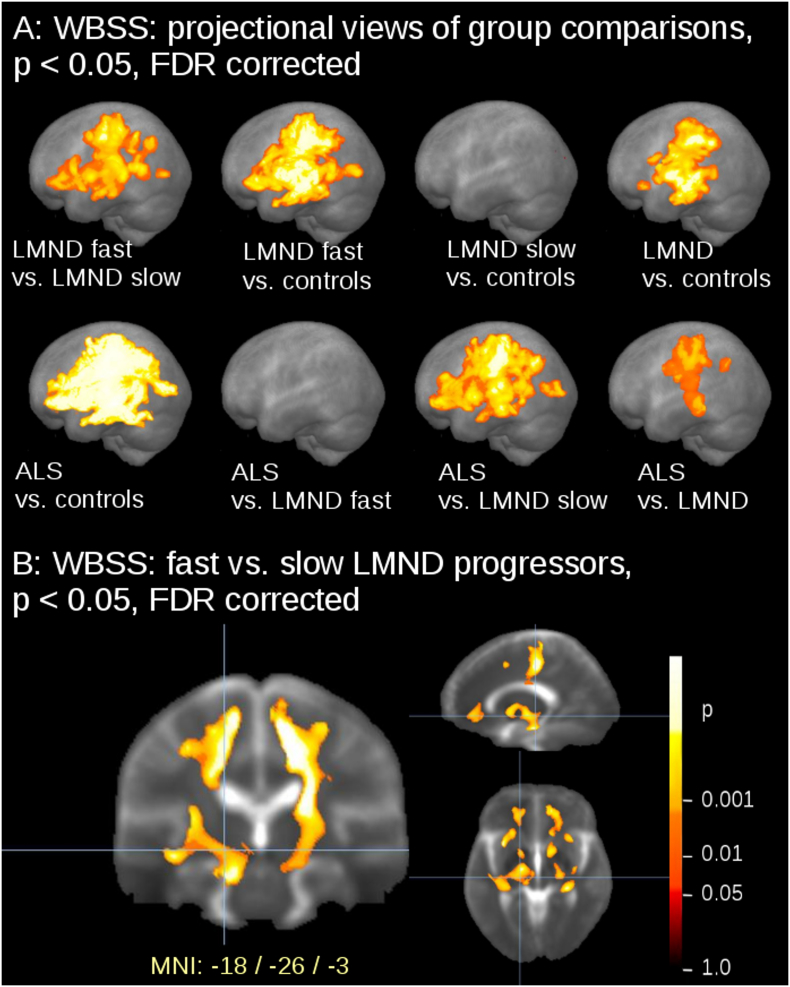
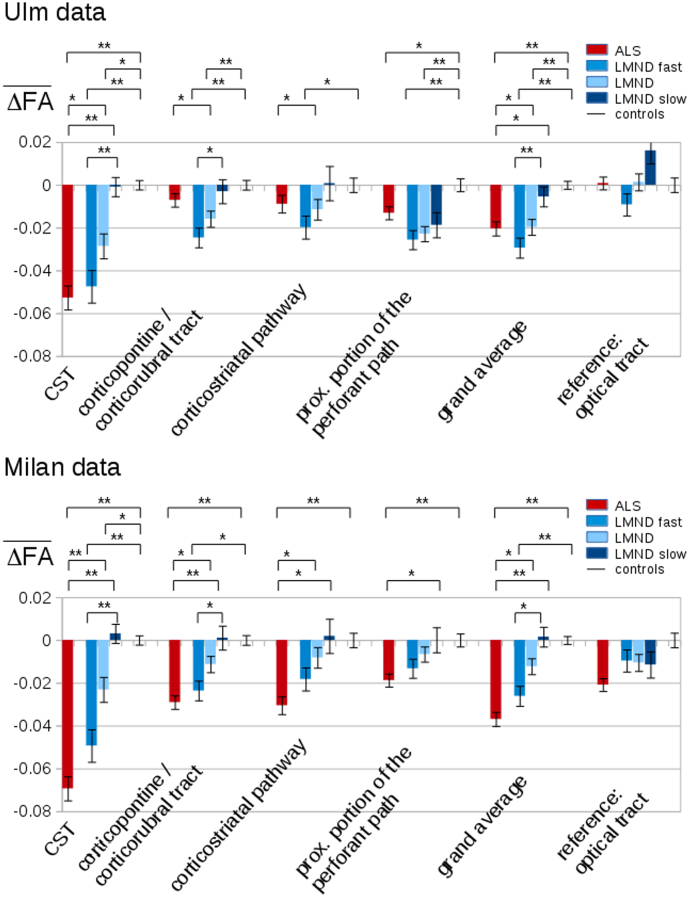
The analysis of white matter structural connectivity by regional FA reductions demonstrated the characteristic alteration patterns along the CST and also in frontal and prefrontal brain areas in LMND patients compared to controls and ALS. Fast progressing LMND showed substantial involvement, like in ALS, while slow progressors showed less severe alterations. In the tract-specific analysis according to the ALS-staging pattern, fast progressing LMND showed significant alterations of ALS-related tract systems as compared to slow progressors and controls.
This study showed an affectation pattern for corticoefferent fibers in LMND with fast disease progression as defined for ALS, that way confirming the hypothesis that fast progressing LMND is a phenotypical variant of ALS.
在纯下运动神经元疾病(LMND)中评估上运动神经元病理的标准仍然是一个主要的争议点,因为这涉及到临床分类为肌萎缩侧索硬化症(ALS)的一种变体。
本研究旨在通过假设引导的感兴趣区域分析方法,比较 LMND 患者与健康对照者和“经典”ALS 患者之间的白质损伤,以便根据神经病理学定义的 ALS 影响模式识别体内大脑结构变化。数据来自两个不同研究地点(德国乌尔姆和意大利米兰)的两项先前研究。
通过体素统计比较和根据 ALS 分期模式对各向异性分数(FA)图进行分析,对 65 例 LMND 患者(根据临床进展速度分为快速进展者和缓慢进展者)、92 名匹配对照者和 101 名具有“经典”表型的 ALS 患者进行基于 DTI 的白质完整性映射,以识别白质结构改变。
通过区域 FA 降低分析白质结构连接,与对照组和 ALS 相比,LMND 患者显示出 CST 沿线以及额叶和前额叶脑区的特征性改变模式。快速进展的 LMND 与 ALS 一样,有明显的病变,而缓慢进展的 LMND 则显示出较轻的病变。根据 ALS 分期模式进行的特定束分析显示,与缓慢进展者和对照组相比,快速进展的 LMND 出现了与 ALS 相关的束系统的明显改变。
本研究显示,快速进展的 LMND 存在皮质传出纤维的受累模式,与 ALS 定义的模式一致,从而证实了快速进展的 LMND 是 ALS 的一种表型变体的假说。