Vikas Biba, Akhil B S, P Remani, Sujathan K
Division of Cancer Research, Regional Cancer Centre, Trivandrum, India. Email:
Asian Pac J Cancer Prev. 2017 Oct 26;18(10):2725-2731. doi: 10.22034/APJCP.2017.18.10.2725.
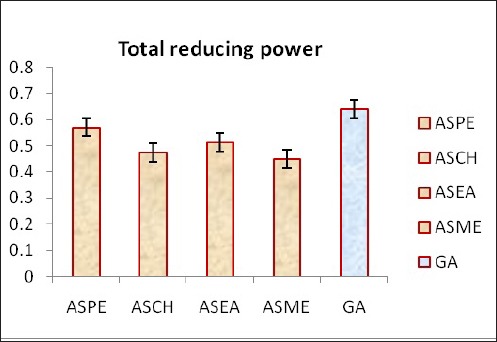
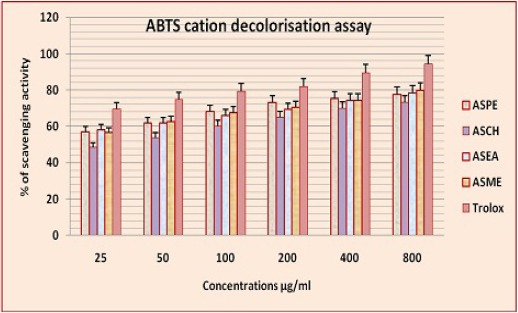
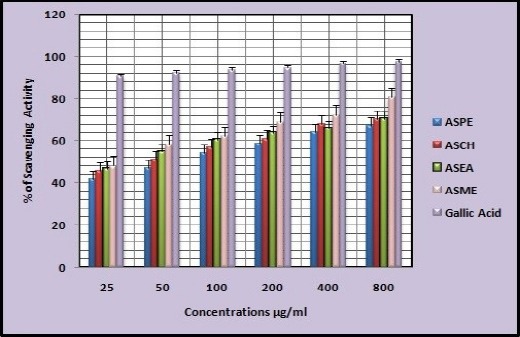
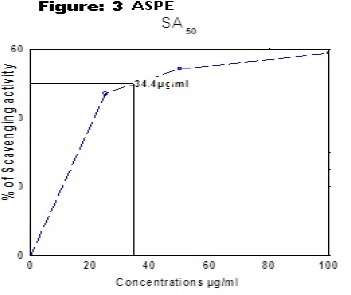
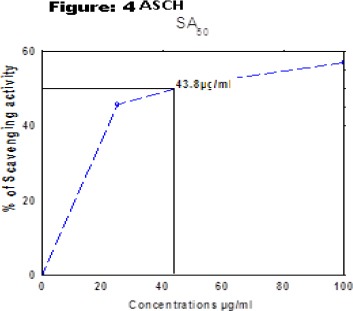
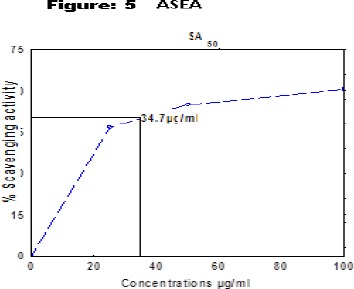
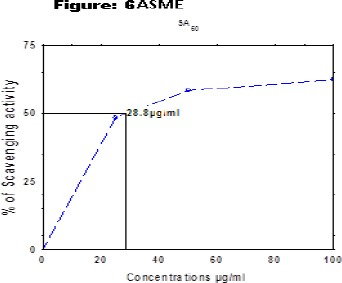
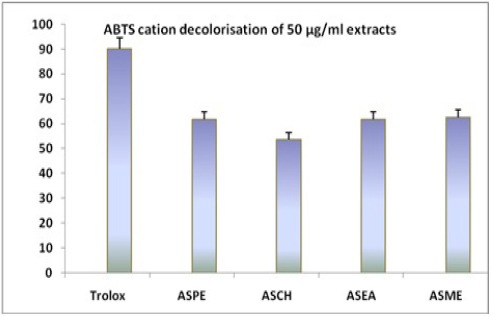
Annona squamosa has extensively been used in the traditional and folkloric medicine and found to possess many biological activities. Different solvents, petroleum ether, chloroform, ethyl acetate and methanol extracts of Annona squamosa seeds (ASPE, ASCH, ASEA, ASME) have been used to prepare plant extracts. The present investigations dealt with the free radical scavenging activity of four extracts using various techniques such as total reducing power estimation, total phenolic count, 1,1-diphenyl-2-picryl hydrazyl (DPPH) radical scavenging effect, evaluation of ABTS cation decolorisation capacity, FRAP assay, hdroxyl radical scavenging assay, super oxide assay and Nitric oxide radical scavenging assay of the extracts. The results showed that the four extracts of Annona squamosa showed significant reducing power in four extracts. The total phenolic contents in petroleum ether, chloroform, ethyl acetate, methanol extracts and positive control were 0.64±0.17, 0.54±0.27, 0.49±0.24, 0.57±0.22 and 0.66±0.33. The antioxidant capacity by ABTS assay of ASPE, ASCH, ASEA, ASME and positive control, trolox showed 77.75±0.5,73.25±1.7,78.5± 1.2 , 80 ± 0.8 μg/ml and 94.2 ± 0.9 respectively. The (50 % scavenging activity) SA50 of ASPE and ASCH, ASEA and ASME was found to be 34.4 μg/ml, 43.8 μg/ml 34.7 μg/m and 28.8 μg/ml respectively by DPPH assay. The percentage of hydroxyl radical scavenging increased with the increasing concentration of the extracts. ASPE, ASCH, ASEA and ASME showed superoxide radical scavenging activity, as indicated by their values 66 ± 0.5, 68 ± 1 ,63 ± 1 and 70 ± 0.5 μg/ml respectively compared to gallic acid which was 97 ± 0.5 μg/ml. The values for scavenging of nitric oxide for ASPE, ASCH, ASEA and ASME were 91.0 ± 1.0, 66.75 ± 0.5, 71.75 ± 1.1 and 75.75 ± 1.15 μg/ml while value for standard ascorbic acid was 91.0 ± 1.0 μg/ml. The results revealed strong antioxidants in four extracts may lead to the development of potent antioxidant agents from Annona squamosa seeds.
番荔枝已广泛应用于传统医学和民间医学,并被发现具有多种生物活性。番荔枝种子的不同溶剂提取物,即石油醚、氯仿、乙酸乙酯和甲醇提取物(ASPE、ASCH、ASEA、ASME)已被用于制备植物提取物。本研究使用了多种技术,如总还原能力评估、总酚含量测定、1,1-二苯基-2-苦基肼(DPPH)自由基清除作用、ABTS阳离子脱色能力评估、FRAP测定、羟基自由基清除测定、超氧化物测定和提取物的一氧化氮自由基清除测定,来研究这四种提取物的自由基清除活性。结果表明,番荔枝的四种提取物在四种提取物中均表现出显著的还原能力。石油醚、氯仿、乙酸乙酯、甲醇提取物和阳性对照中的总酚含量分别为0.64±0.17、- 0.54±0.27、0.49±0.24、0.57±0.22和0.66±0.33。通过ABTS测定法,ASPE、ASCH、ASEA、ASME和阳性对照、曲克芦丁的抗氧化能力分别为77.75±0.5、73.25±1.7、78.5±1.2、80±0.8μg/ml和94.2±0.9μg/ml。通过DPPH测定法,发现ASPE和ASCH、ASEA和ASME的(50%清除活性)SA50分别为34.4μg/ml、43.8μg/ml、34.7μg/ml和28.8μg/ml。羟基自由基清除率随提取物浓度的增加而增加。ASPE、ASCH、ASEA和ASME表现出超氧化物自由基清除活性,与没食子酸(97±0.5μg/ml)相比,它们的值分别为66±0.5、68±1、63±1和70±0.5μg/ml。ASPE、ASCH、ASEA和ASME的一氧化氮清除值分别为91.0±1.0、66.75±0.5、71.75±1.1和75.75±1.15μg/ml,而标准抗坏血酸的值为91.0±1.0μg/ml。结果表明,四种提取物中的强抗氧化剂可能会促使从番荔枝种子中开发出有效的抗氧化剂。