Faculté de Médecine Paris Descartes, INSERM U1001, Sorbonne Paris Cité, Université Paris Descartes, 75014 Paris, France.
Faculté de Médecine Paris Descartes, INSERM U1001, Sorbonne Paris Cité, Université Paris Descartes, 75014 Paris, France;
Proc Natl Acad Sci U S A. 2017 Oct 24;114(43):11512-11517. doi: 10.1073/pnas.1706236114. Epub 2017 Oct 9.
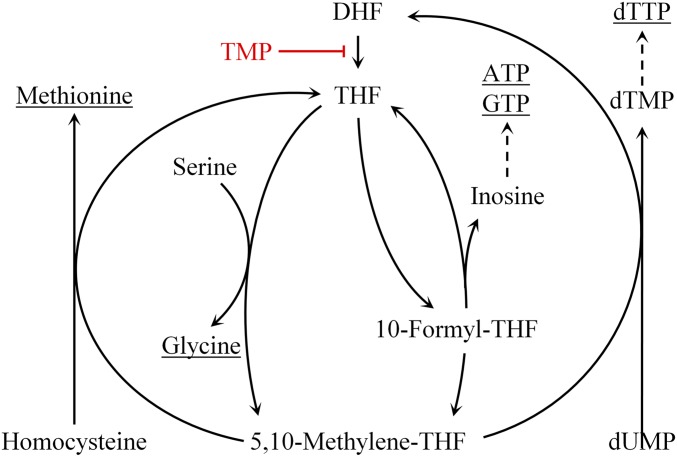
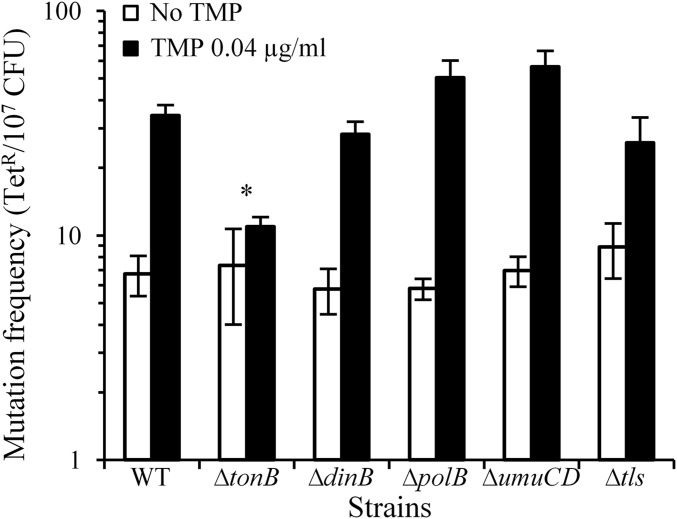
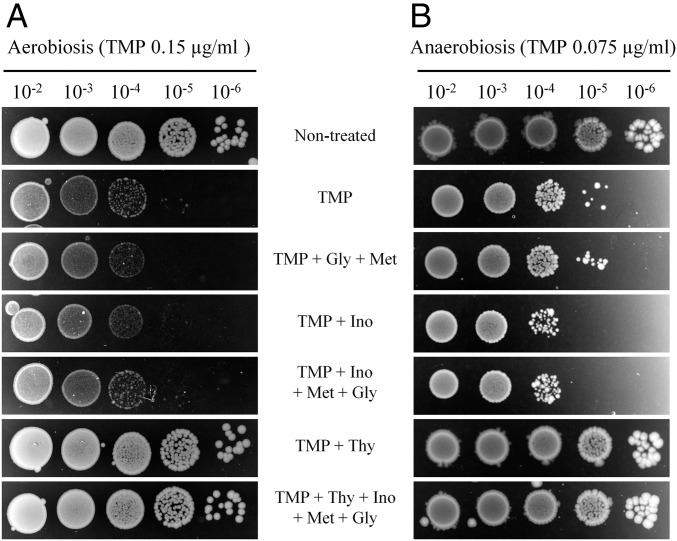
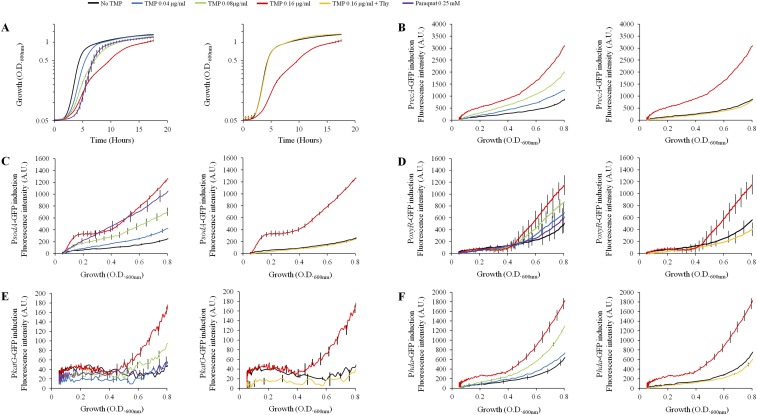
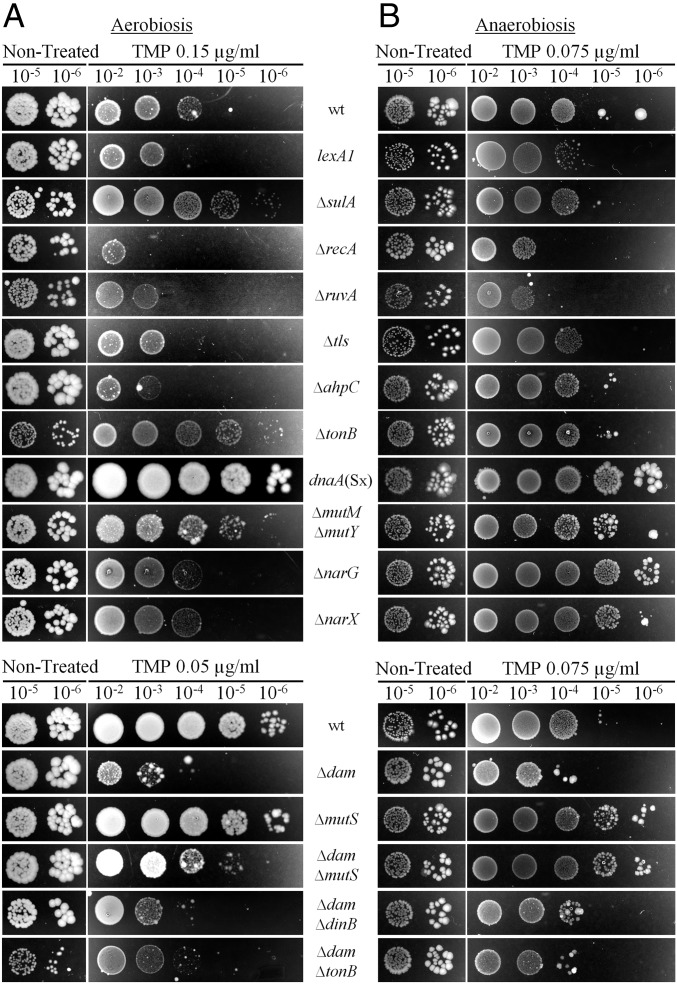
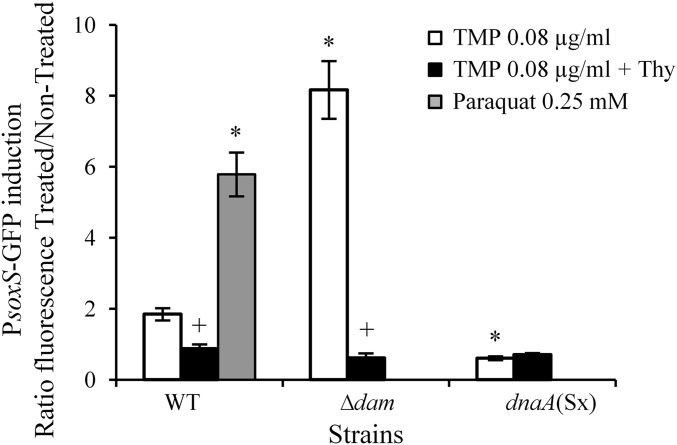
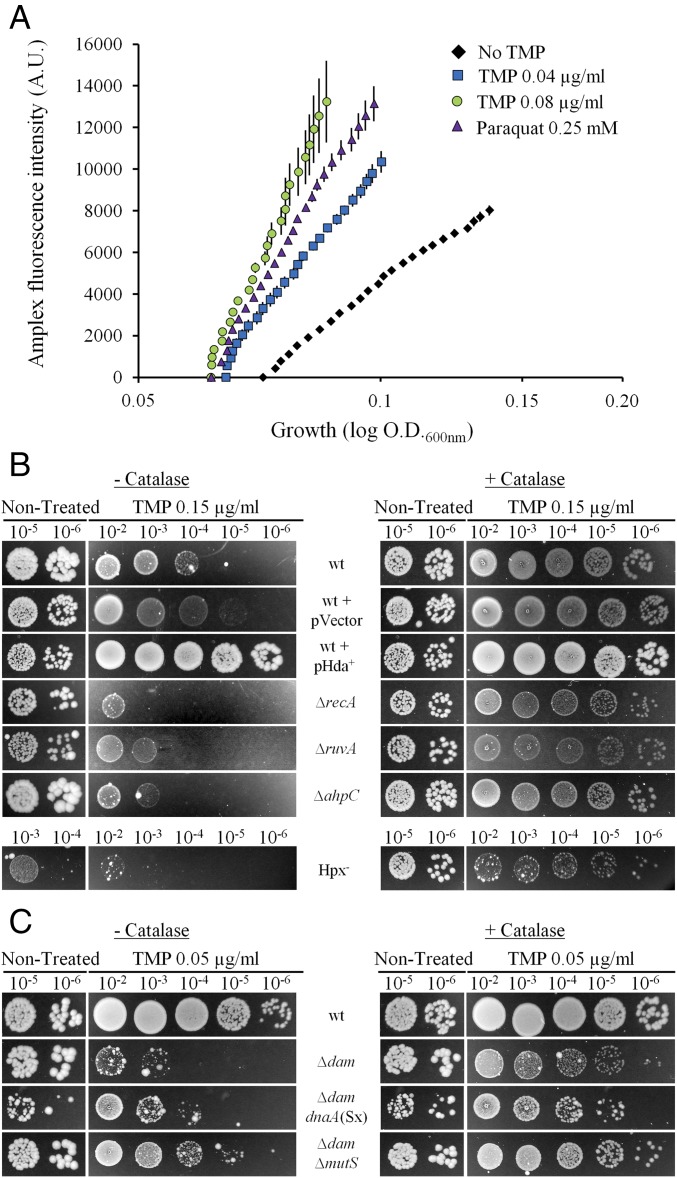
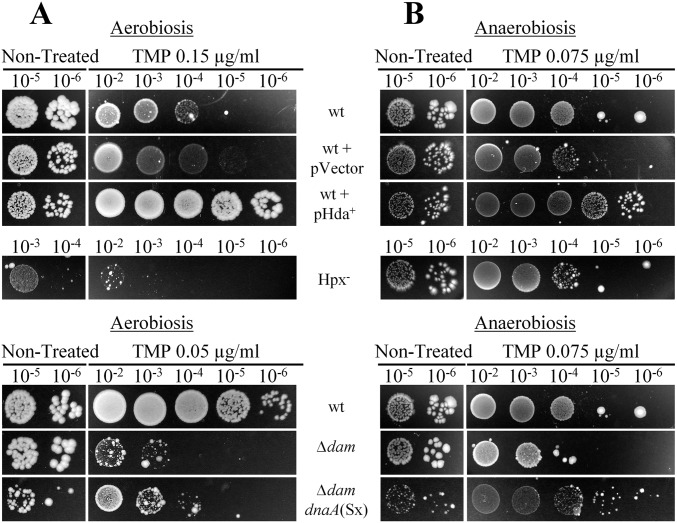
The bactericidal effects of antibiotics are undoubtedly triggered by target-specific interactions, but there is growing evidence that an important aspect of cytotoxicity results from treatment-induced metabolic perturbations. In this study, we characterized molecular mechanisms whereby trimethoprim treatment results in cell death, using as the model organism. cells grown in rich medium that contained all amino acids and low amounts of thymidine were treated with trimethoprim under aerobic and anaerobic conditions. Under these growth conditions, accelerated thymine depletion is the primary trigger of the processes leading to cell death. Thymine depletion-induced DNA replication stress leads to the production of reactive oxygen species under aerobic conditions and of the DNA-damaging byproducts of nitrate respiration under anaerobic conditions. Lowering the DNA replication initiation rate by introducing the (Sx) allele or by overexpressing Hda protein reduces the number of active replication forks, which reduces the consumption of thymidine and increases resistance to trimethoprim under both aerobic and anaerobic conditions. Analysis of the involvement of DNA repair enzymes in trimethoprim-induced cytotoxicity clearly indicates that different amounts and/or different types of DNA lesions are produced in the presence or absence of oxygen. Maladaptive processing of the DNA damage by DNA repair enzymes, in particular by MutM and MutY DNA glycosylases, ultimately contributes to cell death.
抗生素的杀菌作用无疑是通过靶标特异性相互作用触发的,但越来越多的证据表明,细胞毒性的一个重要方面是由于治疗引起的代谢紊乱所致。在这项研究中,我们使用 作为模型生物,研究了甲氧苄啶治疗导致细胞死亡的分子机制。在含有所有氨基酸和低浓度胸苷的丰富培养基中生长的 细胞在有氧和无氧条件下用甲氧苄啶处理。在这些生长条件下,加速胸苷耗竭是导致细胞死亡的过程的主要触发因素。胸苷耗竭诱导的 DNA 复制应激导致有氧条件下产生活性氧,无氧条件下产生硝酸盐呼吸的 DNA 损伤副产物。通过引入 (Sx) 等位基因或过表达 Hda 蛋白降低 DNA 复制起始速率,减少活跃复制叉的数量,从而减少胸腺嘧啶的消耗,并在有氧和无氧条件下提高对甲氧苄啶的抗性。对参与甲氧苄啶诱导的细胞毒性的 DNA 修复酶的分析清楚地表明,在有氧和无氧条件下,会产生不同数量和/或不同类型的 DNA 损伤。DNA 修复酶,特别是 MutM 和 MutY DNA 糖苷酶对 DNA 损伤的适应性处理,最终导致细胞死亡。