Murai Norimitsu, Ohtaki Hirokazu, Watanabe Jun, Xu Zhifang, Sasaki Shun, Yagura Kazumichi, Shioda Seiji, Nagasaka Shoichiro, Honda Kazuho, Izumizaki Masahiko
Department of Physiology, Showa University School of Medicine, Tokyo, Japan.
Department of Anatomy, Showa University School of Medicine, Tokyo, Japan.
PLoS One. 2017 Oct 26;12(10):e0186637. doi: 10.1371/journal.pone.0186637. eCollection 2017.
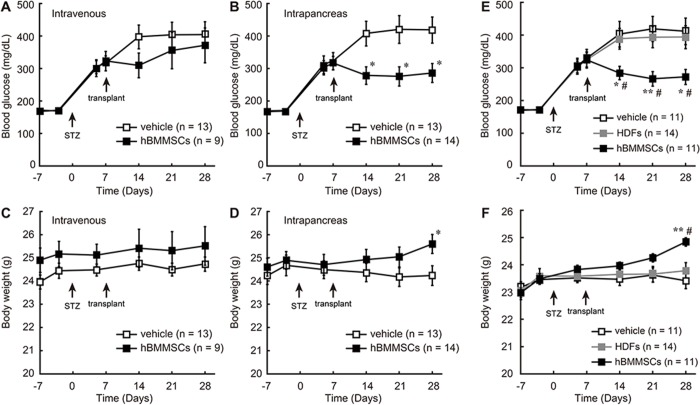
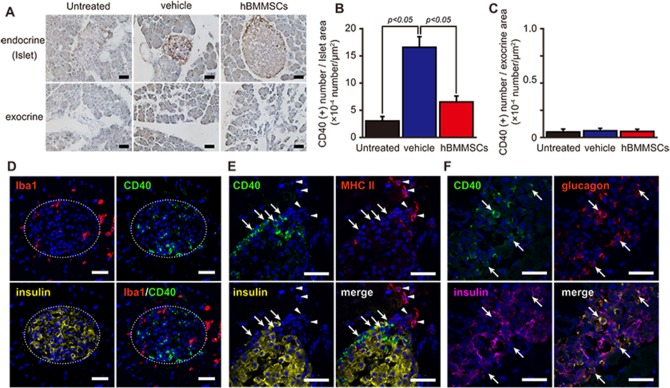
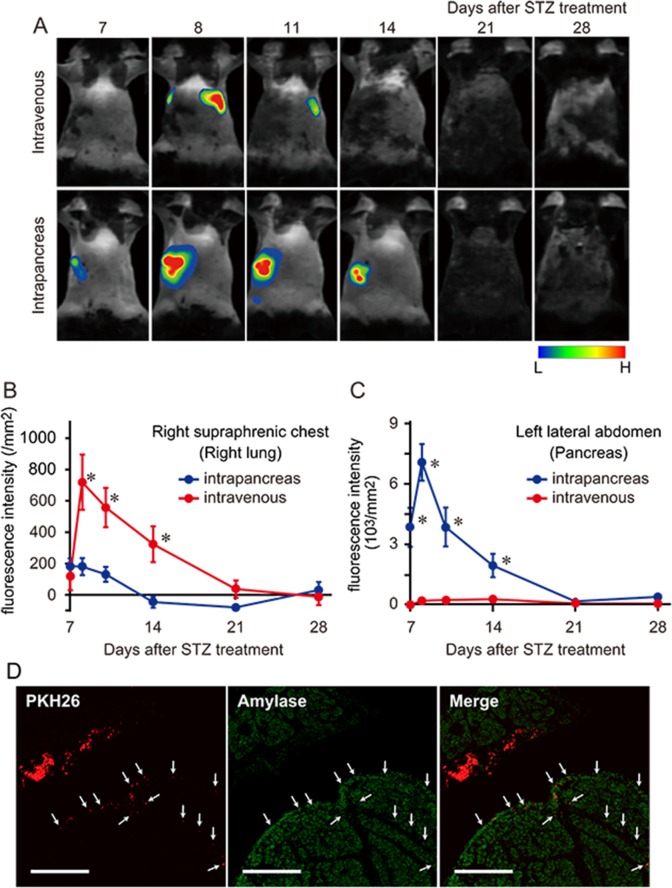
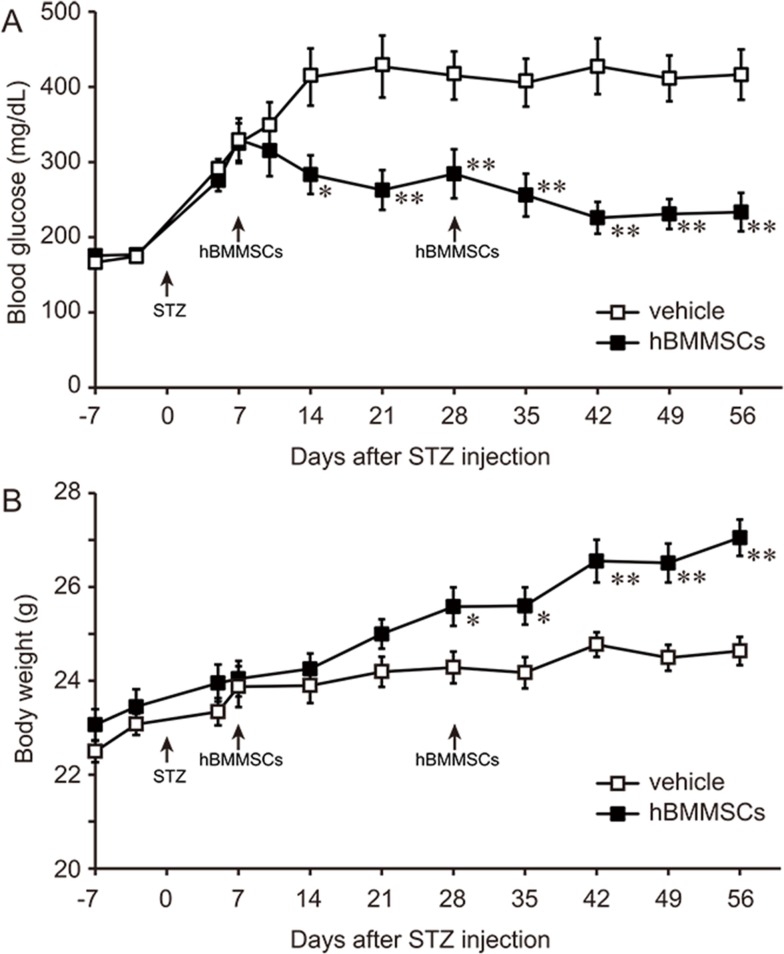
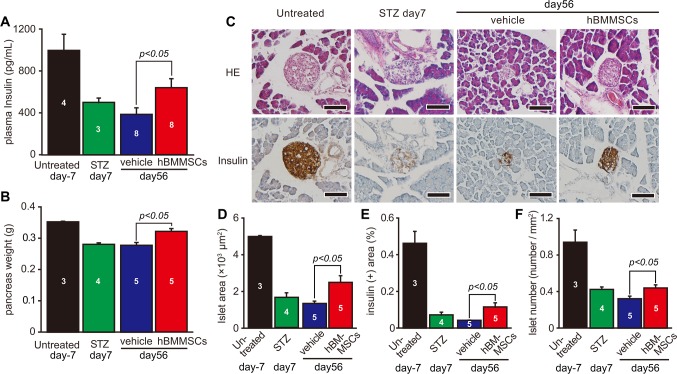
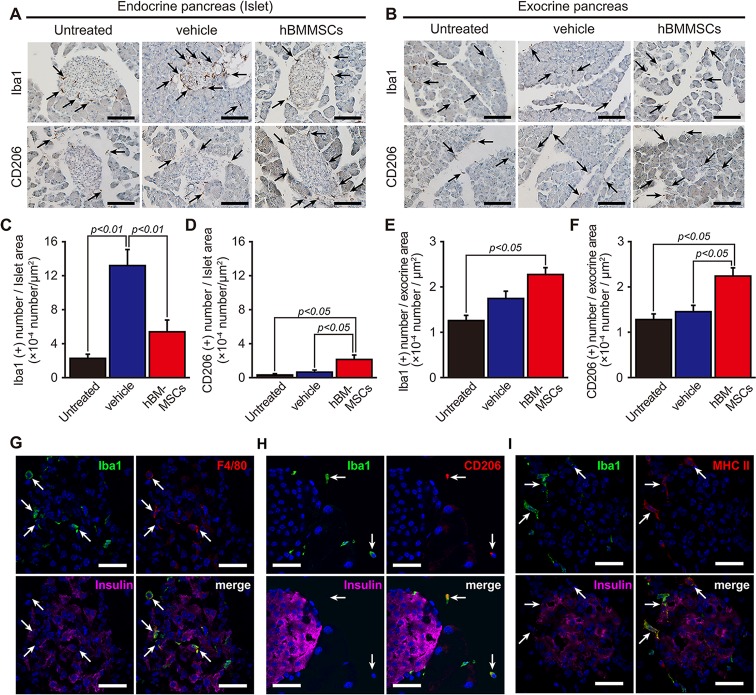
Type 1 diabetes mellitus is a progressive disease caused by the destruction of pancreatic β-cells, resulting in insulin dependency and hyperglycemia. While transplanted bone marrow-derived mesenchymal stem/stromal cells (BMMSCs) have been explored as an alternative therapeutic approach for diseases, the choice of delivery route may be a critical factor determining their sustainability. This study evaluated the effects of intrapancreatic and intravenous injection of human BMMSCs (hBMMSCs) in streptozotocin (STZ)-induced type 1 diabetic mouse model. C57/BL6 mice were intraperitoneally injected with 115 mg/kg STZ on day 0. hBMMSCs (1 × 10⁶ cells) or vehicle were injected into the pancreas or jugular vein on day 7. Intrapancreatic, but not intravenous, hBMMSC injection significantly reduced blood glucose levels on day 28 compared with vehicle injection by the same route. This glucose-lowering effect was not induced by intrapancreatic injection of human fibroblasts as the xenograft control. Intrapancreatically injected fluorescence-labeled hBMMSCs were observed in the intra- and extra-lobular spaces of the pancreas, and intravenously injected cells were in the lung region, although the number of cells mostly decreased within 2 weeks of injection. For hBMMSCs injected twice into the pancreatic region on days 7 and 28, the injected mice had further reduced blood glucose to borderline diabetic levels on day 56. Animals injected with hBMMSCs twice exhibited increases in the plasma insulin level, number and size of islets, insulin-positive proportion of the total pancreas area, and intensity of insulin staining compared with vehicle-injected animals. We found a decrease of Iba1-positive cells in islets and an increase of CD206-positive cells in both the endocrine and exocrine pancreas. The hBMMSC injection also reduced the number of CD40-positive cells merged with glucagon immunoreactions in the islets. These results suggest that intrapancreatic injection may be a better delivery route of hBMMSCs for the treatment of type 1 diabetes mellitus.
1型糖尿病是一种由胰腺β细胞破坏引起的进行性疾病,导致胰岛素依赖和高血糖。虽然已探索将移植的骨髓间充质干细胞(BMMSCs)作为疾病的替代治疗方法,但给药途径的选择可能是决定其可持续性的关键因素。本研究评估了在链脲佐菌素(STZ)诱导的1型糖尿病小鼠模型中胰腺内和静脉注射人BMMSCs(hBMMSCs)的效果。C57/BL6小鼠在第0天腹腔注射115 mg/kg STZ。在第7天,将hBMMSCs(1×10⁶个细胞)或赋形剂注射到胰腺或颈静脉中。与相同途径注射赋形剂相比,胰腺内而非静脉内注射hBMMSCs在第28天显著降低了血糖水平。作为异种移植对照,胰腺内注射人成纤维细胞未诱导这种降糖作用。在胰腺的小叶内和小叶外间隙观察到胰腺内注射的荧光标记hBMMSCs,静脉注射的细胞位于肺区域,尽管注射后2周内细胞数量大多减少。对于在第7天和第28天两次注射到胰腺区域的hBMMSCs,注射的小鼠在第56天血糖进一步降低至临界糖尿病水平。与注射赋形剂的动物相比,两次注射hBMMSCs的动物血浆胰岛素水平、胰岛数量和大小、胰岛素阳性占胰腺总面积的比例以及胰岛素染色强度均增加。我们发现胰岛中Iba1阳性细胞减少,内分泌和外分泌胰腺中CD206阳性细胞增加。hBMMSCs注射还减少了胰岛中与胰高血糖素免疫反应合并的CD40阳性细胞数量。这些结果表明,胰腺内注射可能是hBMMSCs治疗1型糖尿病的更好给药途径。