Zimmer Anat, Tendler Avichai, Katzir Itay, Mayo Avi, Alon Uri
Department of Molecular Cell Biology, Weizmann Institute of Science, Rehovot, Israel.
PLoS Biol. 2017 Oct 26;15(10):e2002518. doi: 10.1371/journal.pbio.2002518. eCollection 2017 Oct.
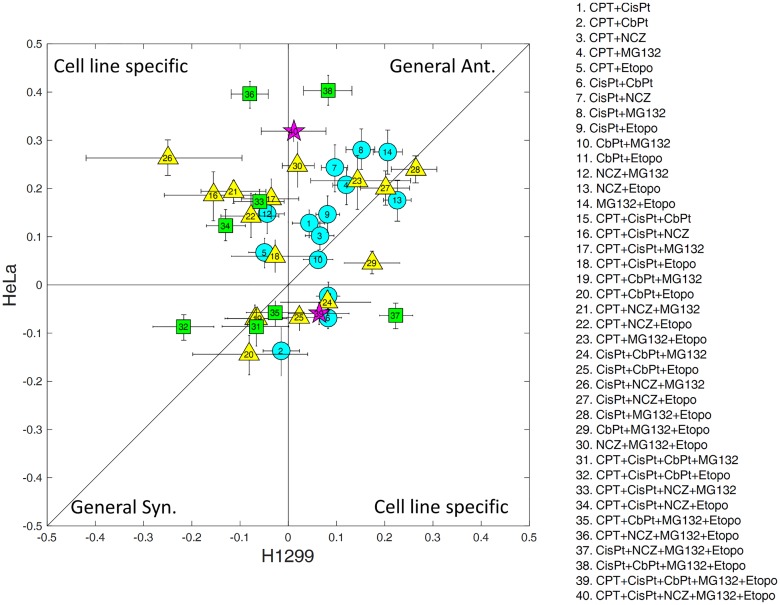
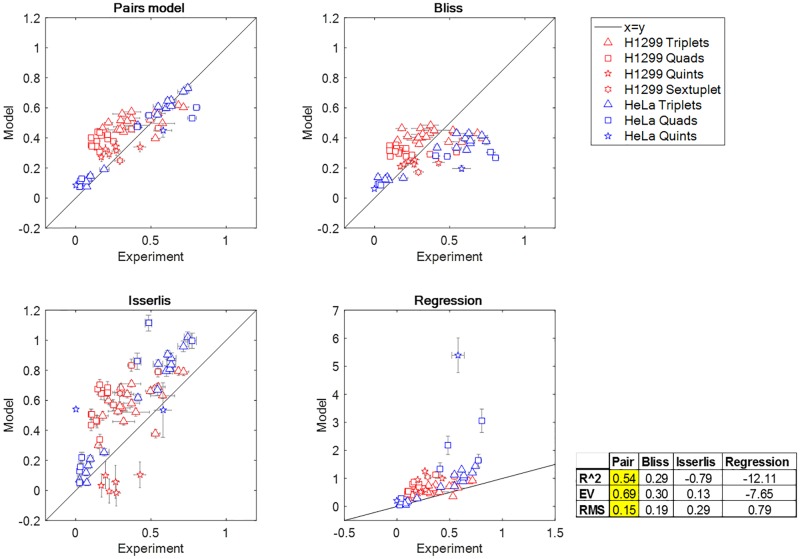
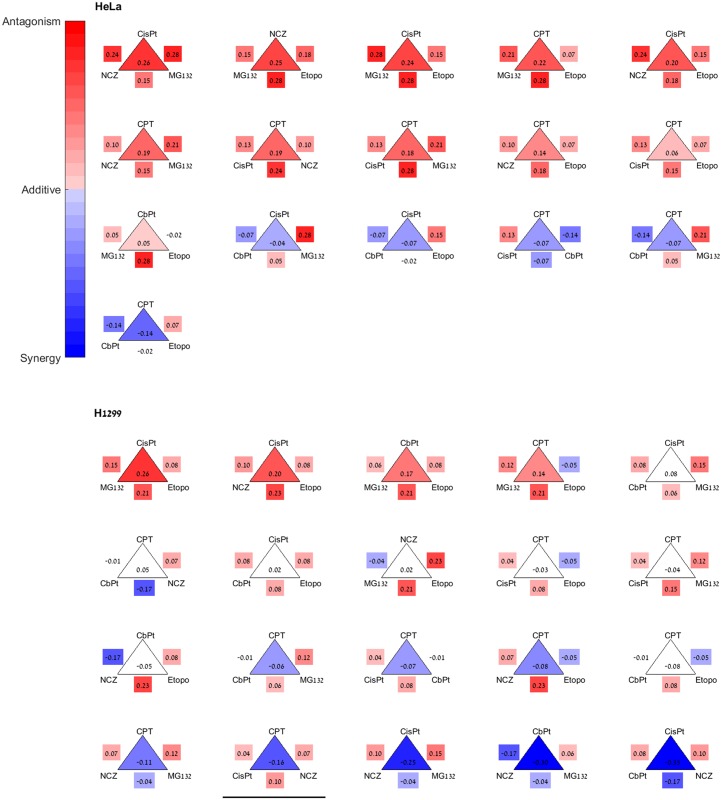
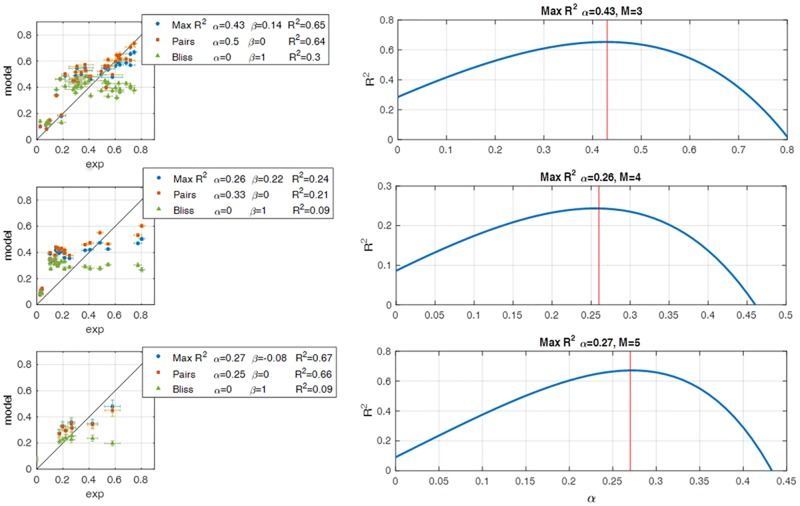
Cocktails of drugs can be more effective than single drugs, because they can potentially work at lower doses and avoid resistance. However, it is impossible to test all drug cocktails drawn from a large set of drugs because of the huge number of combinations. To overcome this combinatorial explosion problem, one can sample a relatively small number of combinations and use a model to predict the rest. Recently, Zimmer and Katzir et al. presented a model that accurately predicted the effects of cocktails at all doses based on measuring pairs of drugs. This model requires measuring each pair at several different doses and uses interpolation to reduce experimental noise. However, often, it is not possible to measure each pair at multiple doses (for example, in scarce patient-derived tumor material or in large screens). Here, we ask whether measurements at only a single dose can also predict high-order drug cocktails. To address this, we present a fully factorial experimental dataset on all drug cocktails built of 6 chemotherapy drugs on 2 cancer cell lines. We develop a formula that uses only pair measurements at a single dose to predict much of the variation up to 6-drug cocktails in the present data, outperforming commonly used Bliss independence and regression approaches. This model, called the pairs model, is an extension of the Bliss independence model to pairs: For M drugs, it equals the product of all pair effects to the power 1/(M-1). The pairs model also shows good agreement with previously published data on antibiotic triplets and quadruplets. The present model can only predict combinations at the same doses in which the pairs were measured and is not able to predict effects at other doses. This study indicates that pair-based approaches might be able to usefully predict and prioritize high-order combinations, even in large screens or when material for testing is limited.
药物组合可能比单一药物更有效,因为它们有可能以较低剂量发挥作用并避免耐药性。然而,由于组合数量巨大,不可能对从大量药物中提取的所有药物组合进行测试。为了克服这种组合爆炸问题,可以对相对较少数量的组合进行采样,并使用模型来预测其余组合。最近,齐默尔和卡齐尔等人提出了一个模型,该模型基于测量药物对来准确预测所有剂量下组合药物的效果。该模型需要在几个不同剂量下测量每一对药物,并使用插值法来减少实验噪声。然而,通常不可能在多个剂量下测量每一对药物(例如,在稀缺的患者来源的肿瘤材料中或在大规模筛选中)。在这里,我们询问仅在单一剂量下的测量是否也能预测高阶药物组合。为了解决这个问题,我们提供了一个关于由6种化疗药物组成的所有药物组合在2种癌细胞系上的全因子实验数据集。我们开发了一个公式,该公式仅使用单一剂量下的药物对测量值来预测当前数据中高达6种药物组合的大部分变化,优于常用的布利斯独立性和回归方法。这个模型,称为药物对模型,是布利斯独立性模型对药物对的扩展:对于M种药物,它等于所有药物对效应的乘积的1/(M - 1)次幂。药物对模型也与先前发表的关于抗生素三联体和四联体的数据显示出良好的一致性。当前模型只能预测测量药物对时相同剂量下的组合,而无法预测其他剂量下的效应。这项研究表明,基于药物对的方法可能能够有效地预测高阶组合并对其进行优先级排序,即使在大规模筛选中或测试材料有限的情况下也是如此。