Joshi Natasha, Werner Sabine
Department of Biology, Institute of Molecular Health Sciences, Swiss Federal Institute of Technology (ETH) Zurich, Otto-Stern-Weg 7, Zurich, Switzerland.
PLoS One. 2017 Oct 26;12(10):e0187162. doi: 10.1371/journal.pone.0187162. eCollection 2017.
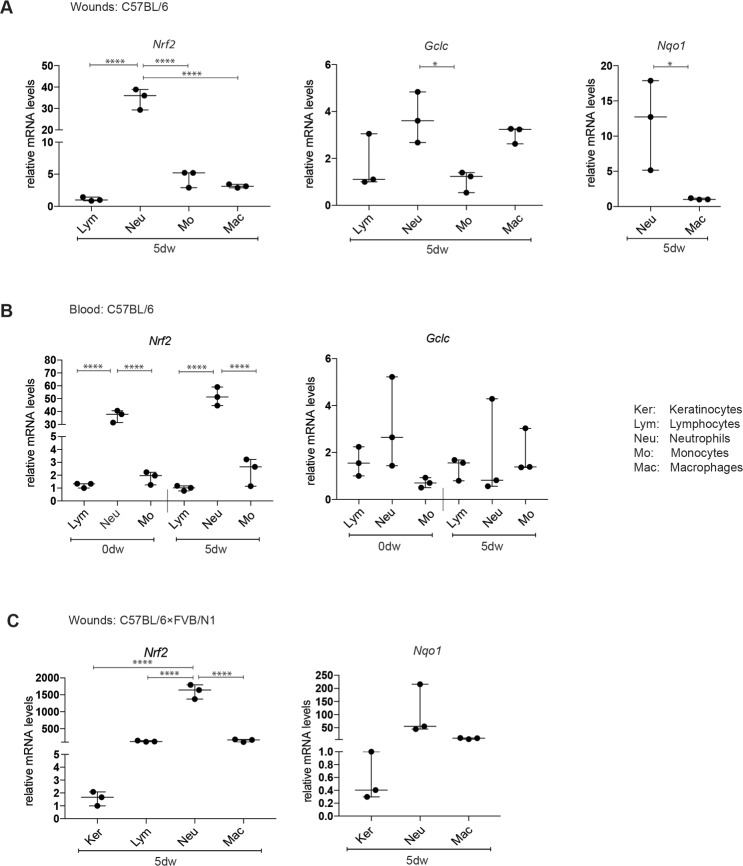
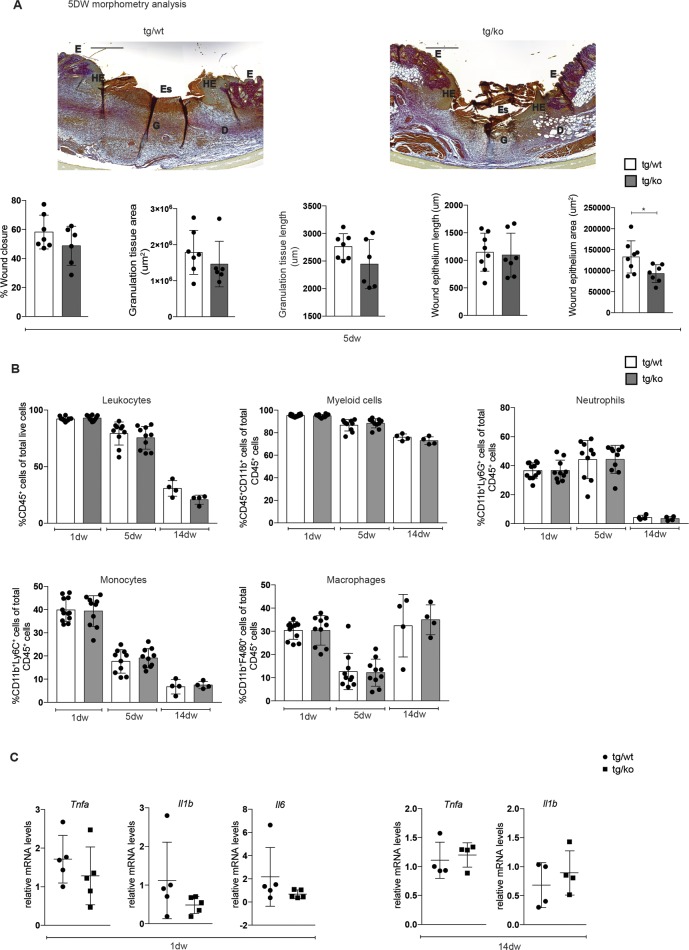
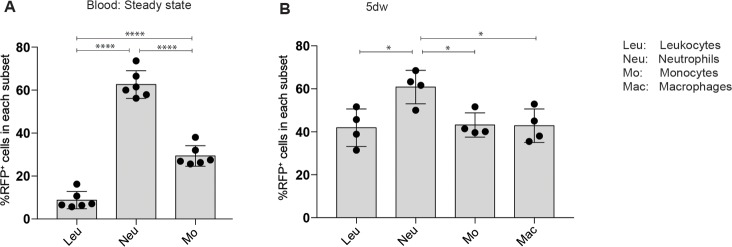
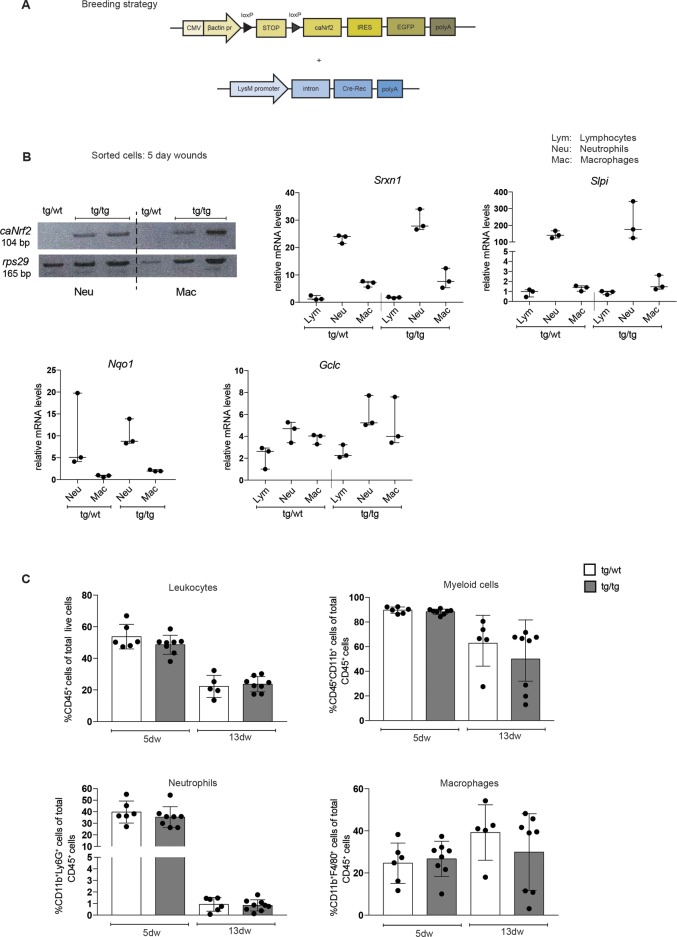
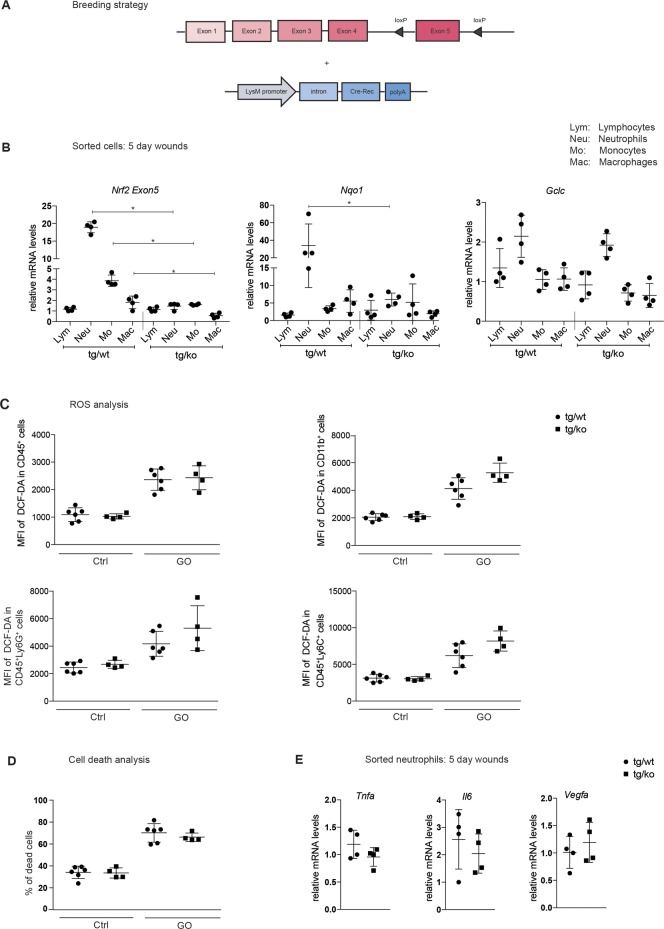
Immune cells of the myeloid lineage are key players in skin wound healing, since they secrete various cytokines and growth factors that orchestrate the repair process. In addition, they are crucial for the defense against invading pathogens through their capacity to produce high levels of reactive oxygen species (ROS). To limit the toxicity of ROS, cells have developed antioxidant defense strategies, including expression of the cytoprotective NRF2 transcription factor. Here we show that murine neutrophils and to a lesser extent macrophages strongly express Nrf2 already when present in the circulation and in particular at the wound site. To determine the role of Nrf2 in neutrophils and macrophages for wound repair, we generated mice with a gain- or loss-of-function of this transcription factor in the myeloid cell lineage. Expression of a constitutively active Nrf2 mutant in myeloid cells did not further enhance the overall Nrf2 activity in these cells due to the already high steady-state activity of endogenous Nrf2. Surprisingly, deletion of Nrf2 in myeloid cells only mildly affected the levels of ROS and the expression of pro-inflammatory cytokines by these cells. In particular, various parameters of wound healing, including wound closure, reepithelialization, wound contraction and the presence of myeloid cells at the wound site were not affected. These results reveal that Nrf2 in myeloid cells is dispensable for wound healing and suggest the presence of additional antioxidant defense strategies of these cells that compensate for the loss of Nrf2, even in the harsh environment of skin wounds.
髓系免疫细胞是皮肤伤口愈合的关键参与者,因为它们分泌各种细胞因子和生长因子来协调修复过程。此外,它们通过产生高水平的活性氧(ROS)来抵御入侵病原体,这一点至关重要。为了限制ROS的毒性,细胞已发展出抗氧化防御策略,包括细胞保护性NRF2转录因子的表达。在这里我们表明,小鼠中性粒细胞以及程度稍轻的巨噬细胞在循环系统中,特别是在伤口部位时,就已强烈表达Nrf2。为了确定Nrf2在中性粒细胞和巨噬细胞中对伤口修复的作用,我们构建了在髓系细胞谱系中该转录因子功能获得或丧失的小鼠。由于内源性Nrf2已经具有较高的稳态活性,因此在髓系细胞中表达组成型活性Nrf2突变体并不能进一步增强这些细胞中的整体Nrf2活性。令人惊讶的是,在髓系细胞中删除Nrf2仅轻微影响这些细胞的ROS水平和促炎细胞因子的表达。特别是,伤口愈合的各种参数,包括伤口闭合、再上皮化、伤口收缩以及伤口部位髓系细胞的存在均未受到影响。这些结果表明,髓系细胞中的Nrf2对于伤口愈合是可有可无的,并表明即使在皮肤伤口的恶劣环境中,这些细胞也存在额外的抗氧化防御策略来补偿Nrf2的缺失。