Baboci Lorena, Holzinger Dana, Boscolo-Rizzo Paolo, Tirelli Giancarlo, Spinato Roberto, Lupato Valentina, Fuson Roberto, Schmitt Markus, Michel Angelika, Halec Gordana, Da Mosto Maria Cristina, Pawlita Michael, Del Mistro Annarosa
Division of Molecular Diagnostics of Oncogenic Infections, Research Program Infection and Cancer, German Cancer Research Center (DKFZ), Im Neuenheimer Feld 242, 69120 Heidelberg, Germany; Department of Surgery, Oncology and Gastroenterology, University of Padua, Oncology and Immunology Section, Via Gattamelata 64, 35128 Padua, Italy.
Division of Molecular Diagnostics of Oncogenic Infections, Research Program Infection and Cancer, German Cancer Research Center (DKFZ), Im Neuenheimer Feld 242, 69120 Heidelberg, Germany.
Papillomavirus Res. 2016 Dec;2:133-140. doi: 10.1016/j.pvr.2016.07.002. Epub 2016 Jul 16.
To investigate the frequency of Human papillomavirus (HPV)-driven head and neck squamous cell carcinoma (HNSCC) among patients living in North-East Italy, by assessing HPV-DNA positivity in all tumors and additional markers whenever possible.
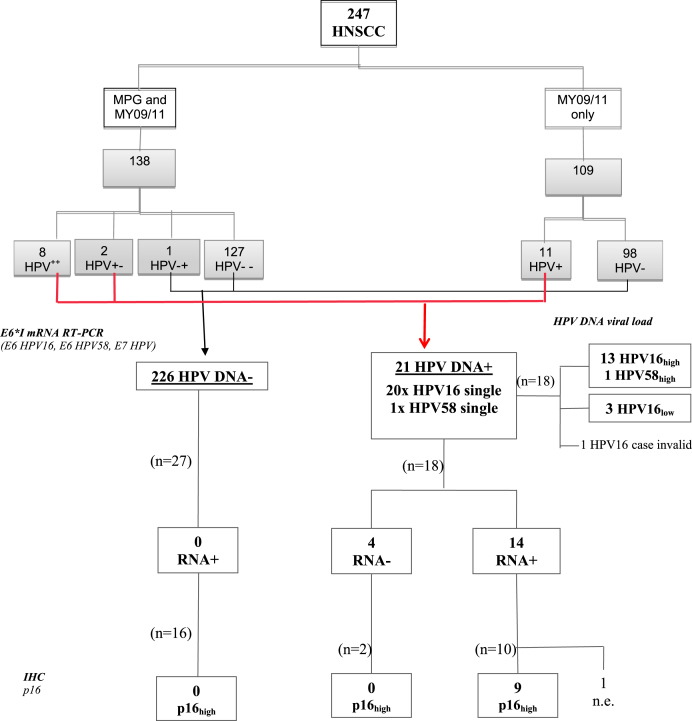
HPV types, viral load, viral RNA, HPV16/18 E6 protein and p16 and pRb expression were determined in primary tumor tissues from 247 HNSCC patients. Tumor-specific HPV seropositivity was analyzed in 102 patients.
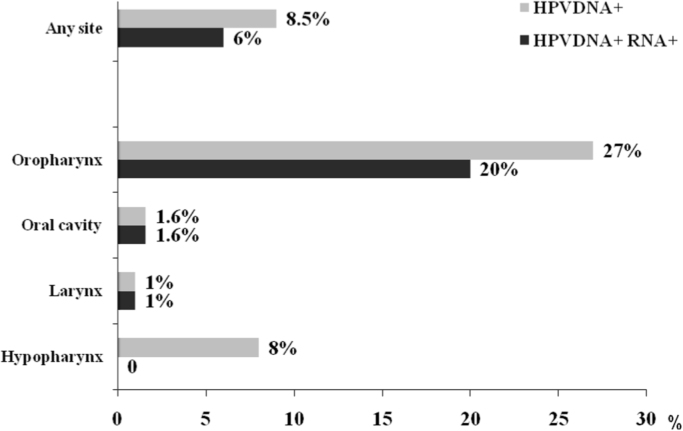
Tumor HPV-DNA prevalence was 8.5% overall (21/247) and 27% in oropharynx (17/63). HPV16 accounted for 95% of all HPV types found. Among HPV-DNA+ tumors, type-concordant HPV E6I RNA prevalence was 79%. HPV DNA+ RNA+ tumors showed high viral load, up-regulated p16, down-regulated pRb and presence of HPV16 E6 protein. Eight cases showed tumor-specific HPV seropositivity, all type-concordant with the tumor. Tumors were defined as HPV-driven when positive for HPV-DNA plus 2 additional HPV transformation-related markers.
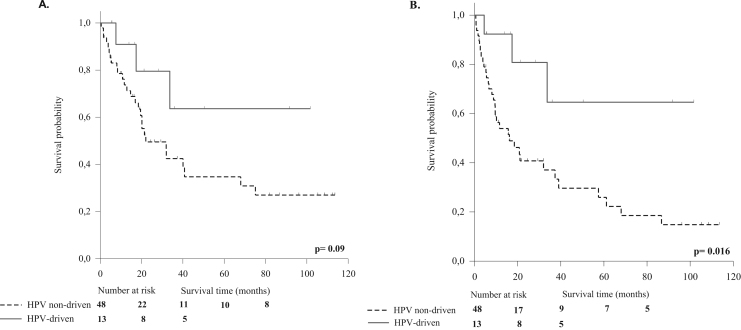
Relative prevalence of HPV-driven tumors (14 HPV16, 1 HPV58) was 6% overall and 20% among oropharyngeal cancers. In the oropharynx the HPV-driven group showed a trend for better survival versus the HPV-negative group. The relative prevalence of HPV-driven oropharyngeal cancer is low in North-East Italy as compared to Western and Northern Europe.
通过评估所有肿瘤中的人乳头瘤病毒(HPV)DNA阳性情况以及尽可能多的其他标志物,调查意大利东北部地区居民中HPV驱动的头颈部鳞状细胞癌(HNSCC)的发生率。
对247例HNSCC患者的原发肿瘤组织进行HPV类型、病毒载量、病毒RNA、HPV16/18 E6蛋白以及p16和pRb表达的检测。对102例患者进行肿瘤特异性HPV血清阳性分析。
总体肿瘤HPV-DNA患病率为8.5%(21/247),口咽癌中为27%(17/63)。HPV16占所有检出HPV类型的95%。在HPV-DNA阳性肿瘤中,类型一致的HPV E6I RNA患病率为79%。HPV DNA+RNA+肿瘤显示病毒载量高、p16上调、pRb下调以及存在HPV16 E6蛋白。8例显示肿瘤特异性HPV血清阳性,均与肿瘤类型一致。当HPV-DNA加上另外2种与HPV转化相关的标志物呈阳性时,肿瘤被定义为HPV驱动型。
HPV驱动型肿瘤(14例HPV16,1例HPV58)的总体相对患病率为6%,在口咽癌中为20%。在口咽癌中,HPV驱动型组与HPV阴性组相比有更好的生存趋势。与西欧和北欧相比,意大利东北部地区HPV驱动型口咽癌的相对患病率较低。