Ellison Courtney K, Kan Jingbo, Dillard Rebecca S, Kysela David T, Ducret Adrien, Berne Cecile, Hampton Cheri M, Ke Zunlong, Wright Elizabeth R, Biais Nicolas, Dalia Ankur B, Brun Yves V
Department of Biology, Indiana University, 1001 East 3rd Street, Bloomington, IN 47405, USA.
Biology Department, CUNY Brooklyn College, 2900 Bedford Avenue, Brooklyn, NY 11210, USA.
Science. 2017 Oct 27;358(6362):535-538. doi: 10.1126/science.aan5706.
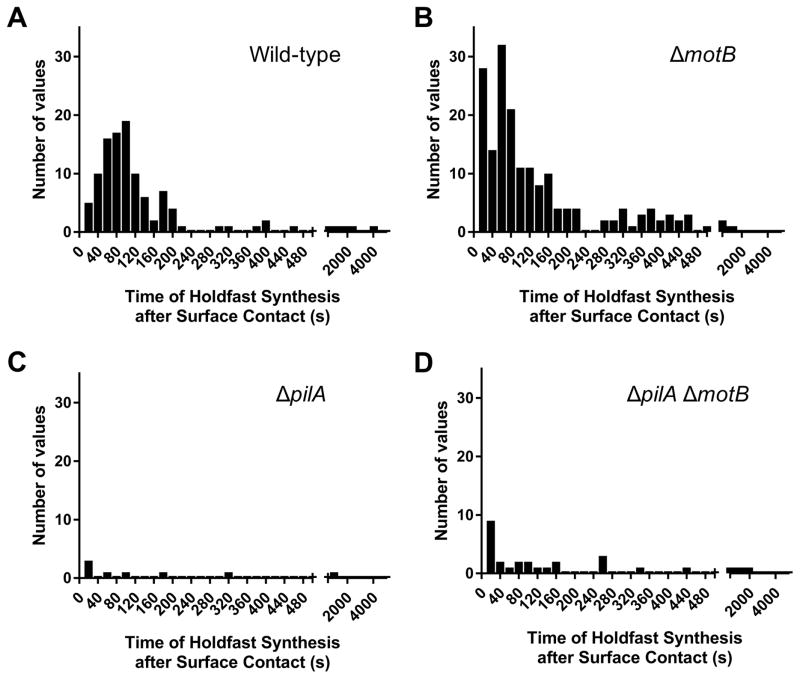
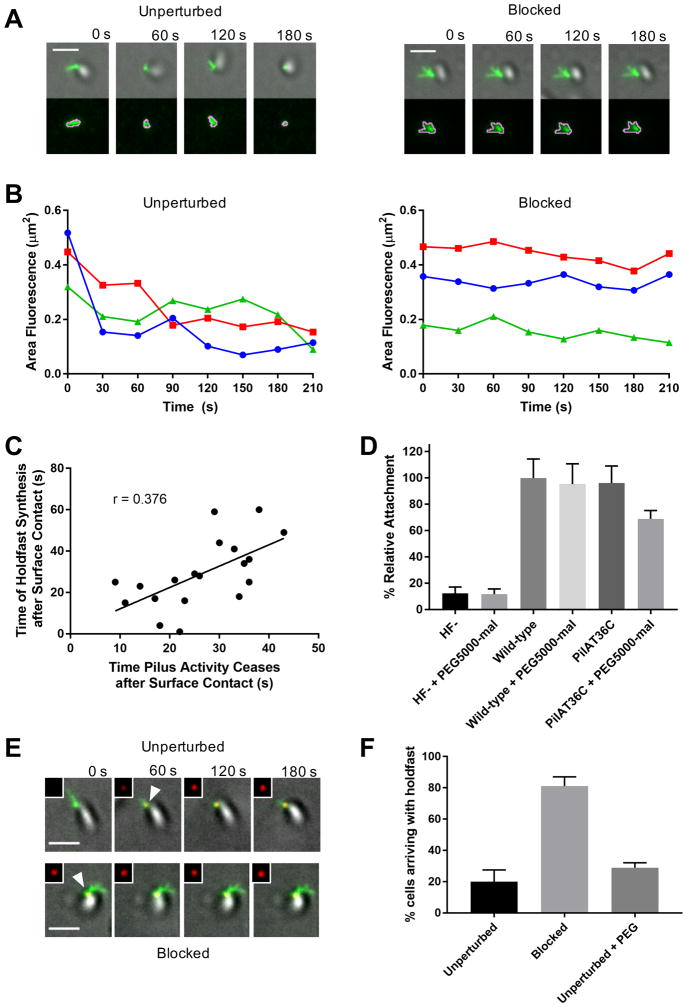
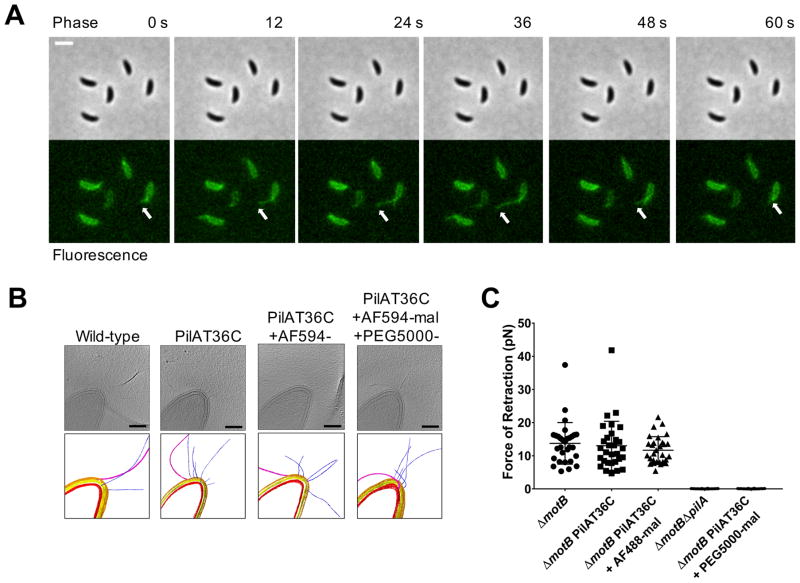
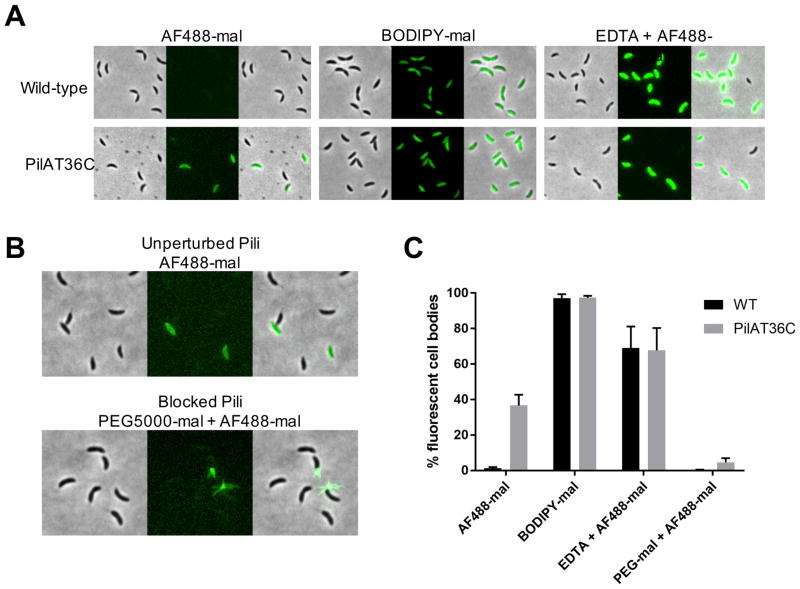
It is critical for bacteria to recognize surface contact and initiate physiological changes required for surface-associated lifestyles. Ubiquitous microbial appendages called pili are involved in sensing surfaces and facilitating downstream behaviors, but the mechanism by which pili mediate surface sensing has been unclear. We visualized pili undergoing dynamic cycles of extension and retraction. Within seconds of surface contact, these cycles ceased, which coincided with synthesis of the adhesive holdfast required for attachment. Physically blocking pili imposed resistance to pilus retraction, which was sufficient to stimulate holdfast synthesis without surface contact. Thus, to sense surfaces, bacteria use the resistance on retracting, surface-bound pili that occurs upon surface contact.
对细菌来说,识别表面接触并启动与表面相关生活方式所需的生理变化至关重要。称为菌毛的普遍存在的微生物附属物参与感知表面并促进下游行为,但菌毛介导表面感知的机制尚不清楚。我们观察到菌毛经历了伸展和收缩的动态循环。在与表面接触的几秒钟内,这些循环停止,这与附着所需的粘性固着器的合成同时发生。物理阻断菌毛会对菌毛收缩产生阻力,这足以在不与表面接触的情况下刺激固着器的合成。因此,为了感知表面,细菌利用表面接触时缩回的、与表面结合的菌毛上的阻力。