Department of Immunology and Infection, London School of Hygiene & Tropical Medicine, London, WC1E 7HT, UK.
Kenya Medical Research Institute (KEMRI)-Wellcome Trust Programme, PO Box 230, Kilifi, 80108, Kenya.
Nat Commun. 2017 Oct 26;8(1):1133. doi: 10.1038/s41467-017-01270-4.
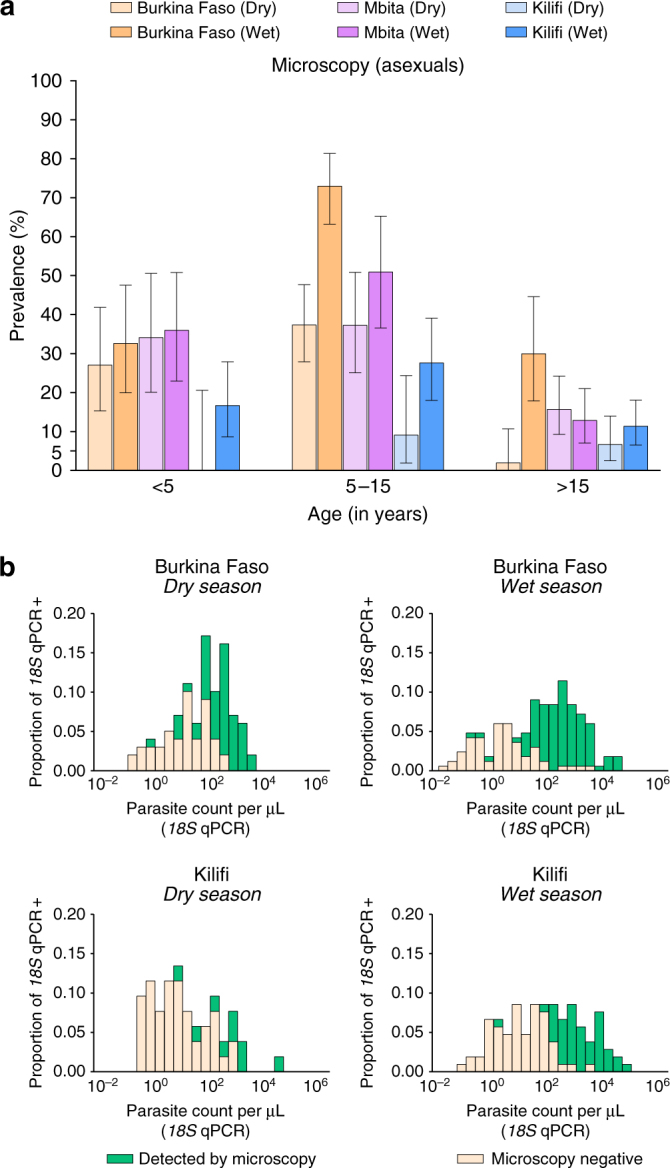
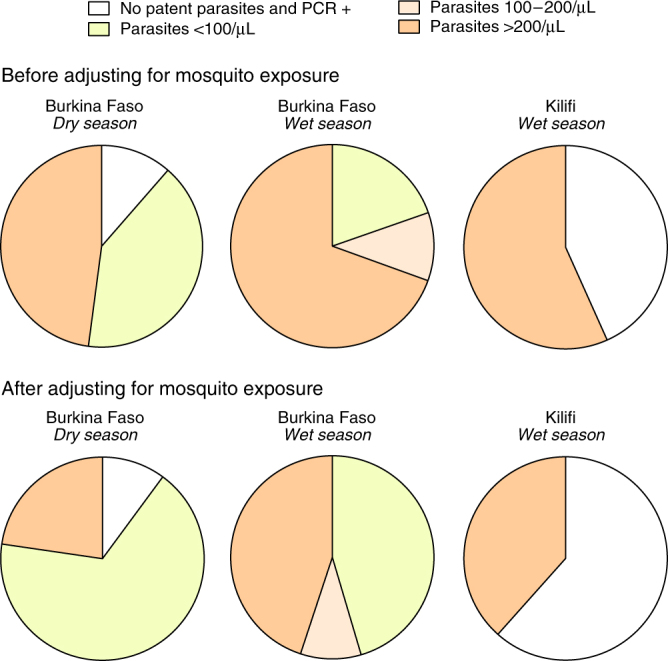
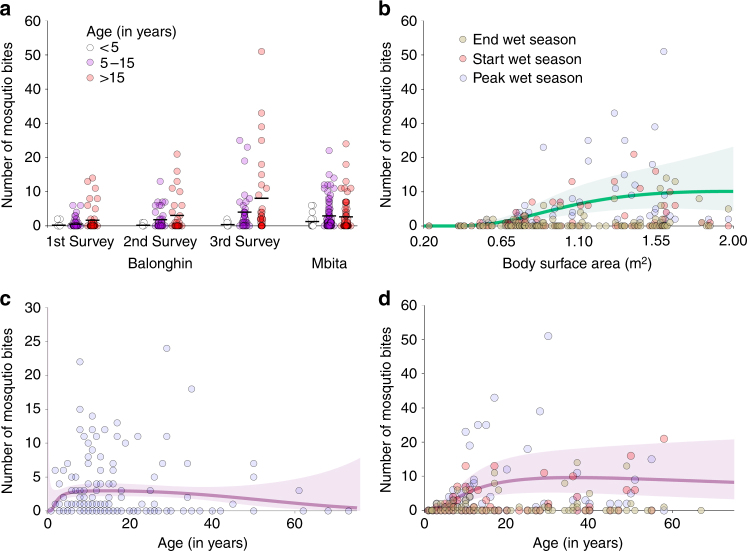
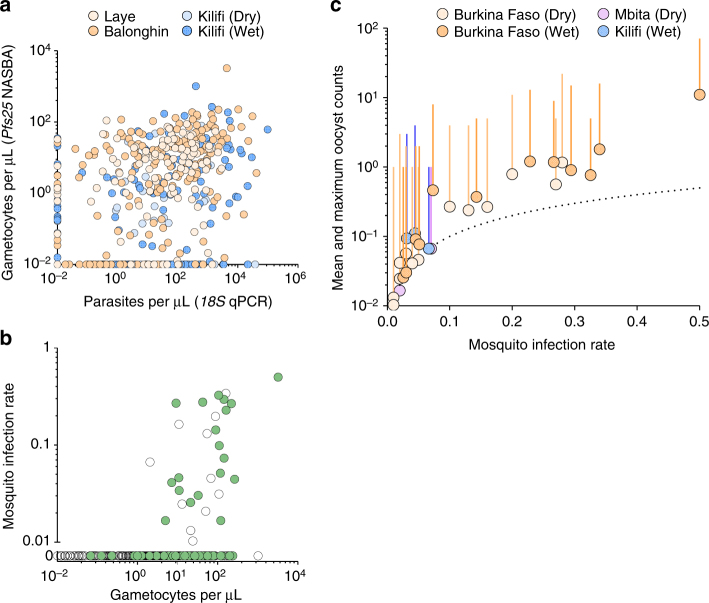
A detailed understanding of the human infectious reservoir is essential for improving malaria transmission-reducing interventions. Here we report a multi-regional assessment of population-wide malaria transmission potential based on 1209 mosquito feeding assays in endemic areas of Burkina Faso and Kenya. Across both sites, we identified 39 infectious individuals. In high endemicity settings, infectious individuals were identifiable by research-grade microscopy (92.6%; 25/27), whilst one of three infectious individuals in the lowest endemicity setting was detected by molecular techniques alone. The percentages of infected mosquitoes in the different surveys ranged from 0.05 (4/7716) to 1.6% (121/7749), and correlate positively with transmission intensity. We also estimated exposure to malaria vectors through genetic matching of blood from 1094 wild-caught bloodfed mosquitoes with that of humans resident in the same houses. Although adults transmitted fewer parasites to mosquitoes than children, they received more mosquito bites, thus balancing their contribution to the infectious reservoir.
深入了解人类感染源对于改善疟疾传播的干预措施至关重要。本研究报告了基于布基纳法索和肯尼亚流行地区的 1209 次蚊虫喂养实验,对全人群疟疾传播潜力的多区域评估。在这两个地点,我们共发现了 39 个感染个体。在高流行地区,通过研究级显微镜可以识别出感染个体(92.6%,25/27),而在最低流行地区,仅通过分子技术就发现了三个感染个体中的一个。不同调查中的感染蚊虫比例从 0.05(4/7716)到 1.6%(121/7749)不等,与传播强度呈正相关。我们还通过与居住在同一房屋中的人类的血液进行基因匹配,估计了通过蚊虫接触疟疾的情况。尽管成年人向蚊子传播的寄生虫比儿童少,但他们受到的蚊子叮咬更多,从而平衡了他们对感染源的贡献。