Blanken Sara Lynn, Kilama Maxwell, Ramjith Jordache, Musiime Alex K, Lanke Kjerstin, Ayo Daniel, Huijbers Kristiaan, Hofste Tom, Conrad Melissa, Krezanoski Paul, Dorsey Grant, Kamya Moses R, Arinaitwe Emmanuel, Bousema Teun
Department of Medical Microbiology, Radboud University Medical Centre, Nijmegen.
Infectious Disease Collaboration, Kampala, Uganda.
medRxiv. 2024 Dec 13:2024.12.12.24318757. doi: 10.1101/2024.12.12.24318757.
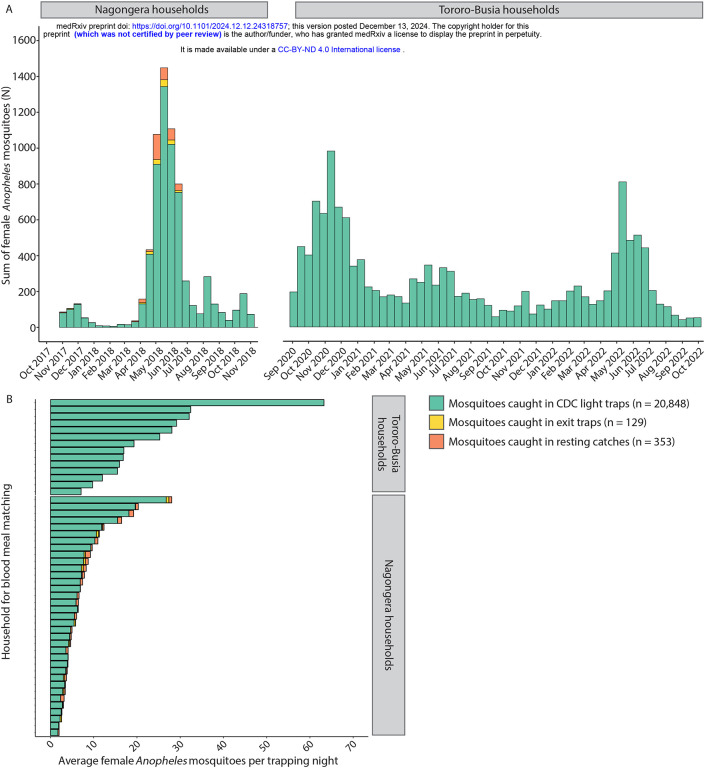
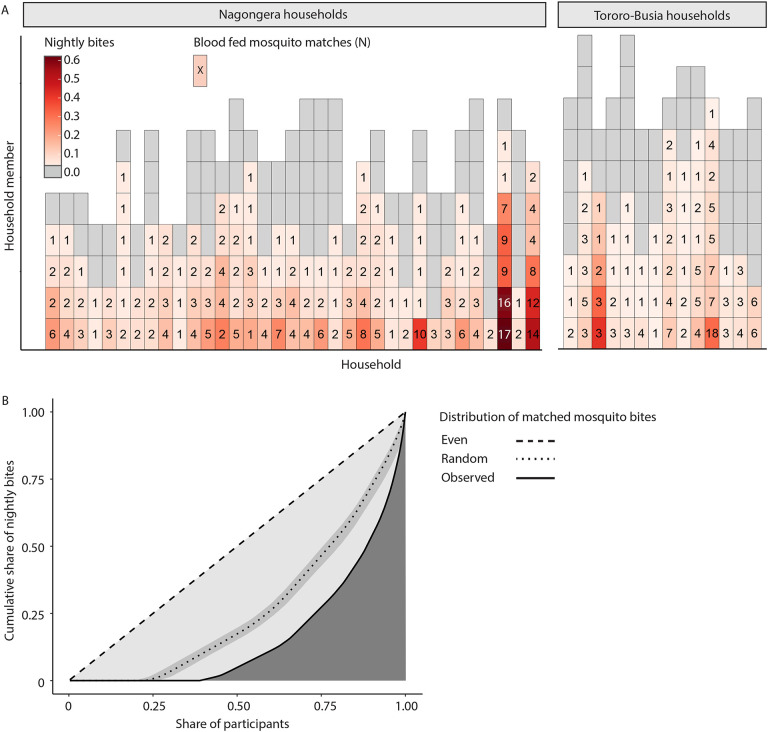
The number of mosquito bites a person receives determines the risk of acquiring malaria and the likelihood of transmitting infections to mosquitoes. We assessed heterogeneity in biting and associated factors in two settings in Uganda with different endemicity.
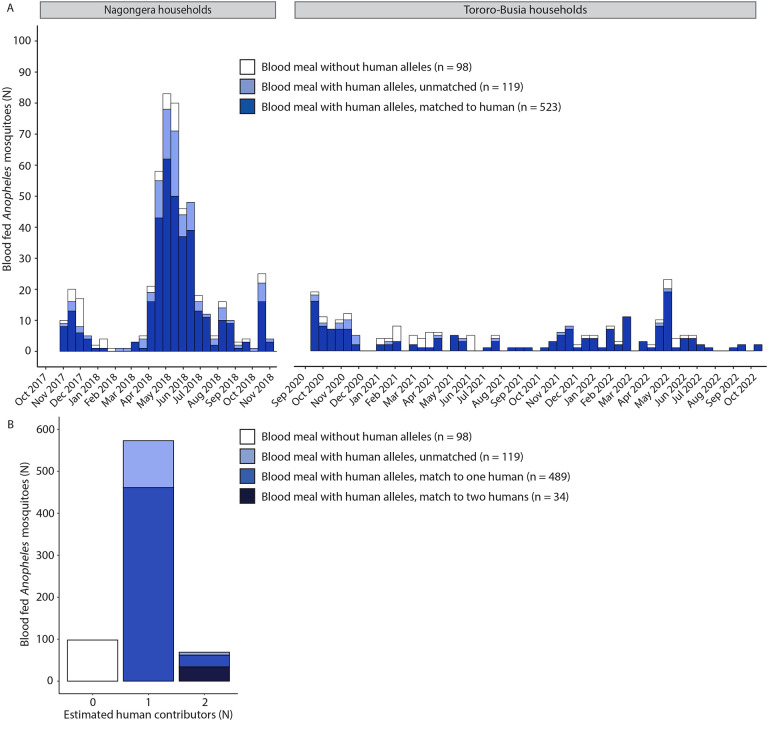
parasites in blood-fed indoor caught mosquitoes were quantified using qPCR targeting the Pf18S rRNA gene. Human DNA in dried blood spots from household occupants and mosquito blood meals was profiled using 15 short-tandem repeats (STRs) and analysed using a log-likelihood approach for matching of both single and multi-sourced blood meals and incomplete DNA profiles.
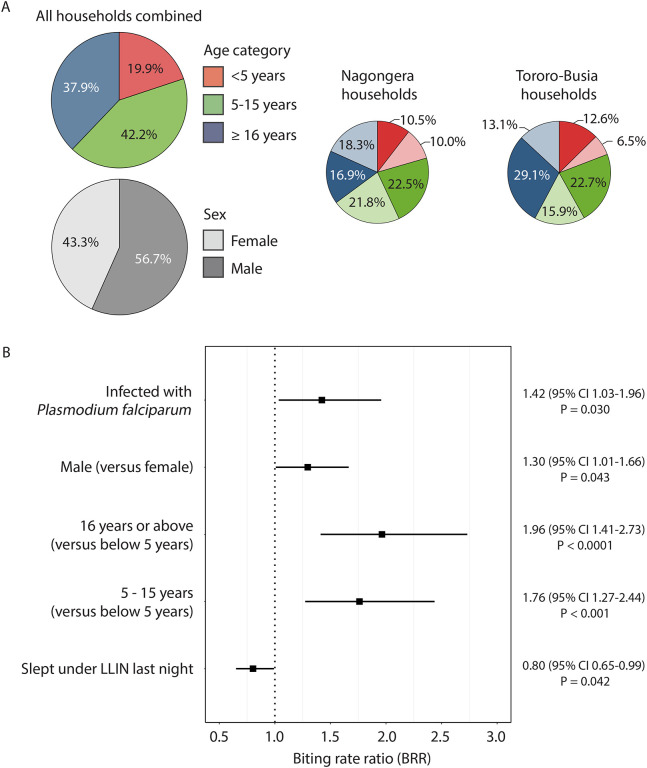
The distribution of mosquito bites was non-random; school-age children (5-15 years) and adults (≥16 years) had a mosquito biting rate ratio (BRR) 1.76 (95%CI 1.27-2.44, P < 0.001) and 1.96 (95%CI 1.41-2.73, P < 0.0001) times that of children under 5 years, respectively. Biting rates were lower in bed net users (BRR: 0.80, 95%CI 0.65-0.99, P = 0.042), and higher in males (BRR: 1.30, 95%CI 1.01-1.66, P = 0.043) and individuals infected with (BRR: 1.42, 95%CI 1.03-1.96, P = 0.030), though the latter effect lost statistical significance in sensitivity analyses.
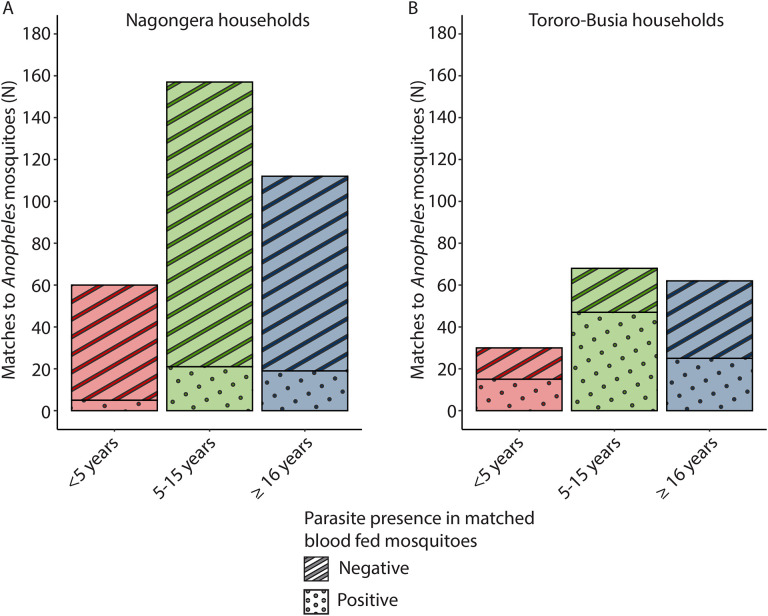
Adults and school-age children are at higher risk for receiving mosquito bites and this has implications for the relative importance of demographic populations to onward malaria transmission to mosquitoes.
一个人被蚊子叮咬的次数决定了感染疟疾的风险以及将感染传播给蚊子的可能性。我们评估了乌干达两种不同流行程度地区蚊虫叮咬情况及其相关因素的异质性。
使用针对Pf18S rRNA基因的qPCR对室内捕获的吸血蚊子体内的寄生虫进行定量。利用15个短串联重复序列(STR)对住户干血斑中的人类DNA和蚊子血餐进行分析,并采用对数似然法分析单源和多源血餐及不完整DNA图谱的匹配情况。
蚊虫叮咬的分布并非随机;学龄儿童(5 - 15岁)和成年人(≥16岁)的蚊虫叮咬率比(BRR)分别是5岁以下儿童的1.76倍(95%可信区间1.27 - 2.44,P < 0.001)和1.96倍(95%可信区间1.41 - 2.73,P < 0.0001)。使用蚊帐者的叮咬率较低(BRR:0.80,95%可信区间0.65 - 0.99,P = 0.042),男性的叮咬率较高(BRR:1.30,95%可信区间1.01 - 1.66,P = 0.043),感染……者的叮咬率也较高(BRR:1.42,95%可信区间1.03 - 1.96,P = 0.030),不过在敏感性分析中,后一效应失去了统计学意义。
成年人和学龄儿童被蚊子叮咬的风险较高,这对不同人口群体在疟疾向蚊子传播中的相对重要性具有影响。