Burger Barrett J, Rose Shannon, Bennuri Sirish C, Gill Pritmohinder S, Tippett Marie L, Delhey Leanna, Melnyk Stepan, Frye Richard E
University of Arkansas for Medical Sciences, Little Rock, AR, United States.
Autism Research Program, Arkansas Children's Research Institute, Little Rock, AR, United States.
Front Pediatr. 2017 Oct 12;5:219. doi: 10.3389/fped.2017.00219. eCollection 2017.
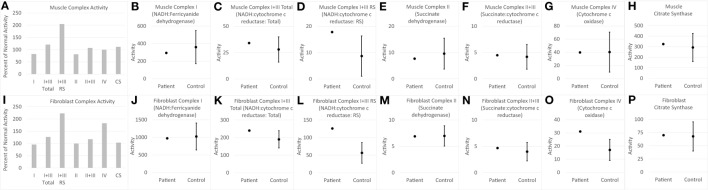
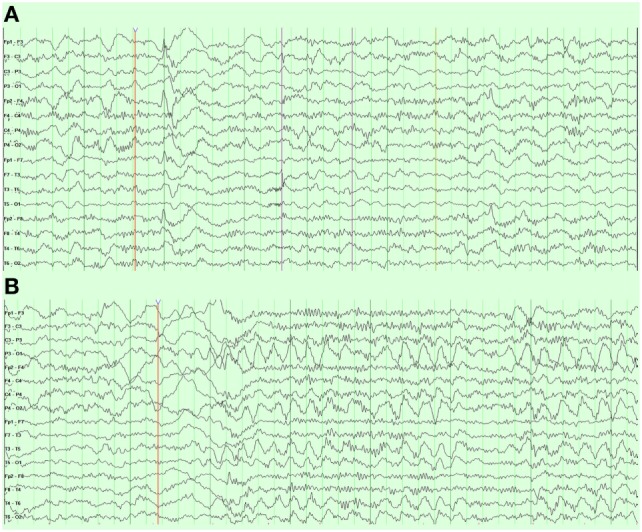
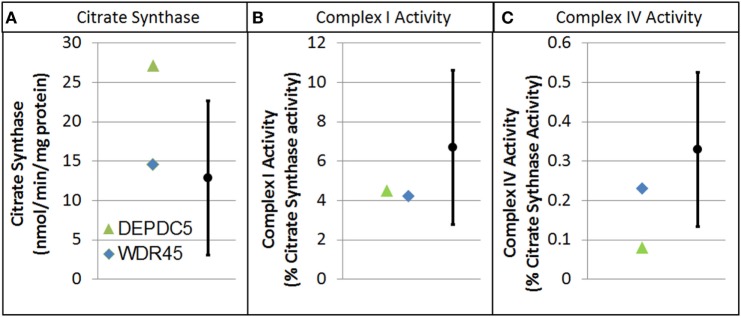
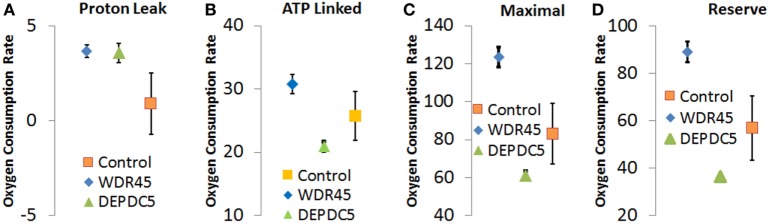
The prevalence of autism spectrum disorder (ASD) is high, yet the etiology of this disorder is still uncertain. Advancements in genetic analysis have provided the ability to identify potential genetic changes that may contribute to ASD. Interestingly, several genetic syndromes have been linked to metabolic dysfunction, suggesting an avenue for treatment. In this case study, we report siblings with ASD who had similar initial phenotypic presentations. Whole exome sequencing (WES) revealed a novel c.795delT mutation in the WDR45 gene affecting the girl, which was consistent with her eventual progression to a Rett-like syndrome phenotype including seizures along with a stereotypical cyclic breathing pattern. Interestingly, WES identified that the brother harbored a novel heterozygous Y1546H variant in the DEP domain-containing protein 5 (DEPDC5) gene, consistent with his presentation. Both siblings underwent a metabolic workup that demonstrated different patterns of mitochondrial dysfunction. The girl demonstrated statistically significant elevations in mitochondrial activity of complex I + III in both muscle and fibroblasts and increased respiration in peripheral blood mononuclear cells (PBMCs) on Seahorse Extracellular Flux analysis. The boy demonstrates a statistically significant decrease in complex IV activity in buccal epithelium and decreased respiration in PBMCs. These cases highlight the differences in genetic abnormalities even in siblings with ASD phenotypes as well as highlights the individual role of novel mutations in the WDR45 and DEPDC5 genes. These cases demonstrate the importance of advanced genetic testing combined with metabolic evaluations in the workup of children with ASD.
自闭症谱系障碍(ASD)的患病率很高,但其病因仍不确定。基因分析的进展使人们有能力识别可能导致ASD的潜在基因变化。有趣的是,几种遗传综合征与代谢功能障碍有关,这为治疗提供了一条途径。在本病例研究中,我们报告了患有ASD的兄弟姐妹,他们最初的表型表现相似。全外显子组测序(WES)揭示了影响该女孩的WDR45基因中一个新的c.795delT突变,这与她最终发展为类瑞特综合征表型一致,包括癫痫发作以及刻板的周期性呼吸模式。有趣的是,WES发现该男孩在含DEP结构域蛋白5(DEPDC5)基因中存在一个新的杂合Y1546H变异,与他的表现相符。这两个兄弟姐妹都接受了代谢检查,结果显示出线粒体功能障碍的不同模式。该女孩在肌肉和成纤维细胞中复合体I + III的线粒体活性在统计学上有显著升高,并且在海马细胞外通量分析中,外周血单核细胞(PBMC)的呼吸增加。该男孩在颊黏膜上皮中复合体IV活性在统计学上有显著降低,PBMC的呼吸也降低。这些病例突出了即使是具有ASD表型的兄弟姐妹之间基因异常的差异,同时也突出了WDR45和DEPDC5基因中新型突变的个体作用。这些病例证明了在对ASD儿童进行检查时,先进的基因检测与代谢评估相结合的重要性。