The State Key Laboratory of Reproductive Regulation and Breeding of Grassland Livestock, Inner Mongolia University, Hohhot 010070, China.
Research Center for Animal Genetic Resources of Mongolia Plateau, College of Life Sciences, Inner Mongolia University, Hohhot 010070, China.
Cell Res. 2018 Jan;28(1):22-34. doi: 10.1038/cr.2017.134. Epub 2017 Oct 27.
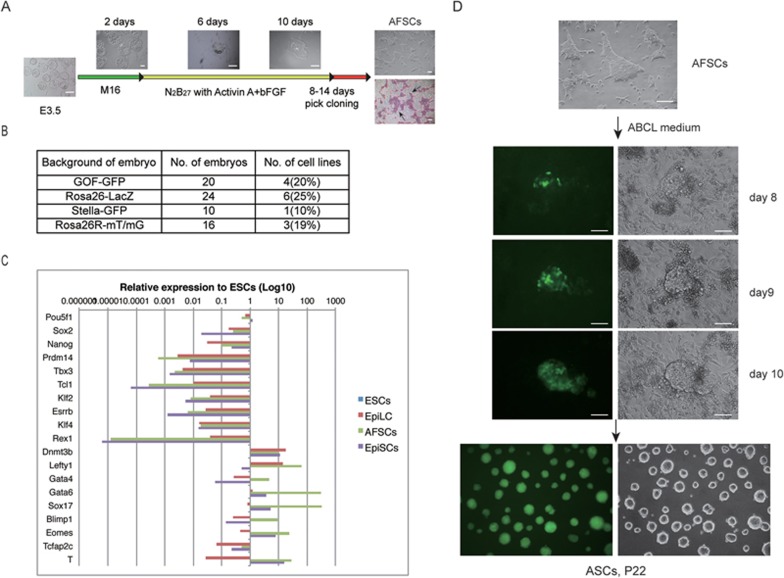
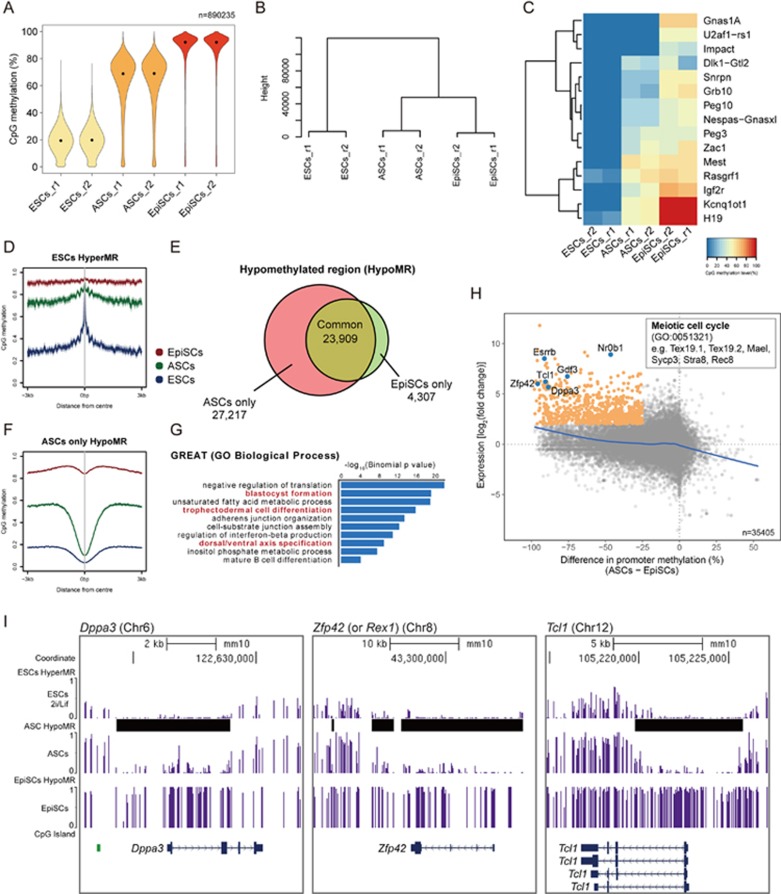
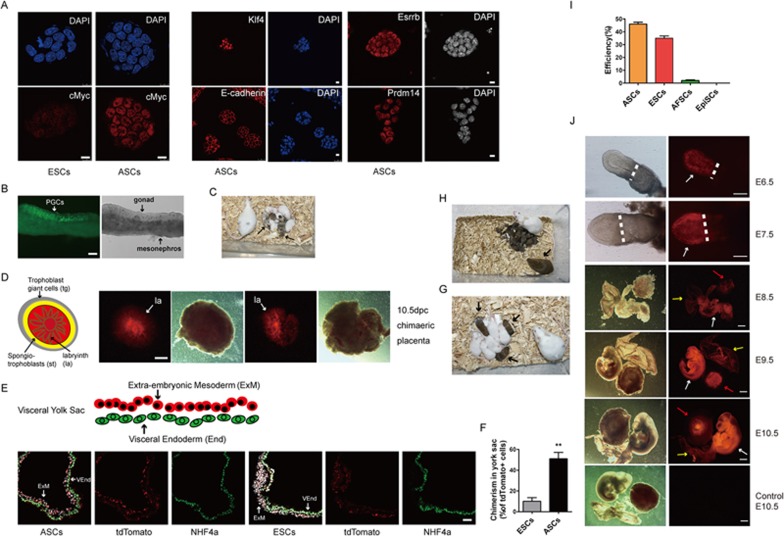
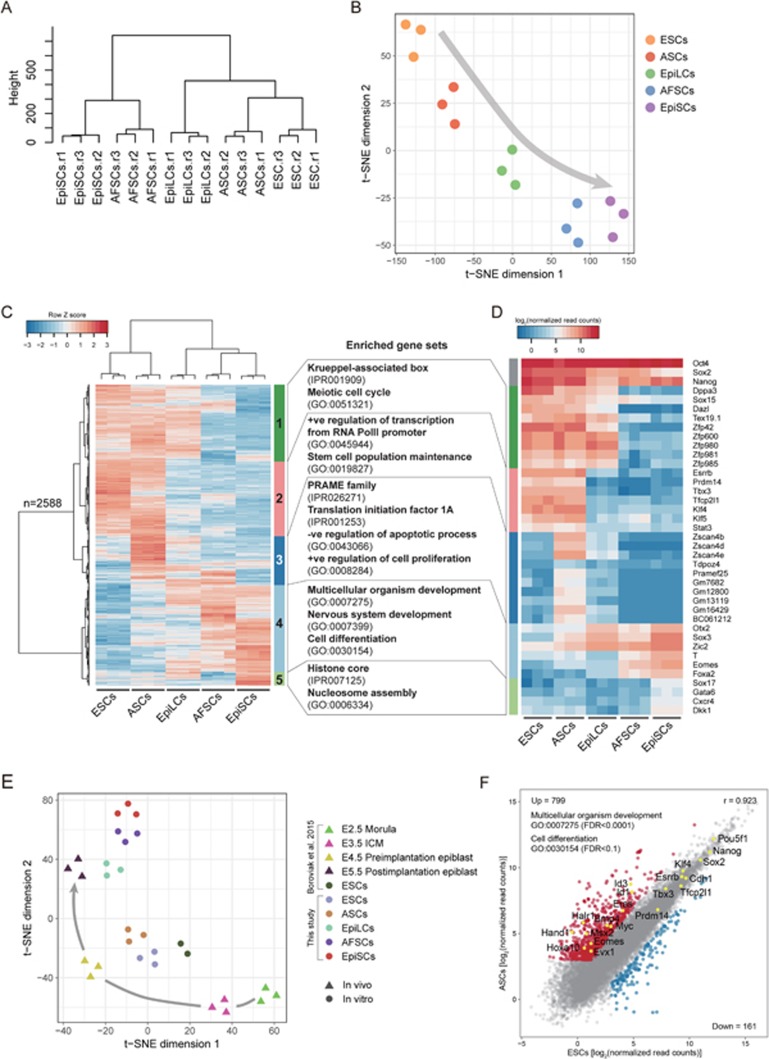
Naive hypomethylated embryonic pluripotent stem cells (ESCs) are developmentally closest to the preimplantation epiblast of blastocysts, with the potential to contribute to all embryonic tissues and the germline, excepting the extra-embryonic tissues in chimeric embryos. By contrast, epiblast stem cells (EpiSCs) resembling postimplantation epiblast are relatively more methylated and show a limited potential for chimerism. Here, for the first time, we reveal advanced pluripotent stem cells (ASCs), which are developmentally beyond the pluripotent cells in the inner cell mass but with higher potency than EpiSCs. Accordingly, a single ASC contributes very efficiently to the fetus, germline, yolk sac and the placental labyrinth in chimeras. Since they are developmentally more advanced, ASCs do not contribute to the trophoblast. ASCs were derived from blastocysts in two steps in a chemically defined medium supplemented with Activin A and basic fibroblast growth factor, followed by culturing in ABCL medium containing ActA, BMP4, CHIR99021 and leukemia inhibitory factor. Notably, ASCs exhibit a distinct transcriptome with the expression of both naive pluripotency genes, as well as mesodermal somatic genes; Eomes, Eras, Tdgf1, Evx1, hand1, Wnt5a and distinct repetitive elements. Conversion of established ESCs to ASCs is also achievable. Importantly, ASCs exhibit a stable hypermethylated epigenome and mostly intact imprints as compared to the hypomethylated inner cell mass of blastocysts and naive ESCs. Properties of ASCs suggest that they represent cells at an intermediate cellular state between the naive and primed states of pluripotency.
幼稚的低甲基化胚胎多能干细胞(ESCs)在发育上最接近囊胚的着床前外胚层,具有向所有胚胎组织和生殖系分化的潜能,但不能向嵌合胚胎的外胚层组织分化。相比之下,类似于着床后外胚层的胚胎干细胞(EpiSCs)则相对甲基化程度更高,且嵌合能力有限。在这里,我们首次揭示了先进的多能干细胞(ASCs),它们在发育上已经超越了内细胞团中的多能细胞,但具有更高的多能性。因此,单个 ASC 非常有效地贡献于嵌合体中的胎儿、生殖系、卵黄囊和胎盘绒毛膜。由于它们在发育上更为先进,因此不会向滋养层分化。ASCs 是在含有激活素 A 和碱性成纤维细胞生长因子的化学定义培养基中从囊胚两步诱导而来,然后在含有 ActA、BMP4、CHIR99021 和白血病抑制因子的 ABCL 培养基中培养。值得注意的是,ASCs 表现出独特的转录组,表达了幼稚多能性基因和中胚层体细胞基因;Eomes、Eras、Tdgf1、Evx1、hand1、Wnt5a 和独特的重复元件。已建立的 ESCs 也可以转化为 ASCs。重要的是,与囊胚的低甲基化内细胞团和幼稚 ESCs 相比,ASCs 表现出稳定的高甲基化表观基因组和大部分完整的印迹。ASCs 的特性表明,它们代表了处于幼稚和原始多能性状态之间的中间细胞状态的细胞。