Li Ping, Guo Wei, Yue Huamei, Li Chuangju, Du Hao, Qiao Xinmei, Liu Zhigang, Zhou Qiong, Wei Qiwei
Key Laboratory of Freshwater Biodiversity Conservation, Ministry of Agriculture of China, Yangtze River Fisheries Research Institute, Chinese Academy of Fishery Sciences, Wuhan, China.
Sino-Czech Joint Laboratory for Fish Conservation and Biotechnology, Yangtze River Fisheries Research Institute, Chinese Academy of Fishery Sciences, Wuhan, China.
PLoS One. 2017 Oct 27;12(10):e0186003. doi: 10.1371/journal.pone.0186003. eCollection 2017.
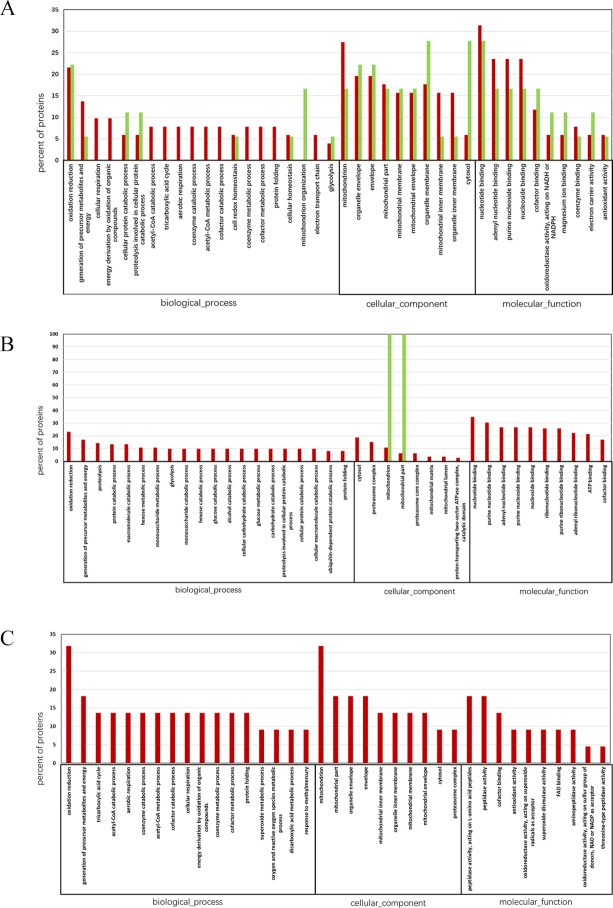
Conventional sperm analysis (i.e., motility and fertility) has been used to evaluate sperm quality. Understanding the quality of sperm on the molecular level in the sturgeons, Acipenser baerii and A. schrenckii, is essential for the improvement of the conservation of genetic resources and farming performance. In this study, we used the iTRAQ proteomics approach to perform proteomic profiling of spermatozoa associated with sperm quality in sturgeons (Data are available via ProteomeXchange with identifier PXD006108). The results showed 291 and 359 differentially expressed proteins in A. baerii and A. schrenckii, respectively, of which 72 were common to both species and all were upregulated in high quality compared with low quality samples. The differentially expressed proteins were mainly categorized into the generation of precursor metabolites and energy and oxidation, and they were localized to the mitochondria. Three distinguishing pathways, Arginine and proline metabolism, Pyruvate metabolism and the Citrate cycle (TCA cycle) were found to play an important role in energy metabolism, and some substrates could be used in the sperm medium for storage and cryopreservation. The quantity levels of two proteins, CKMT1 and LDHB, were verified by western blot analysis. Moreover, other potential biomarkers involved in oxidation reduction, ubiquitin-proteasome-dependent proteolysis, chaperones and binding activity were also discussed. Our study is the first to use the iTRAQ-based proteomics approach to analyse the sturgeon spermatozoa proteome, and the results that we obtained are valuable for the prediction of sperm quality and reproduction management in these threatened species.
传统的精子分析(即活力和受精能力)已被用于评估精子质量。了解贝氏鲟和施氏鲟精子在分子水平上的质量,对于改善遗传资源保护和养殖性能至关重要。在本研究中,我们使用iTRAQ蛋白质组学方法对鲟鱼中与精子质量相关的精子进行蛋白质组分析(数据可通过ProteomeXchange获得,标识符为PXD006108)。结果显示,贝氏鲟和施氏鲟分别有291种和359种差异表达蛋白,其中72种在两个物种中都有,并且与低质量样本相比,所有这些蛋白在高质量样本中均上调。差异表达蛋白主要分为前体代谢物和能量的产生以及氧化,并且它们定位于线粒体。发现精氨酸和脯氨酸代谢、丙酮酸代谢以及柠檬酸循环(TCA循环)这三条不同的途径在能量代谢中起重要作用,并且一些底物可用于精子培养基的储存和冷冻保存。通过蛋白质免疫印迹分析验证了两种蛋白CKMT1和LDHB的数量水平。此外,还讨论了其他参与氧化还原、泛素-蛋白酶体依赖性蛋白水解、伴侣蛋白和结合活性的潜在生物标志物。我们的研究首次使用基于iTRAQ的蛋白质组学方法分析鲟鱼精子蛋白质组,我们获得的结果对于预测这些濒危物种的精子质量和繁殖管理具有重要价值。