Doerflinger Sylvie Y, Cortese Mirko, Romero-Brey Inés, Menne Zach, Tubiana Thibault, Schenk Christian, White Peter A, Bartenschlager Ralf, Bressanelli Stéphane, Hansman Grant S, Lohmann Volker
Department of Infectious Diseases, Virology, Heidelberg University, Heidelberg, Germany.
Schaller Research Group at the University of Heidelberg and the DKFZ, Heidelberg, Germany.
PLoS Pathog. 2017 Oct 27;13(10):e1006705. doi: 10.1371/journal.ppat.1006705. eCollection 2017 Oct.
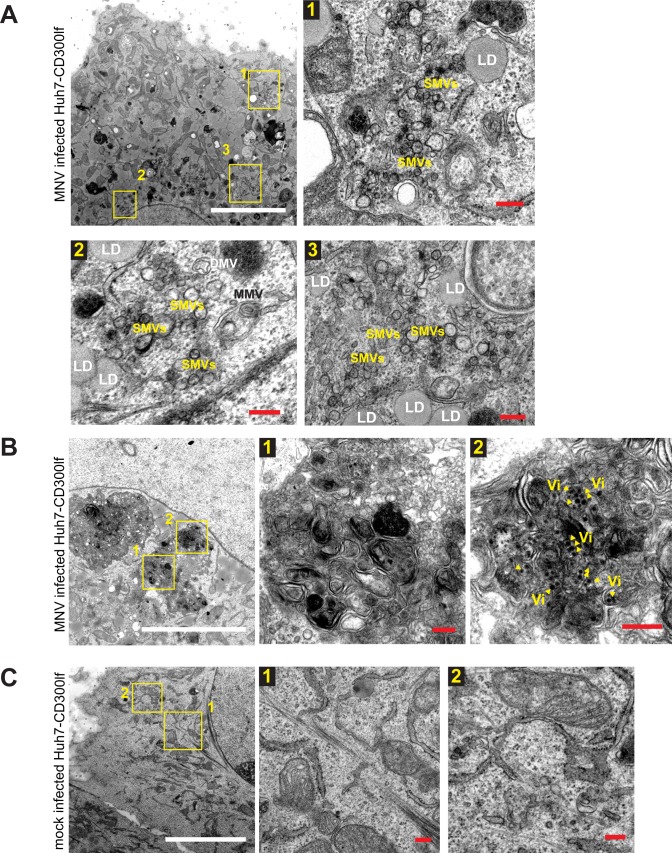
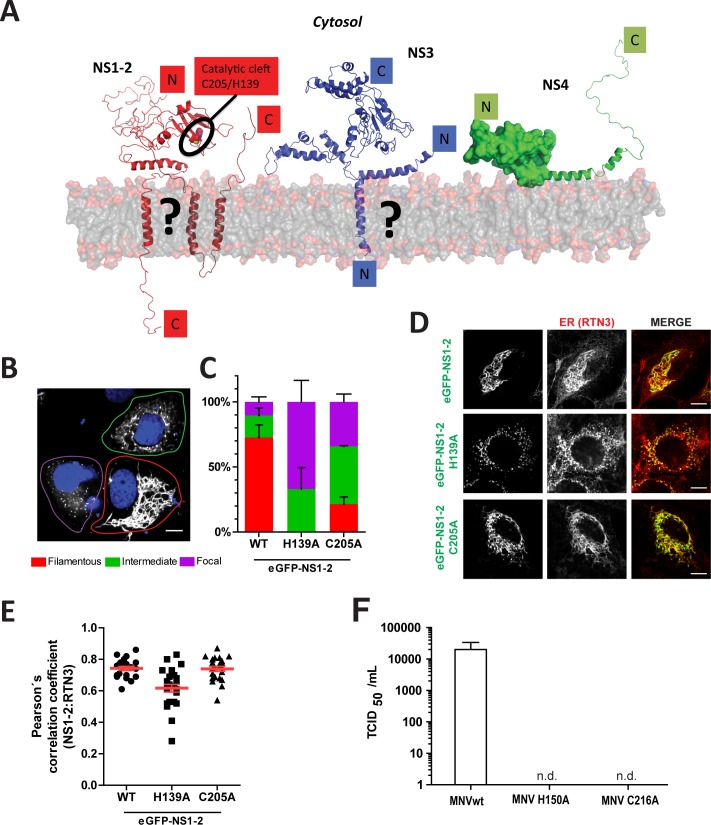
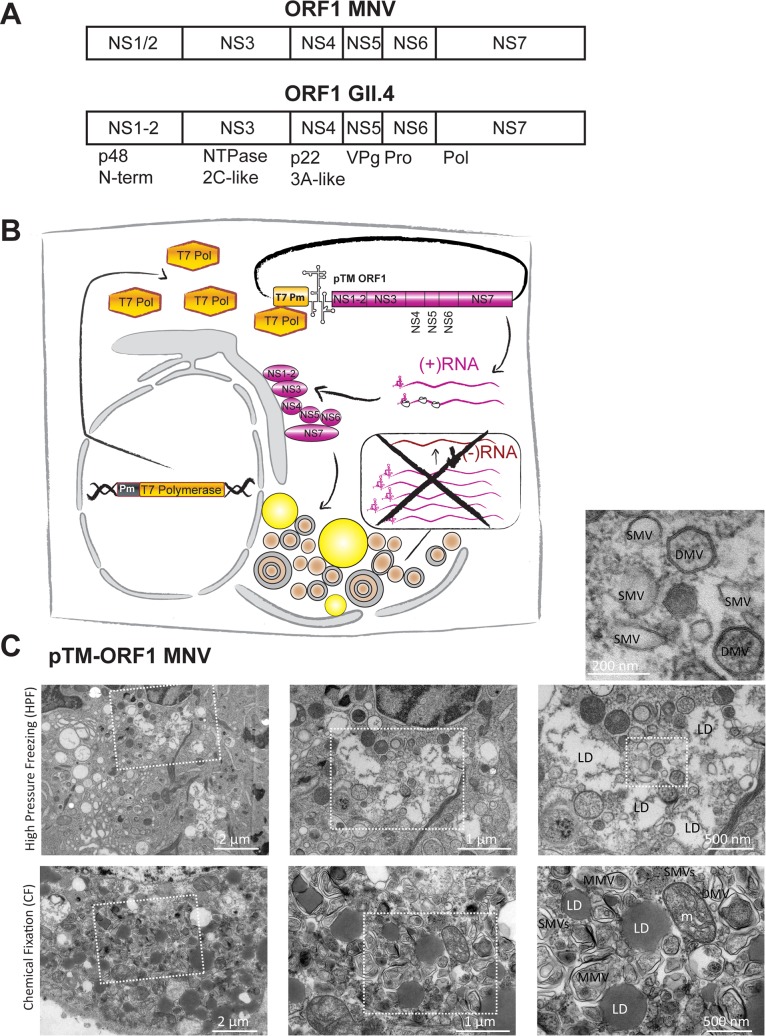
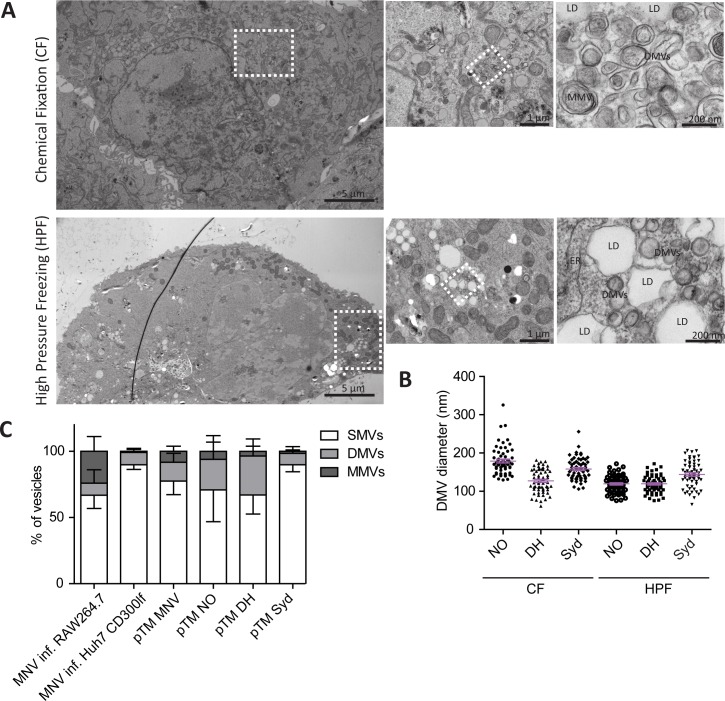
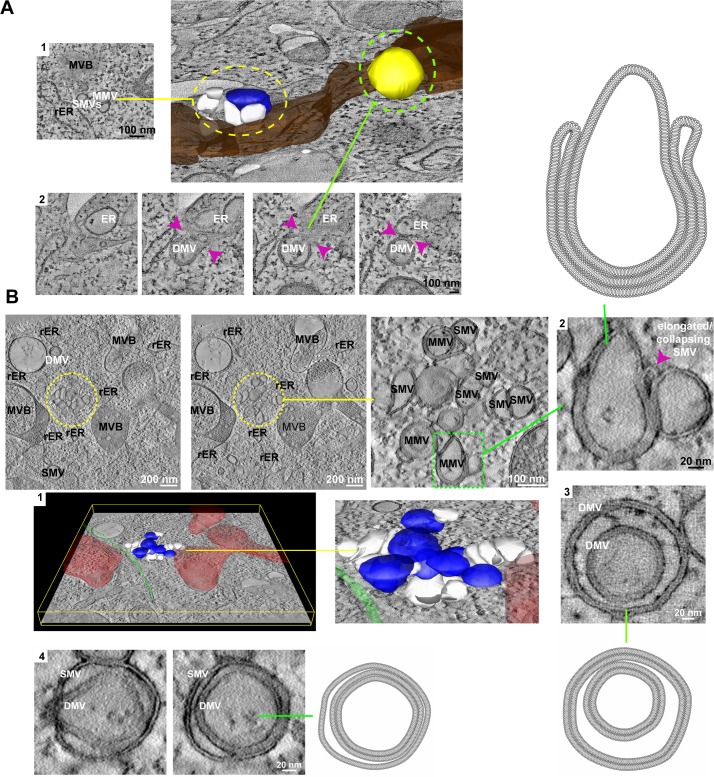
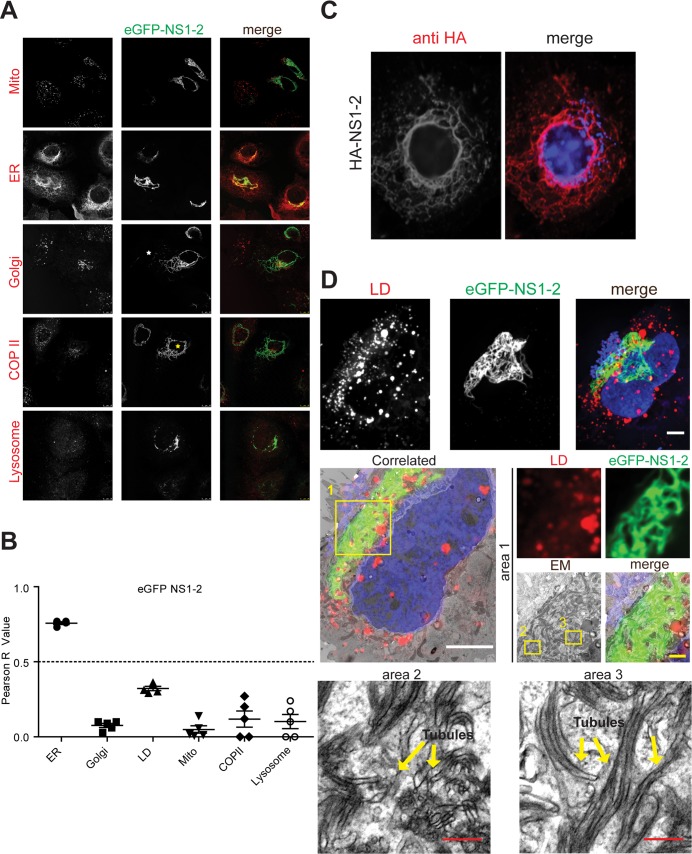
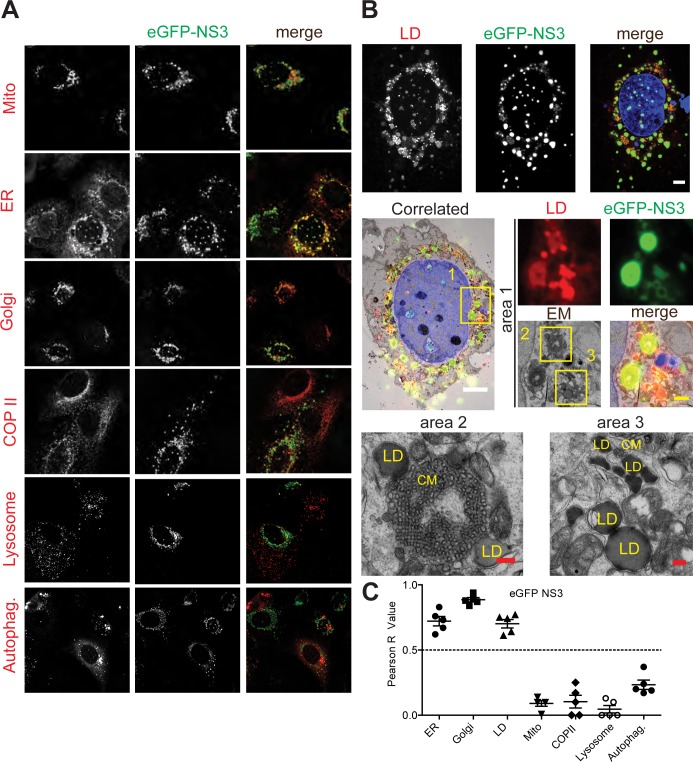
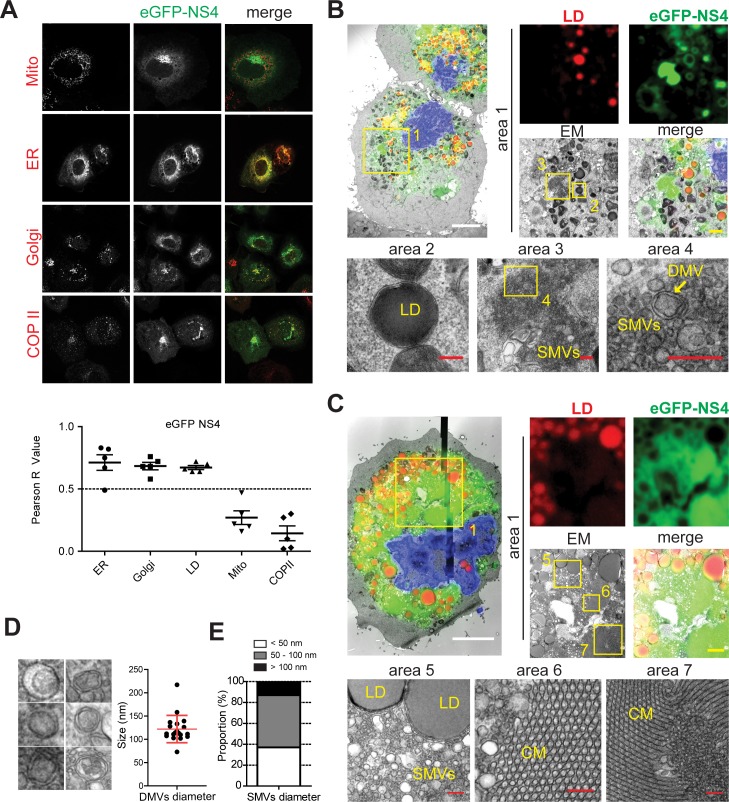
Human noroviruses (huNoV) are the most frequent cause of non-bacterial acute gastroenteritis worldwide, particularly genogroup II genotype 4 (GII.4) variants. The viral nonstructural (NS) proteins encoded by the ORF1 polyprotein induce vesical clusters harboring the viral replication sites. Little is known so far about the ultrastructure of these replication organelles or the contribution of individual NS proteins to their biogenesis. We compared the ultrastructural changes induced by expression of norovirus ORF1 polyproteins with those induced upon infection with murine norovirus (MNV). Characteristic membrane alterations induced by ORF1 expression resembled those found in MNV infected cells, consisting of vesicle accumulations likely built from the endoplasmic reticulum (ER) which included single membrane vesicles (SMVs), double membrane vesicles (DMVs) and multi membrane vesicles (MMVs). In-depth analysis using electron tomography suggested that MMVs originate through the enwrapping of SMVs with tubular structures similar to mechanisms reported for picornaviruses. Expression of GII.4 NS1-2, NS3 and NS4 fused to GFP revealed distinct membrane alterations when analyzed by correlative light and electron microscopy. Expression of NS1-2 induced proliferation of smooth ER membranes forming long tubular structures that were affected by mutations in the active center of the putative NS1-2 hydrolase domain. NS3 was associated with ER membranes around lipid droplets (LDs) and induced the formation of convoluted membranes, which were even more pronounced in case of NS4. Interestingly, NS4 was the only GII.4 protein capable of inducing SMV and DMV formation when expressed individually. Our work provides the first ultrastructural analysis of norovirus GII.4 induced vesicle clusters and suggests that their morphology and biogenesis is most similar to picornaviruses. We further identified NS4 as a key factor in the formation of membrane alterations of huNoV and provide models of the putative membrane topologies of NS1-2, NS3 and NS4 to guide future studies.
人诺如病毒(huNoV)是全球非细菌性急性胃肠炎最常见的病因,尤其是基因II群4型(GII.4)变体。由开放阅读框1多聚蛋白编码的病毒非结构(NS)蛋白诱导形成含有病毒复制位点的囊泡簇。迄今为止,对于这些复制细胞器的超微结构或单个NS蛋白对其生物发生的贡献知之甚少。我们比较了诺如病毒开放阅读框1多聚蛋白表达所诱导的超微结构变化与鼠诺如病毒(MNV)感染所诱导的变化。开放阅读框1表达所诱导的特征性膜改变类似于在MNV感染细胞中发现的改变,由可能由内质网(ER)形成的囊泡聚集组成,包括单膜囊泡(SMV)、双膜囊泡(DMV)和多膜囊泡(MMV)。使用电子断层扫描的深入分析表明,MMV起源于SMV被类似于小RNA病毒报道机制的管状结构包裹。与绿色荧光蛋白融合的GII.4 NS1-2、NS3和NS4的表达,在通过相关光镜和电镜分析时显示出不同的膜改变。NS1-2的表达诱导了光滑内质网形成长管状结构的增殖,这些结构受到假定的NS1-2水解酶结构域活性中心突变的影响。NS3与脂滴(LD)周围的内质网膜相关,并诱导形成卷曲膜,如果是NS4则更为明显。有趣的是,NS4是唯一在单独表达时能够诱导SMV和DMV形成的GII.4蛋白。我们的工作首次对诺如病毒GII.4诱导的囊泡簇进行了超微结构分析,并表明它们的形态和生物发生与小RNA病毒最为相似。我们进一步确定NS4是huNoV膜改变形成的关键因素,并提供了NS1-2、NS3和NS4假定膜拓扑结构的模型,以指导未来的研究。