Wang Yuan, Zhang Xue-Yin, Luo Yan-Ling, Xu Feng, Chen Ya-Shao, Su Yu-Yu
Key Laboratory of Macromolecular Science of Shaanxi Province, School of Chemistry and Chemical Engineering, Shaanxi Normal University, Xi'an, 710062, People's Republic of China.
J Nanobiotechnology. 2017 Oct 27;15(1):76. doi: 10.1186/s12951-017-0309-y.
Stimuli-responsive polymer materials are a new kind of intelligent materials based on the concept of bionics, which exhibits more significant changes in physicochemical properties upon triggered by tiny environment stimuli, hence providing a good carrier platform for antitumor drug delivery.
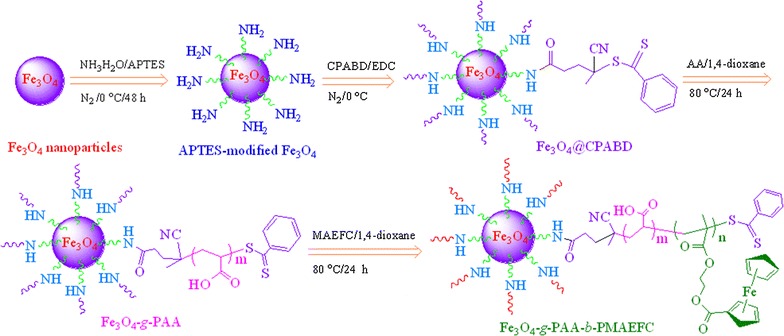
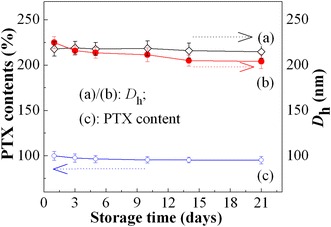
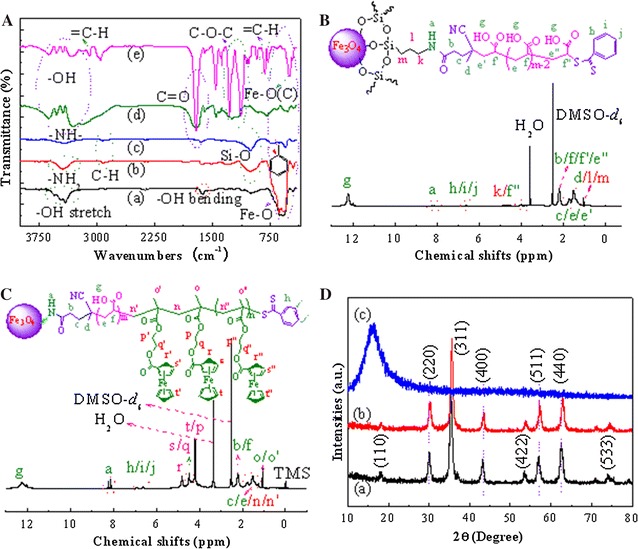
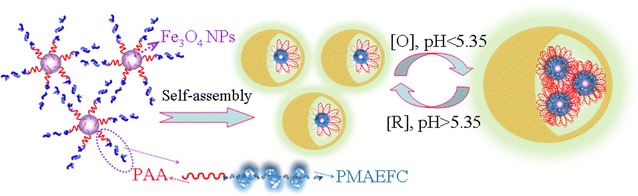
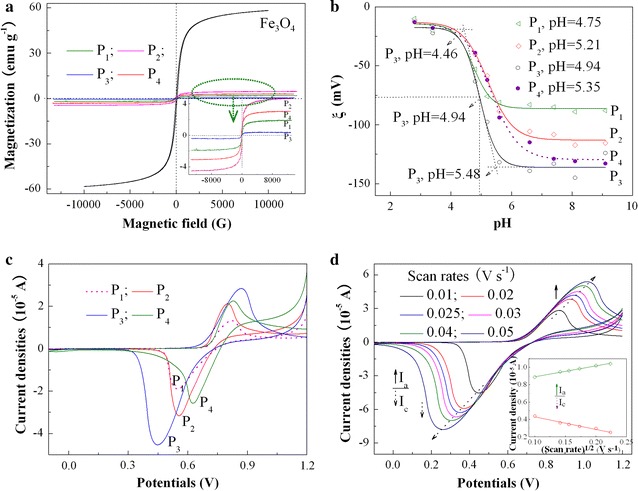
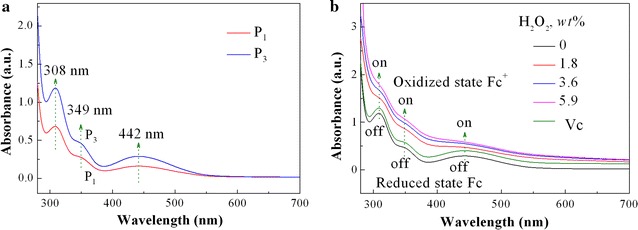
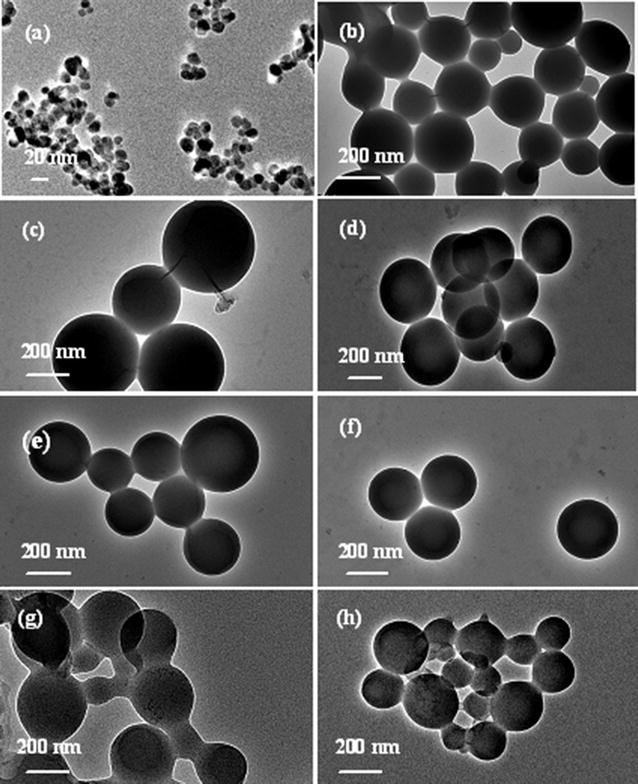
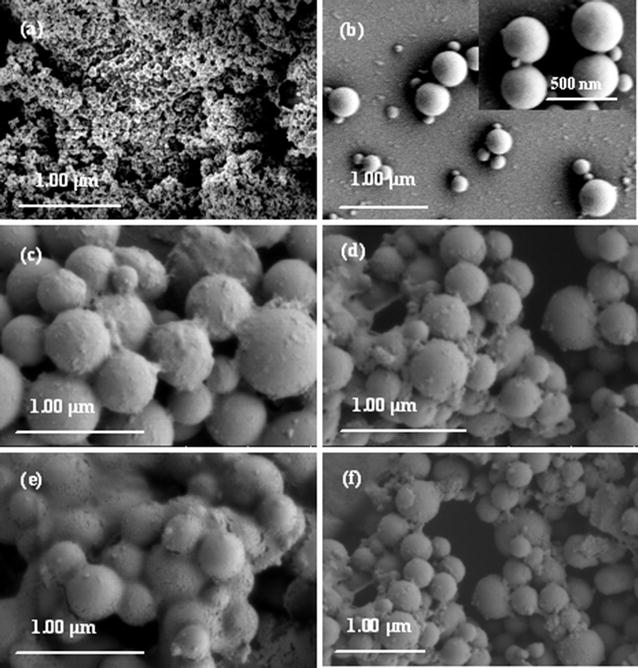
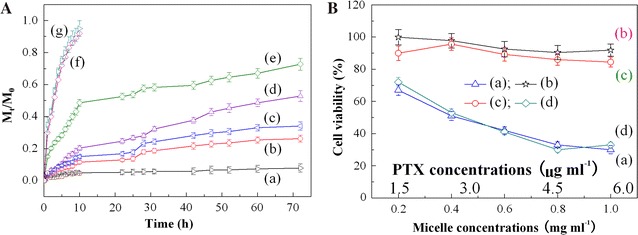
Dual stimuli-responsive FeO graft poly(acrylic acid)-block-poly(2-methacryloyloxyethyl ferrocenecarboxylate) block copolymers (FeO-g-PAA-b-PMAEFC) were engineered and synthesized through a two-step sequential reversible addition-fragmentation chain transfer polymerization route. The characterization was performed by FTIR, H NMR, SEC, XRD and TGA techniques. The self-assembly behavior in aqueous solution upon triggered by pH, magnetic and redox stimuli was investigated via zeta potentials, vibration sample magnetometer, cyclic voltammetry, fluorescent spectrometry, dynamic light scattering, XPS, TEM and SEM measurements. The experimental results indicated that the FeO-g-PAA-b-PMAEFC copolymer materials could spontaneously assemble into hybrid magnetic copolymer micromicelles with core-shell structure, and exhibited superparamagnetism, redox and pH stimuli-responsive features. The hybrid copolymer micromicelles were stable and nontoxic, and could entrap hydrophobic anticancer drug, which was in turn swiftly and effectively delivered from the drug-loaded micromicelles at special microenvironments such as acidic pH and high reactive oxygen species.
This class of stimuli-responsive copolymer materials is expected to find wide applications in medical science and biology, etc., especially in drug delivery system.
刺激响应性高分子材料是基于仿生学概念的新型智能材料,在微小环境刺激下其物理化学性质会发生更显著变化,从而为抗肿瘤药物递送提供了良好的载体平台。
通过两步顺序可逆加成-断裂链转移聚合路线设计并合成了双刺激响应性FeO接枝聚(丙烯酸)-嵌段-聚(2-甲基丙烯酰氧基乙基二茂铁甲酸酯)嵌段共聚物(FeO-g-PAA-b-PMAEFC)。通过傅里叶变换红外光谱(FTIR)、核磁共振氢谱(H NMR)、尺寸排阻色谱(SEC)、X射线衍射(XRD)和热重分析(TGA)技术进行了表征。通过zeta电位、振动样品磁强计、循环伏安法、荧光光谱法、动态光散射、X射线光电子能谱(XPS)、透射电子显微镜(TEM)和扫描电子显微镜(SEM)测量研究了在pH、磁和氧化还原刺激下在水溶液中的自组装行为。实验结果表明,FeO-g-PAA-b-PMAEFC共聚物材料可自发组装成具有核壳结构的混合磁性共聚物微胶束,并表现出超顺磁性、氧化还原和pH刺激响应特性。混合共聚物微胶束稳定且无毒,可包封疏水性抗癌药物,进而在酸性pH和高活性氧等特殊微环境下从载药微胶束中快速有效地释放药物。
这类刺激响应性共聚物材料有望在医学、生物学等领域得到广泛应用,尤其是在药物递送系统中。