Lecocq Thomas, Longuevergne Laurent, Pedersen Helle Anette, Brenguier Florent, Stammler Klaus
Royal Observatory of Belgium, Seismology-Gravimetry, Avenue circulaire 3, B1180, Brussels, Belgium.
Géosciences Rennes, UMR 6118, Université Rennes 1, Campus Beaulieu, 35042, Rennes Cedex, France.
Sci Rep. 2017 Oct 27;7(1):14241. doi: 10.1038/s41598-017-14468-9.
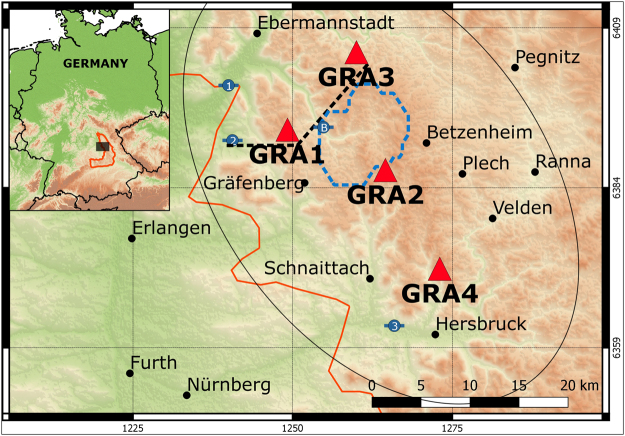
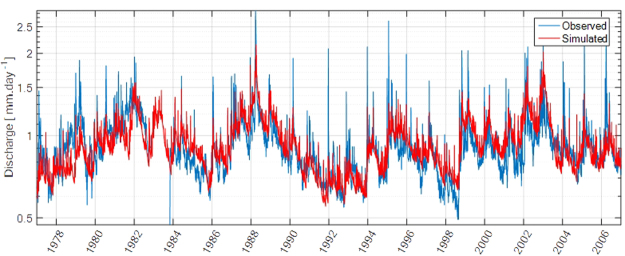
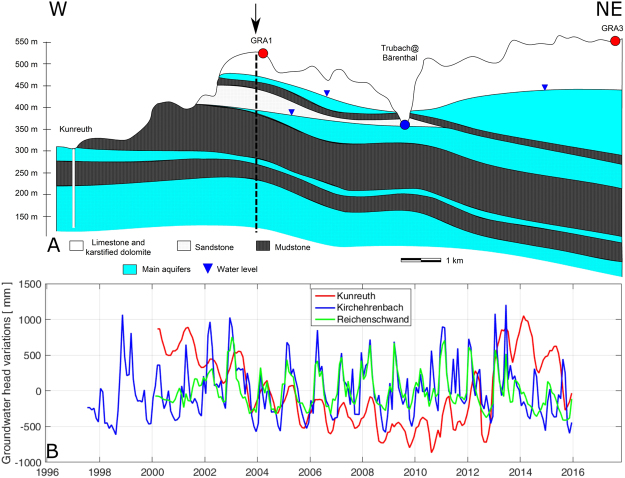
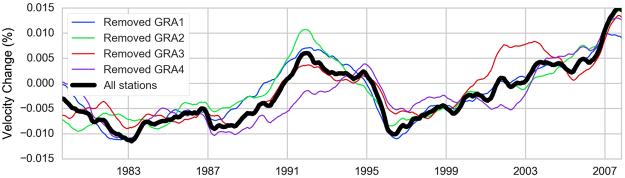
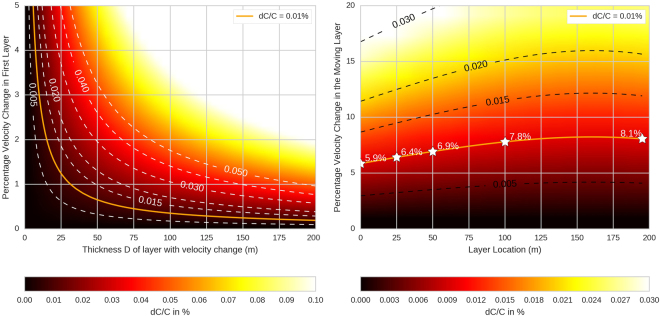
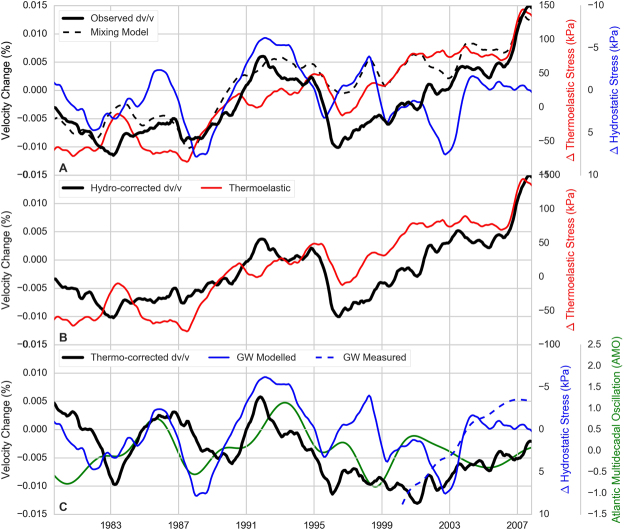
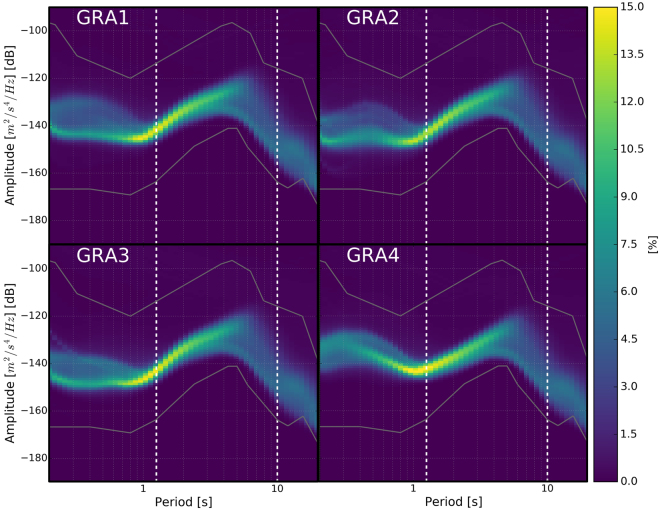
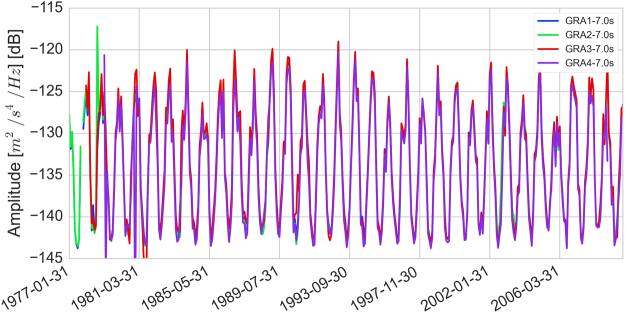
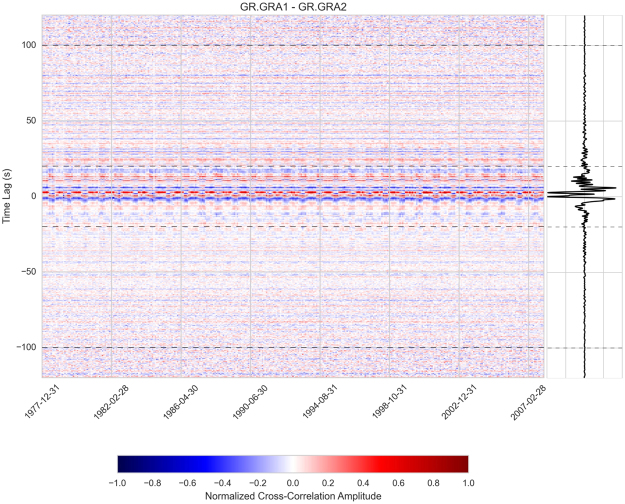
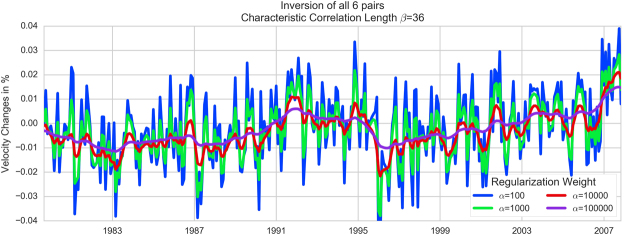
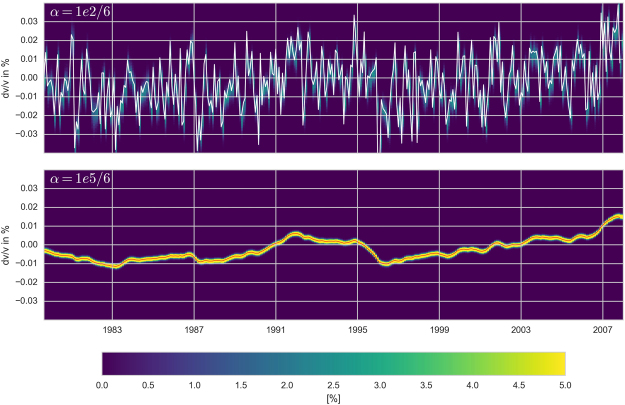
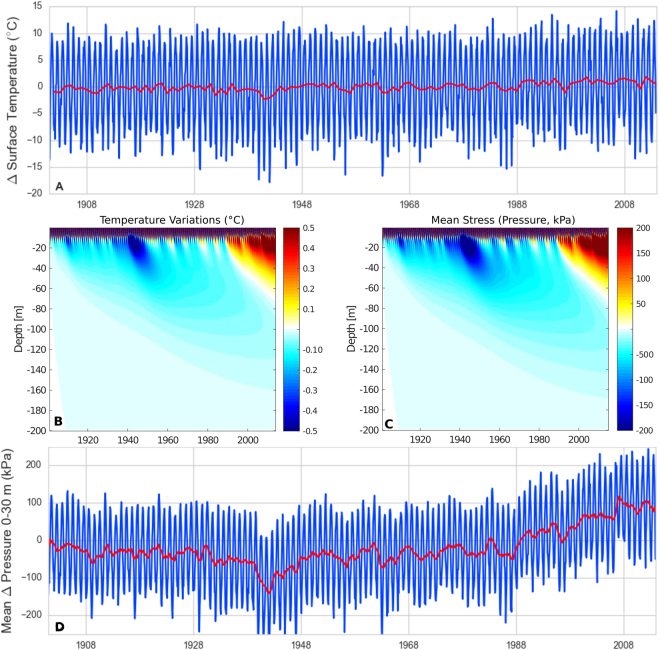
Groundwater is a vital freshwater resource for both humans and ecosystems. Achieving sustainable management requires a detailed knowledge of the aquifer structure and of its behavior in response to climatic and anthropogenic forcing. Traditional monitoring is carried out using piezometer networks, and recently complemented with new geophysical or satellite-based observations. These techniques survey either local (small-scale) water systems or regional areas (large scale) but, to date, adequate observation tools are lacking at the water management scale (i.e. several tens of kms), which is generally explored by modeling. Using 30 years of continuous recording by four seismic stations of the Gräfenberg Array (Germany), we demonstrate that long-term observations of velocity variations (approximately 0.01%) of surface waves can be extracted from such recordings of ocean-generated seismic noise. These small variations can be explained by changes to mechanical properties of the complex aquifer system in the top few hundred meters of the crust. The velocity changes can be interpreted as effects of temperature diffusion and water storage changes. Seismic noise recordings may become a new and valuable tool to monitor heterogeneous groundwater systems at mesoscale, in addition to existing observation methods.
地下水是人类和生态系统至关重要的淡水资源。实现可持续管理需要详细了解含水层结构及其对气候和人为因素作用的响应。传统监测通过测压计网络进行,最近又辅以新的地球物理或卫星观测。这些技术要么调查局部(小尺度)水系统,要么调查区域(大尺度)区域,但迄今为止,在水管理尺度(即几十公里)上缺乏足够的观测工具,该尺度通常通过建模来探索。利用德国格拉芬贝格阵列四个地震台站30年的连续记录,我们证明可以从此类海洋产生的地震噪声记录中提取面波速度变化(约0.01%)的长期观测数据。这些微小变化可以用地壳顶部几百米复杂含水层系统力学性质的变化来解释。速度变化可以解释为温度扩散和储水变化的影响。除现有观测方法外,地震噪声记录可能成为监测中尺度非均质地下水系统的一种新的有价值工具。