• 文献检索
  • 文档翻译
  • 深度研究
  • 学术资讯
  • Suppr Zotero 插件Zotero 插件
  • 邀请有礼
  • 套餐&价格
  • 历史记录
应用&插件
Suppr Zotero 插件Zotero 插件浏览器插件Mac 客户端Windows 客户端微信小程序
定价
高级版会员购买积分包购买API积分包
服务
文献检索文档翻译深度研究API 文档MCP 服务
关于我们
关于 Suppr公司介绍联系我们用户协议隐私条款
关注我们

Suppr 超能文献

核心技术专利:CN118964589B侵权必究
粤ICP备2023148730 号-1Suppr @ 2026

文献检索

告别复杂PubMed语法,用中文像聊天一样搜索,搜遍4000万医学文献。AI智能推荐,让科研检索更轻松。

立即免费搜索

文件翻译

保留排版,准确专业,支持PDF/Word/PPT等文件格式,支持 12+语言互译。

免费翻译文档

深度研究

AI帮你快速写综述,25分钟生成高质量综述,智能提取关键信息,辅助科研写作。

立即免费体验

二氧化硅纳米颗粒的特定表面修饰可减少炎性小体激活及所选炎症基因的体内表达。

Specific Surface Modifications of Silica Nanoparticles Diminish Inflammasome Activation and In Vivo Expression of Selected Inflammatory Genes.

作者信息

Marzaioli Viviana, Groß Christina J, Weichenmeier Ingrid, Schmidt-Weber Carsten B, Gutermuth Jan, Groß Olaf, Alessandrini Francesca

机构信息

Center of Allergy and Environment (ZAUM), Technical University and Helmholtz Center Munich, Member of the German Center for Lung Research (DZL), Ingolstädter Landstr. 1, 85764 Neuherberg, Germany.

Institute for Clinical Chemistry and Pathobiochemistry, Klinikum rechts der Isar, Technical University of Munich, 81675 Munich, Germany.

出版信息

Nanomaterials (Basel). 2017 Oct 30;7(11):355. doi: 10.3390/nano7110355.

DOI:10.3390/nano7110355
PMID:29084176
原文链接:https://pmc.ncbi.nlm.nih.gov/articles/PMC5707572/
Abstract

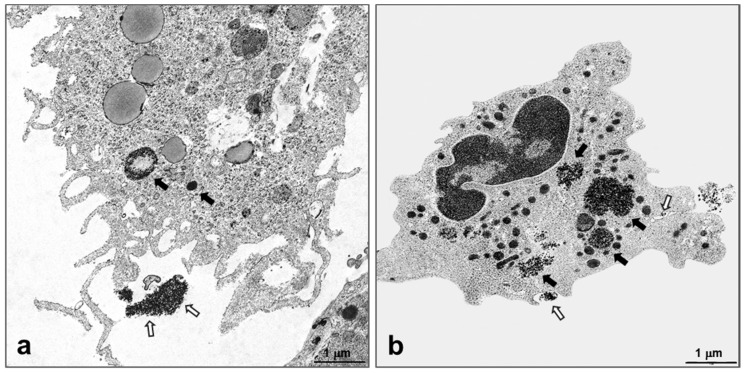
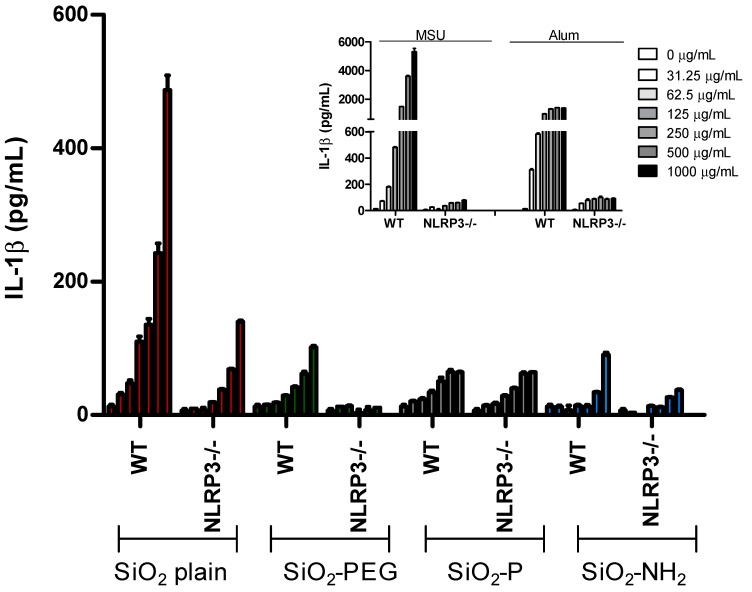
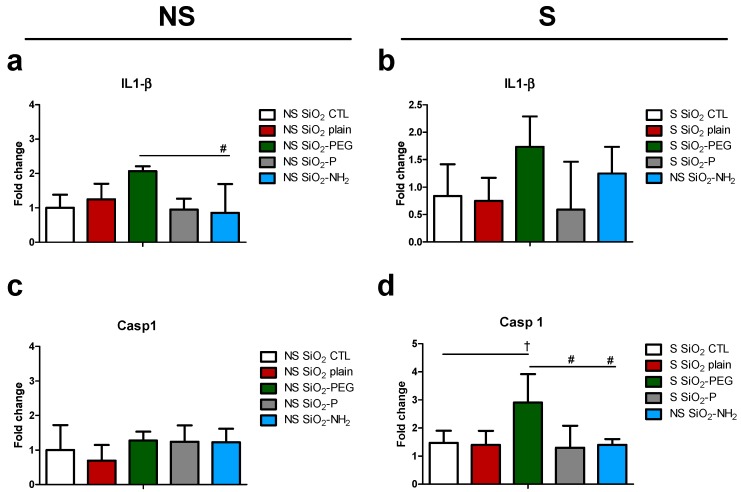
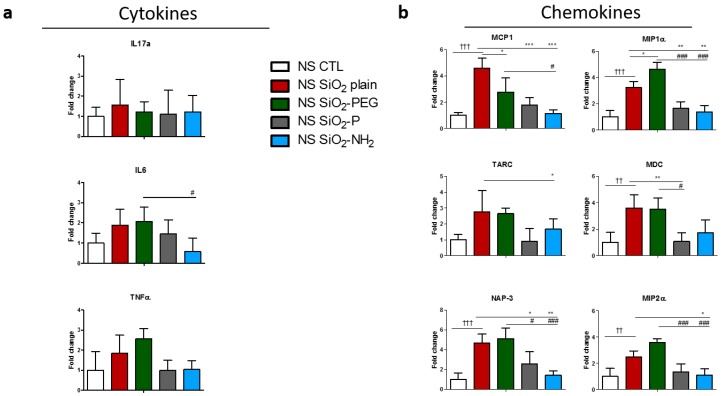
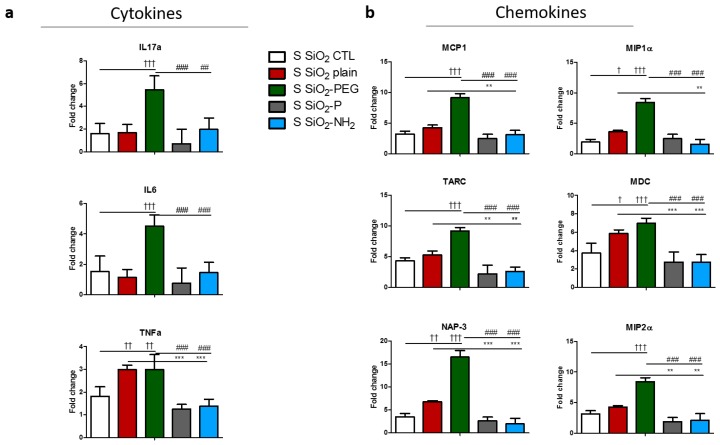
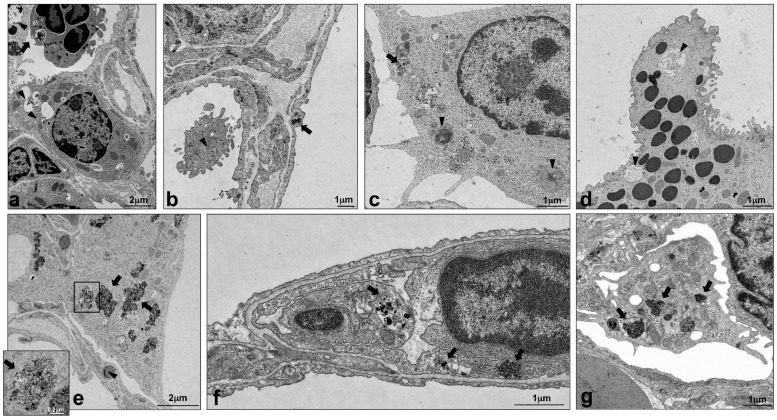
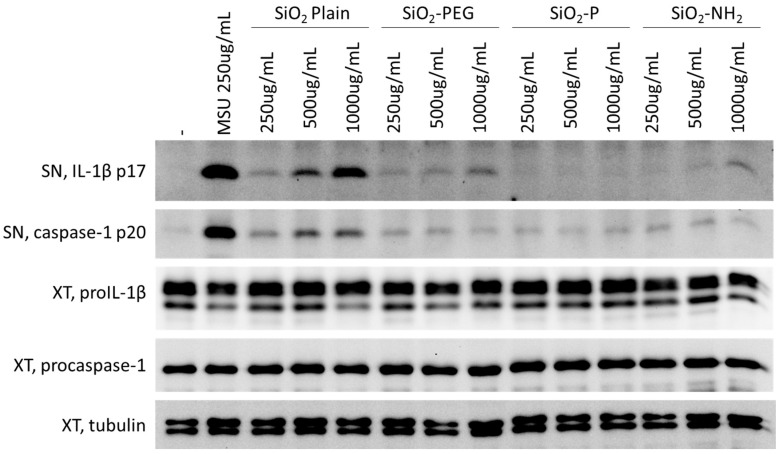
Silica (SiO₂) nanoparticles (NPs) usage includes, but is not limited to, industrial and biomedical applications. Toxic effects of SiO₂ NPs have been explored either or , assessing different surface modifications to reduce their harmful effects. Here, murine bone marrow-derived dendritic (BMDC) and a mouse model of mild allergic inflammation were used to study inflammasome activation and lung inflammation. Our results showed that SiO₂ plain NPs induced NACHT, LRR and PYD domains-containing protein 3 (NLRP3) inflammasome activation, increasing interleukin (IL)-1β release , and, to a lesser extent, . In addition, SiO₂ plain NPs triggered a pulmonary inflammatory milieu in both non-sensitized (NS) and sensitized (S) mice, by inducing the expression of key inflammatory cytokines and chemokines. Electron microscopy showed that SiO₂ NPs were mostly localized in alveolar macrophages, within vesicles and/or in phagolysosomes. Both the and the effects of SiO NPs were attenuated by coating NPs with phosphonate or amino groups, whereas PEGylation, although it mitigated inflammasome activation , was not a successful coating strategy . These findings highlight that multiple assays are required to determine the effect of surface modifications in limiting NPs inflammatory potential. Taken together, these data are obtained by comparing and effects of SiO₂ NPs suggest the use of amino and phosphonate coating of silica NPs for commercial purposes and targeted applications, as they significantly reduce their proinflammatory potential.

摘要

二氧化硅(SiO₂)纳米颗粒(NPs)的用途包括但不限于工业和生物医学应用。已经探索了SiO₂ NPs的毒性作用,评估了不同的表面修饰以降低其有害影响。在这里,使用小鼠骨髓来源的树突状细胞(BMDC)和轻度过敏性炎症小鼠模型来研究炎性小体激活和肺部炎症。我们的结果表明,普通SiO₂ NPs诱导含NACHT、LRR和PYD结构域的蛋白3(NLRP3)炎性小体激活,增加白细胞介素(IL)-1β释放,并且在较小程度上增加 。此外,普通SiO₂ NPs通过诱导关键炎性细胞因子和趋化因子的表达,在未致敏(NS)和致敏(S)小鼠中引发肺部炎症环境。电子显微镜显示,SiO₂ NPs大多定位于肺泡巨噬细胞内、囊泡中和/或吞噬溶酶体中。用膦酸酯或氨基包被NPs可减弱SiO NPs的 和 作用,而聚乙二醇化虽然减轻了炎性小体激活 ,但不是一种成功的包被策略 。这些发现突出表明,需要多种测定方法来确定表面修饰在限制NPs炎症潜能方面的作用。综上所述,通过比较SiO₂ NPs的 和 作用获得的数据表明,出于商业目的和靶向应用,使用氨基和膦酸酯包被的二氧化硅纳米颗粒,因为它们可显著降低其促炎潜能。
https://cdn.ncbi.nlm.nih.gov/pmc/blobs/2ee4/5707572/45c386f32044/nanomaterials-07-00355-g008.jpg
https://cdn.ncbi.nlm.nih.gov/pmc/blobs/2ee4/5707572/1274f4263554/nanomaterials-07-00355-g001.jpg
https://cdn.ncbi.nlm.nih.gov/pmc/blobs/2ee4/5707572/75f6cebf052e/nanomaterials-07-00355-g002.jpg
https://cdn.ncbi.nlm.nih.gov/pmc/blobs/2ee4/5707572/2a00bba283ef/nanomaterials-07-00355-g003.jpg
https://cdn.ncbi.nlm.nih.gov/pmc/blobs/2ee4/5707572/159da16cd17e/nanomaterials-07-00355-g004.jpg
https://cdn.ncbi.nlm.nih.gov/pmc/blobs/2ee4/5707572/4a63c92dd566/nanomaterials-07-00355-g005.jpg
https://cdn.ncbi.nlm.nih.gov/pmc/blobs/2ee4/5707572/c15e5472526f/nanomaterials-07-00355-g006.jpg
https://cdn.ncbi.nlm.nih.gov/pmc/blobs/2ee4/5707572/2c008907b59c/nanomaterials-07-00355-g007.jpg
https://cdn.ncbi.nlm.nih.gov/pmc/blobs/2ee4/5707572/45c386f32044/nanomaterials-07-00355-g008.jpg
https://cdn.ncbi.nlm.nih.gov/pmc/blobs/2ee4/5707572/1274f4263554/nanomaterials-07-00355-g001.jpg
https://cdn.ncbi.nlm.nih.gov/pmc/blobs/2ee4/5707572/75f6cebf052e/nanomaterials-07-00355-g002.jpg
https://cdn.ncbi.nlm.nih.gov/pmc/blobs/2ee4/5707572/2a00bba283ef/nanomaterials-07-00355-g003.jpg
https://cdn.ncbi.nlm.nih.gov/pmc/blobs/2ee4/5707572/159da16cd17e/nanomaterials-07-00355-g004.jpg
https://cdn.ncbi.nlm.nih.gov/pmc/blobs/2ee4/5707572/4a63c92dd566/nanomaterials-07-00355-g005.jpg
https://cdn.ncbi.nlm.nih.gov/pmc/blobs/2ee4/5707572/c15e5472526f/nanomaterials-07-00355-g006.jpg
https://cdn.ncbi.nlm.nih.gov/pmc/blobs/2ee4/5707572/2c008907b59c/nanomaterials-07-00355-g007.jpg
https://cdn.ncbi.nlm.nih.gov/pmc/blobs/2ee4/5707572/45c386f32044/nanomaterials-07-00355-g008.jpg

相似文献

1
Specific Surface Modifications of Silica Nanoparticles Diminish Inflammasome Activation and In Vivo Expression of Selected Inflammatory Genes.二氧化硅纳米颗粒的特定表面修饰可减少炎性小体激活及所选炎症基因的体内表达。
Nanomaterials (Basel). 2017 Oct 30;7(11):355. doi: 10.3390/nano7110355.
2
Surface modifications of silica nanoparticles are crucial for their inert versus proinflammatory and immunomodulatory properties.二氧化硅纳米颗粒的表面修饰对于其惰性与促炎和免疫调节特性至关重要。
Int J Nanomedicine. 2014 Jun 5;9:2815-32. doi: 10.2147/IJN.S57396. eCollection 2014.
3
Effect of TiO₂ Nanoparticles on Inflammasome-Mediated Airway Inflammation and Responsiveness.二氧化钛纳米颗粒对炎性小体介导的气道炎症和反应性的影响。
Allergy Asthma Immunol Res. 2017 May;9(3):257-264. doi: 10.4168/aair.2017.9.3.257.
4
Pro-Inflammatory versus Immunomodulatory Effects of Silver Nanoparticles in the Lung: The Critical Role of Dose, Size and Surface Modification.银纳米颗粒在肺部的促炎作用与免疫调节作用:剂量、尺寸和表面修饰的关键作用
Nanomaterials (Basel). 2017 Sep 29;7(10):300. doi: 10.3390/nano7100300.
5
Silica nanoparticles induce NLRP3 inflammasome activation in human primary immune cells.硅纳米颗粒诱导人原代免疫细胞中 NLRP3 炎性体的激活。
Innate Immun. 2017 Nov;23(8):697-708. doi: 10.1177/1753425917738331.
6
Evaluation of the NLRP3 Inflammasome Activating Effects of a Large Panel of TiO Nanomaterials in Macrophages.一大组TiO纳米材料对巨噬细胞中NLRP3炎性小体激活作用的评估
Nanomaterials (Basel). 2020 Sep 19;10(9):1876. doi: 10.3390/nano10091876.
7
Neurotoxicity of silica nanoparticles: brain localization and dopaminergic neurons damage pathways.纳米二氧化硅的神经毒性:脑部定位和多巴胺能神经元损伤途径。
ACS Nano. 2011 Jun 28;5(6):4476-89. doi: 10.1021/nn103530b. Epub 2011 May 4.
8
Reactive oxygen species trigger NF-κB-mediated NLRP3 inflammasome activation induced by zinc oxide nanoparticles in A549 cells.活性氧触发氧化锌纳米颗粒诱导A549细胞中NF-κB介导的NLRP3炎性小体激活。
Toxicol Ind Health. 2017 Oct;33(10):737-745. doi: 10.1177/0748233717712409. Epub 2017 Sep 5.
9
Inhibition of lanthanide nanocrystal-induced inflammasome activation in macrophages by a surface coating peptide through abrogation of ROS production and TRPM2-mediated Ca(2+) influx.通过表面涂层肽抑制镧系纳米晶体诱导的巨噬细胞中的炎性体激活,从而阻断 ROS 产生和 TRPM2 介导的 Ca(2+)内流。
Biomaterials. 2016 Nov;108:143-56. doi: 10.1016/j.biomaterials.2016.08.036. Epub 2016 Sep 3.
10
Mechanistic insight into the attenuation of gouty inflammation by Taiwanese green propolis via inhibition of the NLRP3 inflammasome.通过抑制 NLRP3 炎性小体,探究台湾绿蜂胶对痛风性炎症的抑制作用的机制。
J Cell Physiol. 2019 Apr;234(4):4081-4094. doi: 10.1002/jcp.27204. Epub 2018 Oct 28.

引用本文的文献

1
Nanoreporter for Real-Time Monitoring of Inflammasome Activity and Targeted Therapy.用于实时监测炎症小体活性和靶向治疗的纳米报告器。
Adv Sci (Weinh). 2023 Feb;10(6):e2204900. doi: 10.1002/advs.202204900. Epub 2023 Jan 5.
2
Pulmonary Toxicity of Silica Linked to Its Micro- or Nanometric Particle Size and Crystal Structure: A Review.二氧化硅的肺毒性与其微米或纳米级粒径及晶体结构的关系:综述
Nanomaterials (Basel). 2022 Jul 13;12(14):2392. doi: 10.3390/nano12142392.
3
Think Beyond Particle Cytotoxicity: When Self-Cellular Components Released After Immunogenic Cell Death Explain Chronic Disease Development.

本文引用的文献

1
MD-2 regulates LPS-induced NLRP3 inflammasome activation and IL-1beta secretion by a MyD88/NF-κB-dependent pathway in alveolar macrophages cell line.MD-2通过肺泡巨噬细胞系中MyD88/核因子-κB依赖途径调节脂多糖诱导的NLRP3炎性小体激活和白细胞介素-1β分泌。
Mol Immunol. 2017 Oct;90:1-10. doi: 10.1016/j.molimm.2017.06.035. Epub 2017 Jun 24.
2
Quantitative biokinetics of titanium dioxide nanoparticles after intratracheal instillation in rats: Part 3.气管滴注染毒后大鼠体内二氧化钛纳米颗粒的定量生物动力学:第 3 部分。
Nanotoxicology. 2017 May;11(4):454-464. doi: 10.1080/17435390.2017.1306894. Epub 2017 Apr 3.
3
PEGylated graphene oxide elicits strong immunological responses despite surface passivation.
超越颗粒细胞毒性:当免疫原性细胞死亡后释放的自身细胞成分解释慢性疾病发展时。
Front Toxicol. 2022 Jul 1;4:887228. doi: 10.3389/ftox.2022.887228. eCollection 2022.
4
Core Hydrophobicity of Supramolecular Nanoparticles Induces NLRP3 Inflammasome Activation.超分子纳米颗粒的核心疏水性诱导 NLRP3 炎性体激活。
ACS Appl Mater Interfaces. 2021 Sep 29;13(38):45300-45314. doi: 10.1021/acsami.1c14082. Epub 2021 Sep 20.
5
Size and surface modification of silica nanoparticles affect the severity of lung toxicity by modulating endosomal ROS generation in macrophages.二氧化硅纳米颗粒的大小和表面修饰通过调节巨噬细胞内体 ROS 的产生,影响其肺部毒性的严重程度。
Part Fibre Toxicol. 2021 Jun 17;18(1):21. doi: 10.1186/s12989-021-00415-0.
6
The Membrane Interactions of Nano-Silica and Its Potential Application in Animal Nutrition.纳米二氧化硅的膜相互作用及其在动物营养中的潜在应用
Animals (Basel). 2019 Nov 28;9(12):1041. doi: 10.3390/ani9121041.
7
Unintended effects of drug carriers: Big issues of small particles.药物载体的非预期作用:小微粒的大问题。
Adv Drug Deliv Rev. 2018 May;130:90-112. doi: 10.1016/j.addr.2018.06.023. Epub 2018 Jul 3.
聚乙二醇化氧化石墨烯尽管表面钝化,仍能引发强烈的免疫反应。
Nat Commun. 2017 Feb 24;8:14537. doi: 10.1038/ncomms14537.
4
Inflammasomes in the lung.肺中的炎性小体。
Mol Immunol. 2017 Jun;86:44-55. doi: 10.1016/j.molimm.2017.01.014. Epub 2017 Jan 24.
5
Toxic and adjuvant effects of silica nanoparticles on ovalbumin-induced allergic airway inflammation in mice.二氧化硅纳米颗粒对卵清蛋白诱导的小鼠过敏性气道炎症的毒性和佐剂效应。
Respir Res. 2016 May 18;17(1):60. doi: 10.1186/s12931-016-0376-x.
6
Influence of agglomeration and specific lung lining lipid/protein interaction on short-term inhalation toxicity.团聚作用以及特定肺表面活性脂质/蛋白质相互作用对短期吸入毒性的影响。
Nanotoxicology. 2016 Sep;10(7):970-80. doi: 10.3109/17435390.2016.1155671. Epub 2016 Mar 17.
7
An in vitro alveolar macrophage assay for predicting the short-term inhalation toxicity of nanomaterials.一种用于预测纳米材料短期吸入毒性的体外肺泡巨噬细胞检测方法。
J Nanobiotechnology. 2016 Mar 5;14:16. doi: 10.1186/s12951-016-0164-2.
8
NLRP3 inflammasome expression in idiopathic pulmonary fibrosis and rheumatoid lung.NLRP3炎性小体在特发性肺纤维化和类风湿性肺病中的表达
Eur Respir J. 2016 Mar;47(3):910-8. doi: 10.1183/13993003.00564-2015. Epub 2016 Jan 7.
9
In vitro and in vivo genotoxicity investigations of differently sized amorphous SiO2 nanomaterials.不同尺寸的无定形二氧化硅纳米材料的体外和体内遗传毒性研究。
Mutat Res Genet Toxicol Environ Mutagen. 2015 Dec;794:57-74. doi: 10.1016/j.mrgentox.2015.10.005. Epub 2015 Oct 31.
10
Acute exposure to silica nanoparticles aggravate airway inflammation: different effects according to surface characteristics.急性暴露于二氧化硅纳米颗粒会加剧气道炎症:根据表面特性产生不同影响。
Exp Mol Med. 2015 Jul 17;47(7):e173. doi: 10.1038/emm.2015.50.