Department of Cardiology, The First Affiliated Hospital of Xi'an Jiaotong University, 277 West Yanta Road, Xi'an, 710061, Shaanxi, China.
Department of Vascular Surgery, The First Affiliated Hospital of Xi'an Jiaotong University, Xi'an, 710061, Shaanxi, China.
Cardiovasc Diabetol. 2017 Oct 30;16(1):140. doi: 10.1186/s12933-017-0623-6.
Pioglitazone (PIO), a thiazolidinediones drug, is a well-known anti-diabetic medicine, but its anti-atherosclerotic effects remain controversial. Thus it is important to investigate the effects of PIO on atherogenesis and the relevant mechanisms.
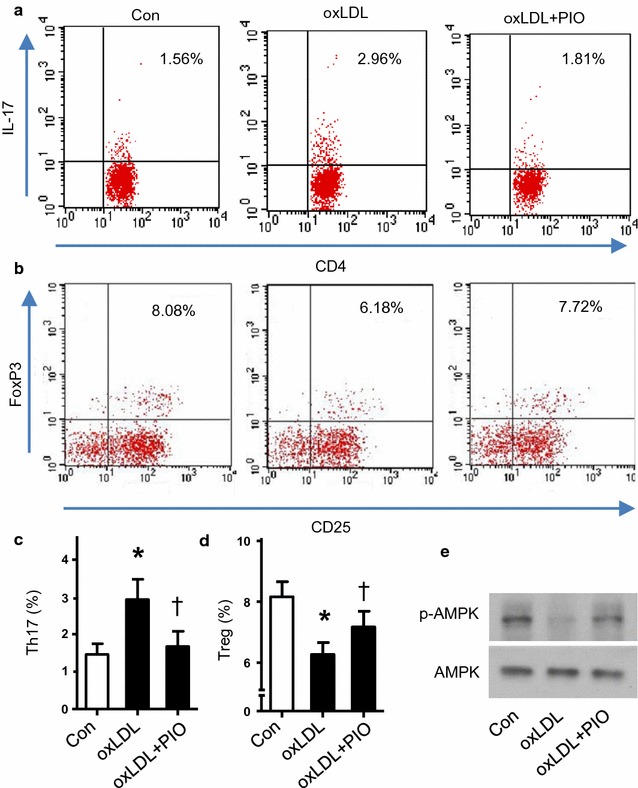
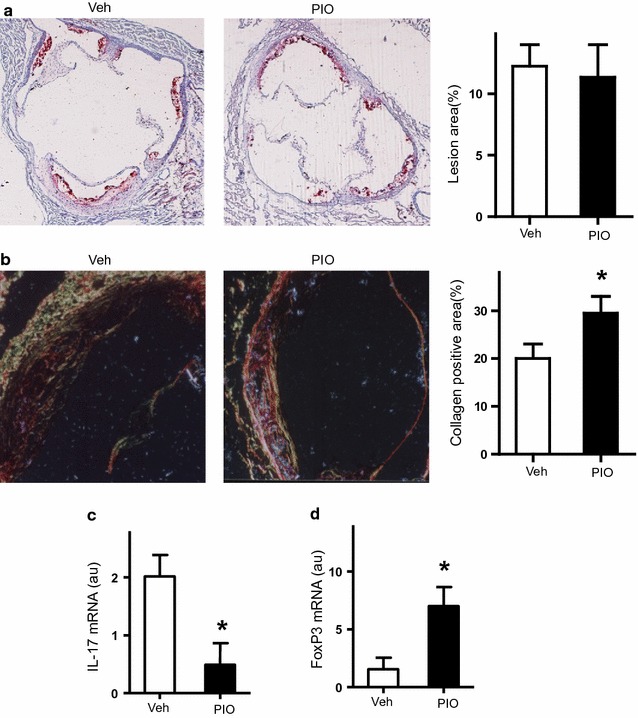
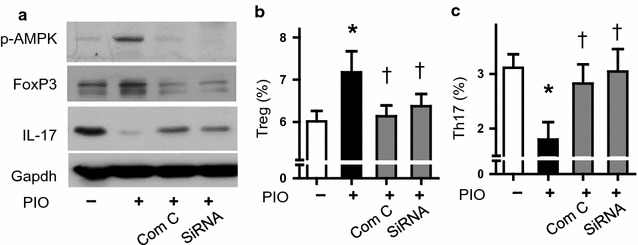
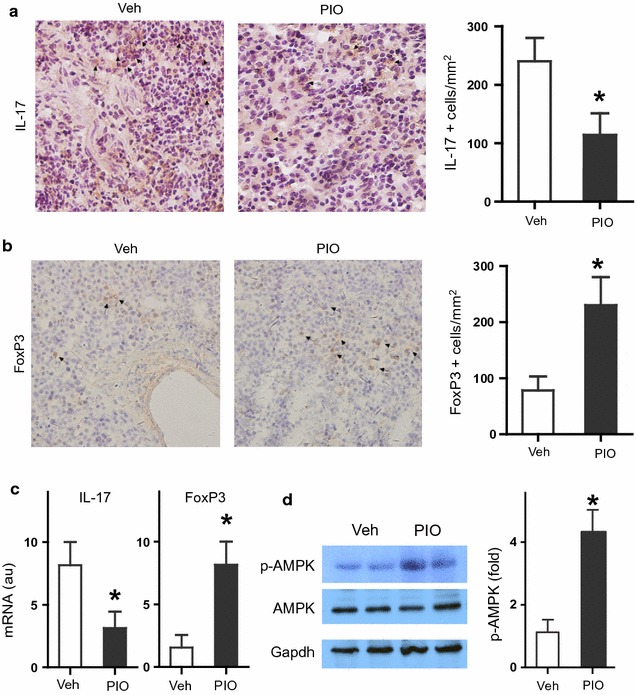
For in vitro studies, primary cultured or AMP-activated protein kinase (AMPK) inhibited splenocytes were treated with oxidized low density lipoprotein (ox-LDL) or ox-LDL plus PIO. Percentage of T helper 17 (Th17) and regulatory T (Treg) cells were determined by flow cytometry. Expression of AMPK, interleukin-17 (IL-17) and forkhead box P3 (FoxP3) were detected by Western blots. For in vivo studies, apolipoprotein E-deficient (apoE-/-) mice fed with western diet were treated with PIO or vehicle for 8 weeks respectively. Percentage of Th17 and Treg cells in spleen were measured by immunohistochemical analysis. The atherosclerotic lesions were analyzed using oil red O staining, and collagen types I and III in atherosclerotic lesions were stained by Sirius red. Expression of IL-17 and FoxP3 were determined by quantitative polymerase chain reaction.
In cultured primary splenocytes, PIO dramatically inhibited Th17 and raised Treg. Intriguingly, pharmacological and genetic AMPK inhibitions abolished PIO-induced Treg elevation and Th17 inhibition. Moreover, PIO significantly induced AMPK phosphorylation, decreased IL-17 and increased FoxP3 cells in spleen of apoE-/- mice. Finally, PIO did not alter plaque area, but intriguingly, stabilized atherosclerotic plaque through collagen induction in apoE-/- mice. PIO treatment also improved Th17/Treg balance in atherosclerotic lesions.
PIO exhibits anti-atherosclerotic effects for stabilization of atherosclerotic plaque through regulating the Th17/Treg balance in an AMPK-dependent manner.
吡格列酮(PIO),一种噻唑烷二酮类药物,是一种著名的抗糖尿病药物,但它的抗动脉粥样硬化作用仍存在争议。因此,研究 PIO 对动脉粥样形成的影响及其相关机制非常重要。
在体外研究中,用氧化型低密度脂蛋白(ox-LDL)或 ox-LDL 加 PIO 处理原代培养或 AMP 激活蛋白激酶(AMPK)抑制的脾细胞。通过流式细胞术测定 Th17 和调节性 T(Treg)细胞的百分比。通过 Western blot 检测 AMPK、白细胞介素 17(IL-17)和叉头框 P3(FoxP3)的表达。在体内研究中,用西方饮食喂养载脂蛋白 E 缺陷(apoE-/-)小鼠,分别用 PIO 或载体处理 8 周。用免疫组化分析测定脾中 Th17 和 Treg 细胞的百分比。用油红 O 染色分析动脉粥样硬化病变,用天狼猩红染色分析动脉粥样硬化病变中的胶原 I 和胶原 III。通过定量聚合酶链反应测定 IL-17 和 FoxP3 的表达。
在培养的原代脾细胞中,PIO 显著抑制 Th17 并增加 Treg。有趣的是,药理学和遗传 AMPK 抑制消除了 PIO 诱导的 Treg 升高和 Th17 抑制。此外,PIO 显著诱导 apoE-/-小鼠脾脏中 AMPK 磷酸化,降低 IL-17 并增加 FoxP3 细胞。最后,PIO 并未改变斑块面积,但通过诱导胶原在 apoE-/-小鼠中,动脉粥样硬化斑块的稳定性得到改善。PIO 治疗还改善了动脉粥样硬化病变中的 Th17/Treg 平衡。
PIO 通过调节 AMPK 依赖性 Th17/Treg 平衡,表现出抗动脉粥样硬化作用,稳定动脉粥样硬化斑块。