Laboratory of Neuroanatomy and Experimental Neurology, Dept. of Morphological Sciences, CIMUS, Faculty of Medicine, University of Santiago de Compostela, 15782, Santiago de Compostela, Spain.
Networking Research Center on Neurodegenerative Diseases (CIBERNED), Madrid, Spain.
Mol Neurobiol. 2018 Jul;55(7):5847-5867. doi: 10.1007/s12035-017-0805-y. Epub 2017 Oct 30.
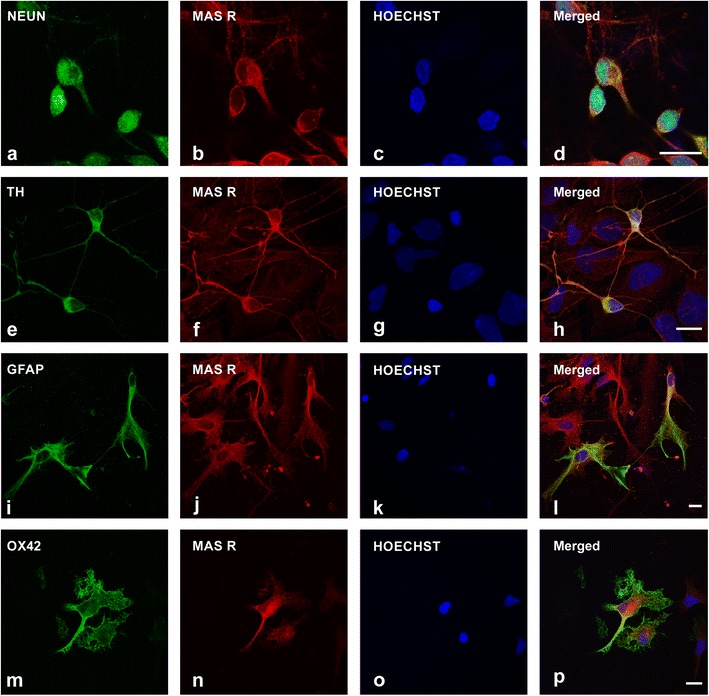
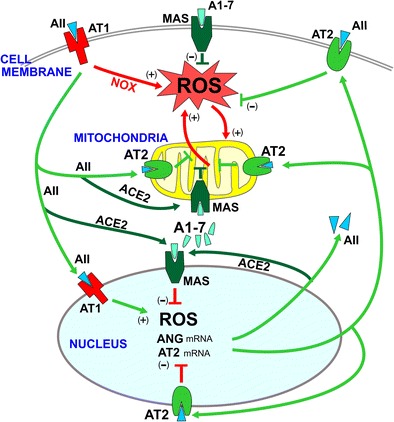
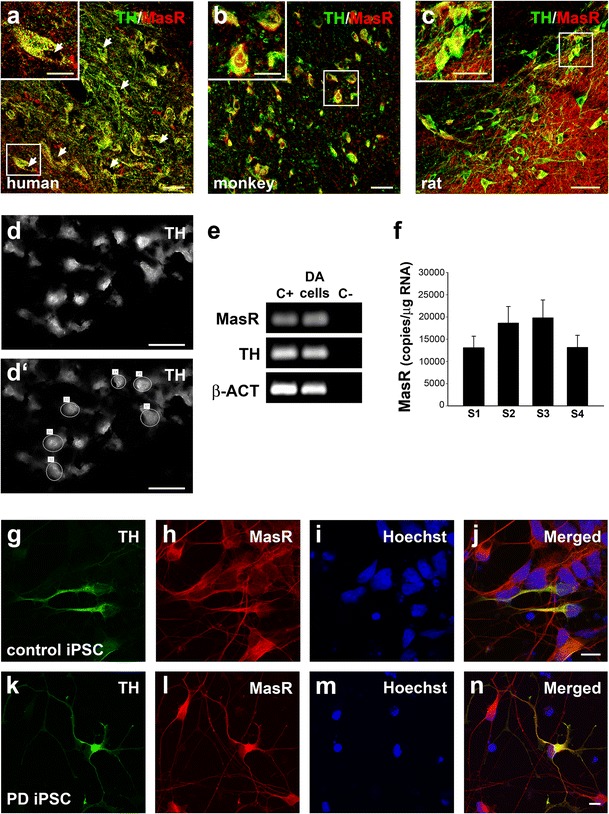
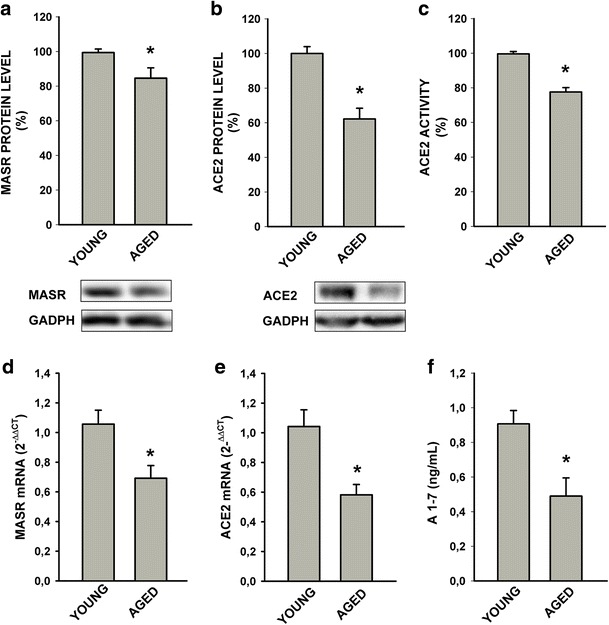
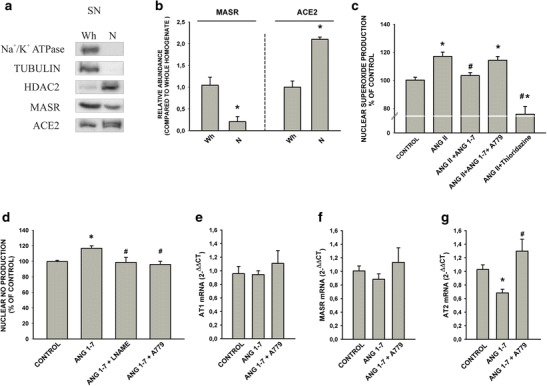
In addition to the classical hormonal (tissue-to-tissue) renin-angiotensin system (RAS), there are a paracrine (cell-to-cell) and an intracrine (intracellular/nuclear) RAS. A local paracrine brain RAS has been associated with several brain disorders, including Parkinson's disease (PD). Classically, angiotensin II (Ang II) is the main RAS effector peptide and acts through two major receptors: Ang II type 1 and 2 (AT1 and AT2) receptors. It has been shown that enhanced activation of the Ang II/AT1 axis exacerbates dopaminergic cell death. Several new components of the RAS have more recently been discovered. However, the role of new Ang 1-7/Mas receptor RAS component was not investigated in the brain and particularly in the dopaminergic system. In the present study, we observed Mas receptor labeling in dopaminergic neurons and glial cells in rat mesencephalic primary cultures; substantia nigra of rats, monkeys, and humans; and human induced pluripotent stem (iPS) cells derived from healthy controls and sporadic PD patients. The present data support a neuroprotective role of the Ang 1-7/Mas receptor axis in the dopaminergic system. We observed that this axis is downregulated with aging, which may contribute to the aging-related vulnerability to neurodegeneration. We have also identified an intracellular Ang 1-7/Mas axis that modulates mitochondrial and nuclear levels of superoxide. The present data suggest that nuclear RAS receptors regulate the adequate balance between the detrimental and the protective arms of the cell RAS. The results further support that the brain RAS should be taken into account for the design of new therapeutic strategies for PD.
除了经典的激素(组织间)肾素-血管紧张素系统(RAS)外,还有旁分泌(细胞间)和胞内(细胞内/核)RAS。局部旁分泌脑 RAS 与多种脑疾病有关,包括帕金森病(PD)。经典地,血管紧张素 II(Ang II)是主要的 RAS 效应肽,通过两种主要受体起作用:血管紧张素 II 型 1 和 2(AT1 和 AT2)受体。已经表明,Ang II/AT1 轴的增强激活加剧了多巴胺能神经元的死亡。最近发现了更多的 RAS 的新成分。然而,新的 Ang 1-7/Mas 受体 RAS 成分在大脑中特别是在多巴胺能系统中的作用尚未被研究。在本研究中,我们在大鼠中脑原代培养物中的多巴胺能神经元和神经胶质细胞、大鼠、猴子和人类的黑质以及来自健康对照和散发性 PD 患者的人诱导多能干细胞(iPS)中观察到 Mas 受体标记。本数据支持 Ang 1-7/Mas 受体轴在多巴胺能系统中的神经保护作用。我们观察到该轴随年龄的增长而下调,这可能导致与衰老相关的神经退行性变易感性。我们还鉴定了一种细胞内 Ang 1-7/Mas 轴,其调节线粒体和核超氧化物的水平。本数据表明,核 RAS 受体调节细胞 RAS 的有害和保护臂之间的适当平衡。结果进一步支持脑 RAS 应该考虑用于设计新的 PD 治疗策略。