Chung Ill-Min, Oh Jin-Young, Kim Seung-Hyun
Department of Crop Science, College of Sanghuh Life Science, Konkuk University, 120 Neungdong-ro, Gwangjin-gu, Seoul, 05029, Republic of Korea.
Chem Cent J. 2017 Jul 18;11(1):64. doi: 10.1186/s13065-017-0298-9.
Pickled soybeans or vinegar beans have long been used as a folk remedy and also a supplemental nutritional source in Korea. In general the pickling process in vinegar improves the digestibility of soybeans as well as increases the availability of various (non-)nutrients in soybeans. However, detailed information about the changes in functional substances such as (poly)phenolic compounds, vitamin E, and fatty acids (FAs) in soybeans during the pickling process is quite limited. Therefore, this study aims to investigate the changes in the selected phenolic compounds, vitamin E, and FAs in soybeans as a function of the pickling time.
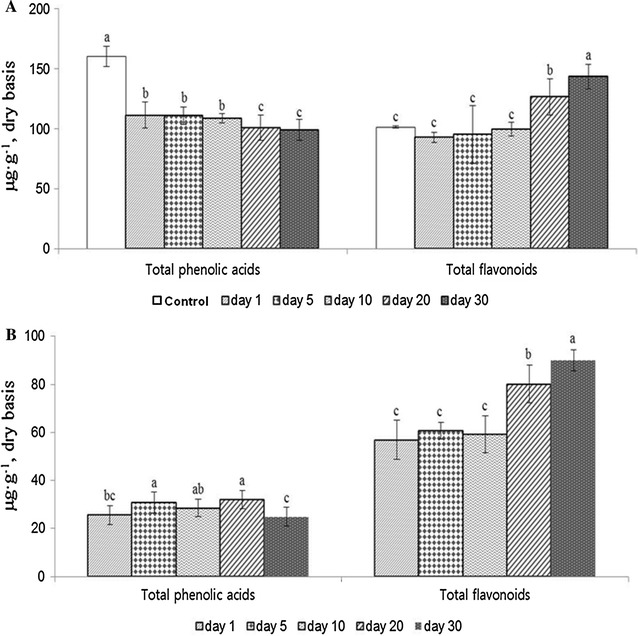
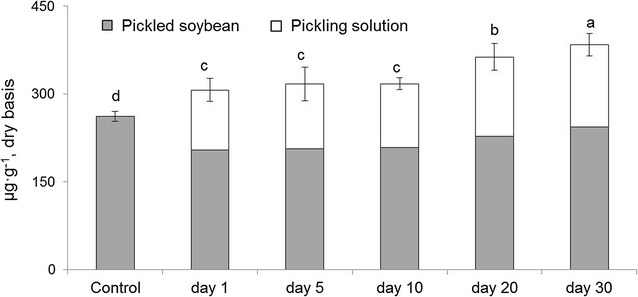
The sum of the total phenolics in both the pickled soybeans and the pickling solutions increased by as much as 47% after pickling. Naringenin, vanillin, and catechin were the major phenolics observed in the pickled soybeans and pickling solutions. The total vitamin E content in the pickled soybeans decreased by 23% after pickling, although no vitamin E molecules were found in the pickling solution. γ-Tocopherol was abundant in the untreated soybeans, but decreased by ~29% after pickling. Both the total and major FA contents varied by less than 1% during the pickling period. In this study, a 10-20 day pickling period may be considered suitable in terms of retention of functional substances in the pickled soybeans, such as selected phenolics, vitamin E, and FAs.
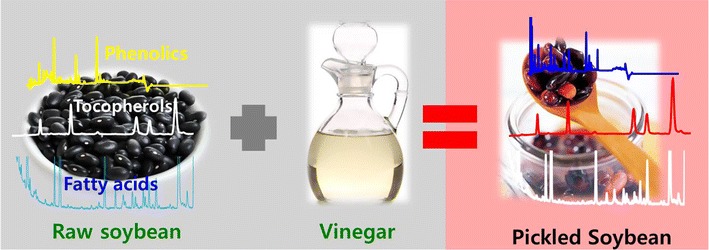
Our findings provide basic information and insight into the production of functional compounds in soybeans upon immersing in brewed vinegar, and also may be helpful toward improving the health-functionality of soybean-based foods in the food industry. Graphical abstract How to change bioactive compounds during the pickling process?
腌制大豆或醋豆长期以来在韩国一直被用作民间疗法以及补充营养来源。一般来说,用醋腌制的过程会提高大豆的消化率,并增加大豆中各种(非)营养成分的可利用性。然而,关于腌制过程中大豆中(多)酚类化合物、维生素E和脂肪酸(FAs)等功能物质变化的详细信息相当有限。因此,本研究旨在探讨腌制时间对大豆中选定的酚类化合物、维生素E和脂肪酸的影响。
腌制后,腌制大豆和腌制液中总酚含量均增加了47%。柚皮素、香草醛和儿茶素是腌制大豆和腌制液中观察到的主要酚类物质。腌制后,腌制大豆中的总维生素E含量下降了23%,尽管在腌制液中未发现维生素E分子。γ-生育酚在未处理的大豆中含量丰富,但腌制后下降了约29%。在腌制期间,总脂肪酸和主要脂肪酸含量的变化均小于1%。在本研究中,就腌制大豆中选定的酚类物质、维生素E和脂肪酸等功能物质的保留而言,10 - 20天的腌制期可能被认为是合适的。
我们的研究结果为大豆浸泡在酿造醋中时功能化合物的产生提供了基本信息和见解,也可能有助于提高食品工业中大豆基食品的健康功能性。图形摘要 腌制过程中生物活性化合物如何变化?