Dong Yan, Fang Xianping, Yang Yong, Xue Gang-Ping, Chen Xian, Zhang Weilin, Wang Xuming, Yu Chulang, Zhou Jie, Mei Qiong, Fang Wang, Yan Chengqi, Chen Jianping
Agricultural Insect Laboratory, College of Plant Protection, Nanjing Agricultural University, Nanjing, China.
State Key Laboratory Breeding Base for Zhejiang Sustainable Pest and Disease Control, Ministry of China Key Laboratory of Biotechnology in Plant Protection, Institute of Virology and Biotechnology, Zhejiang Academy of Agricultural Sciences, Hangzhou, China.
Front Plant Sci. 2017 Oct 17;8:1744. doi: 10.3389/fpls.2017.01744. eCollection 2017.
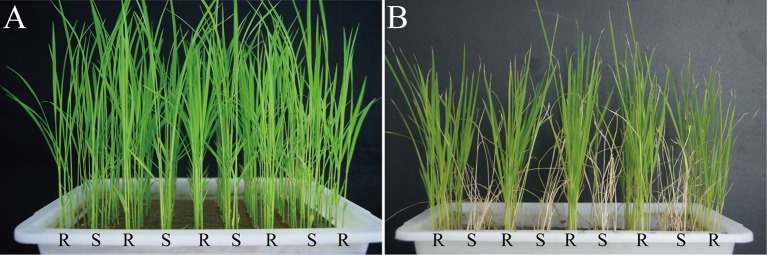
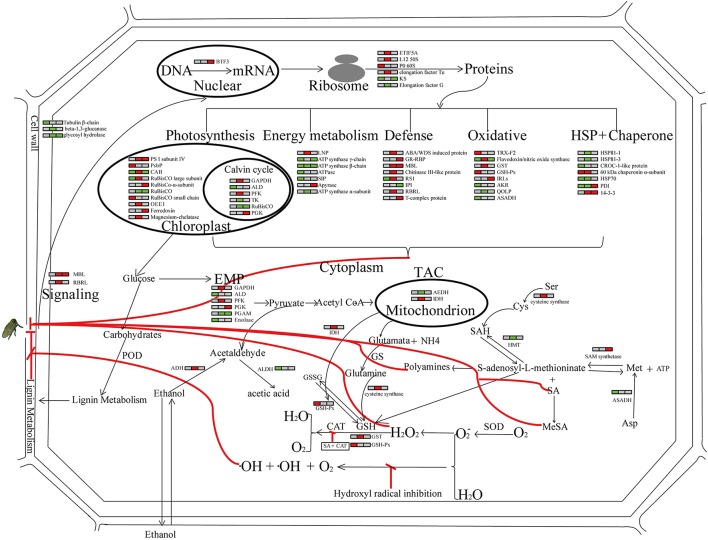
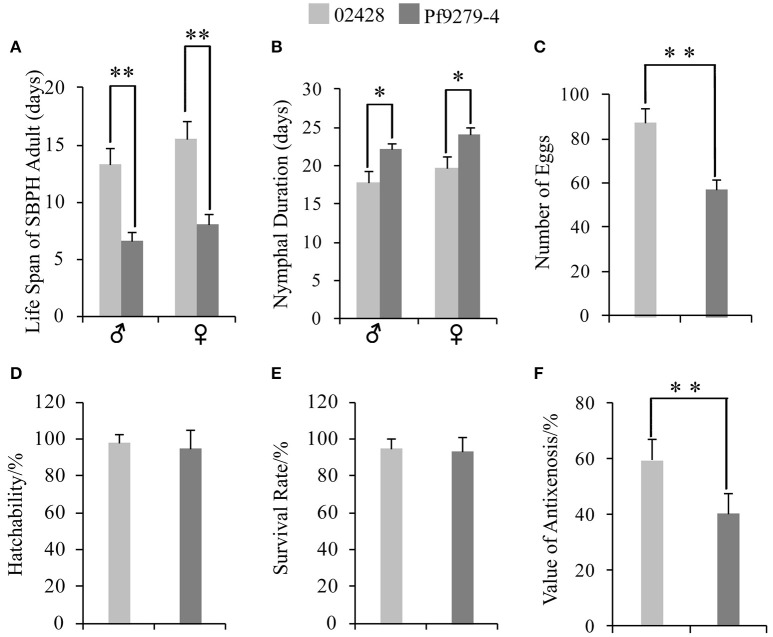
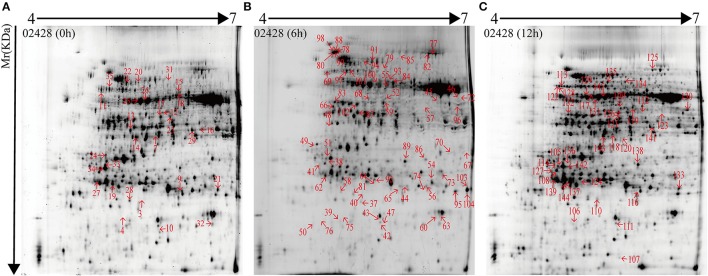
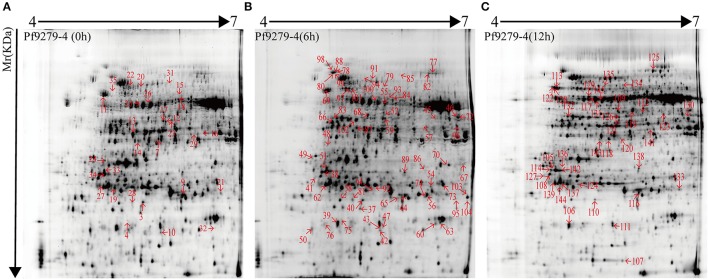
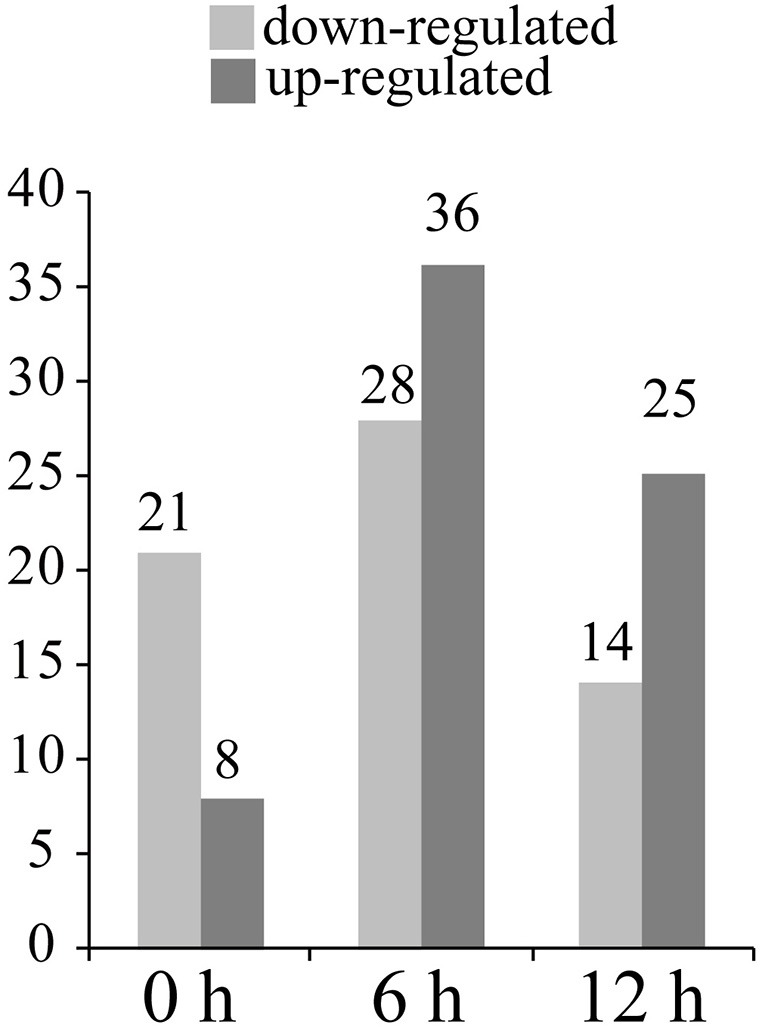
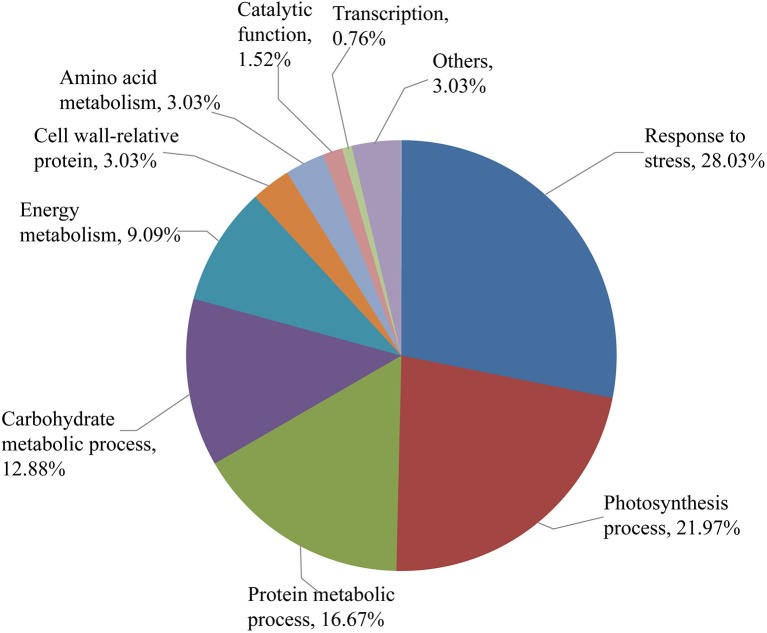
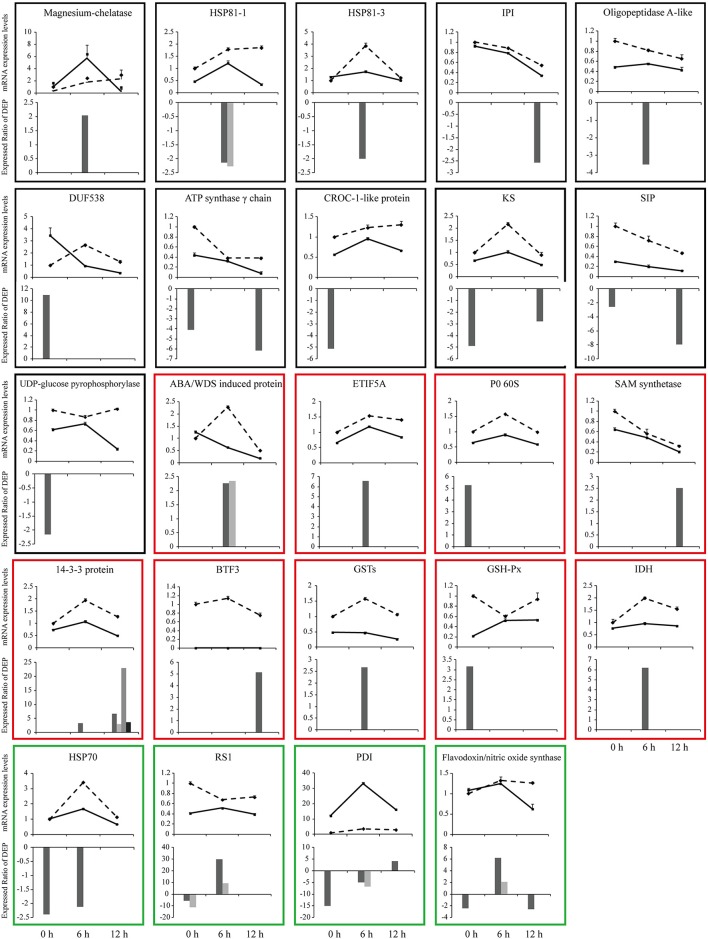
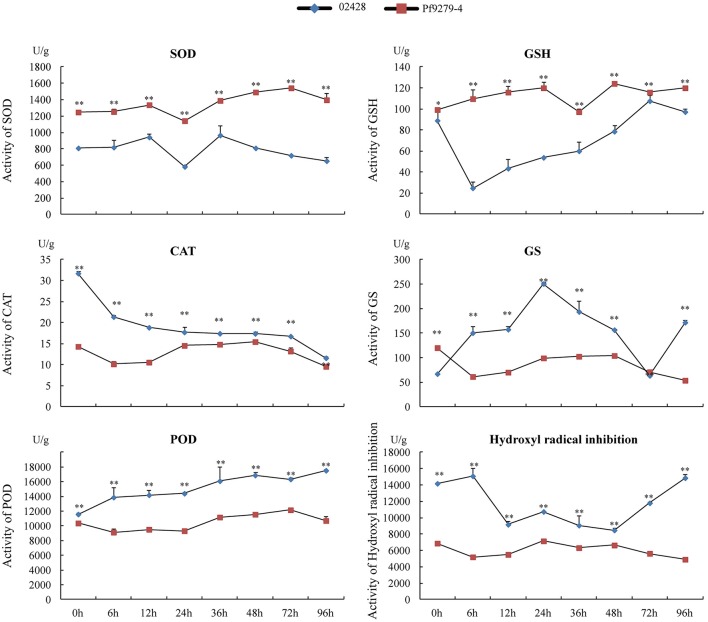
The small brown planthopper ( Fallén, Homoptera, Delphacidae-SBPH) is one of the major destructive pests of rice ( L.). Understanding on how rice responds to SBPH infestation will contribute to developing strategies for SBPH control. However, the response of rice plant to SBPH is poorly understood. In this study, two contrasting rice genotypes, Pf9279-4 (SBPH-resistant) and 02428 (SBPH-susceptible), were used for comparative analysis of protein profiles in the leaf sheath of rice plants in responses to SBPH infestation. One hundred and thirty-two protein spots that were differentially expressed between the resistant and susceptible rice lines were identified with significant intensity differences (≥2-fold, < 0.05) at 0, 6, and 12 h after SBPH infestation. Protein expression profile analysis in the leaf sheath of SBPH-resistant and SBPH-susceptible rice lines after SBPH infestation showed that proteins induced by SBPH feeding were involved mainly in stress response, photosynthesis, protein metabolic process, carbohydrate metabolic process, energy metabolism, cell wall-related proteins, amino acid metabolism and transcriptional regulation. Gene expression analysis of 24 differentially expressed proteins (DEPs) showed that more than 50% DEPs were positively correlated with their mRNA levels. Analysis of some physiological indexes mainly involved in the removal of oxygen reactive species showed that the levels of superoxide dismutase (SOD) and glutathione (GSH) were considerably higher in Pf9279-4 than 02428 during SBPH infestation. The catalase (CAT) activity and hydroxyl radical inhibition were lower in Pf9279-4 than 02428. Analysis of enzyme activities indicates that Pf9279-4 rice plants defend against SBPH through the activation of the pathway of the salicylic acid (SA)-dependent systemic acquired resistance. In conclusion, this study provides some insights into the molecular networks involved on cellular and physiological responses to SBPH infestation.
褐飞虱(法伦,同翅目,飞虱科——褐飞虱)是水稻(L.)的主要毁灭性害虫之一。了解水稻对褐飞虱侵害的反应将有助于制定褐飞虱防治策略。然而,水稻植株对褐飞虱的反应尚不清楚。在本研究中,使用了两种截然不同的水稻基因型,Pf9279 - 4(抗褐飞虱)和02428(感褐飞虱),对水稻植株叶鞘中响应褐飞虱侵害的蛋白质谱进行比较分析。在褐飞虱侵害后0、6和12小时,鉴定出132个在抗性和感病水稻品系之间差异表达的蛋白质斑点,其强度差异显著(≥2倍,<0.05)。褐飞虱侵害后抗褐飞虱和感褐飞虱水稻品系叶鞘中的蛋白质表达谱分析表明,褐飞虱取食诱导的蛋白质主要参与应激反应、光合作用、蛋白质代谢过程、碳水化合物代谢过程、能量代谢、细胞壁相关蛋白质、氨基酸代谢和转录调控。对24个差异表达蛋白(DEPs)的基因表达分析表明,超过50%的DEPs与其mRNA水平呈正相关。对一些主要参与清除活性氧的生理指标分析表明,在褐飞虱侵害期间,Pf9279 - 4中的超氧化物歧化酶(SOD)和谷胱甘肽(GSH)水平明显高于02428。Pf9279 - 4中的过氧化氢酶(CAT)活性和羟自由基抑制率低于02428。酶活性分析表明,Pf9279 - 4水稻植株通过激活水杨酸(SA)依赖的系统获得性抗性途径抵御褐飞虱。总之,本研究为参与对褐飞虱侵害的细胞和生理反应的分子网络提供了一些见解。