Bertin Yolande, Habouzit Chloé, Dunière Lysiane, Laurier Marie, Durand Alexandra, Duchez David, Segura Audrey, Thévenot-Sergentet Delphine, Baruzzi Federico, Chaucheyras-Durand Frédérique, Forano Evelyne
Université Clermont Auvergne, INRA, MEDIS, Clermont-Ferrand, France.
Lallemand SAS, Blagnac, France.
PLoS One. 2017 Nov 1;12(11):e0187229. doi: 10.1371/journal.pone.0187229. eCollection 2017.
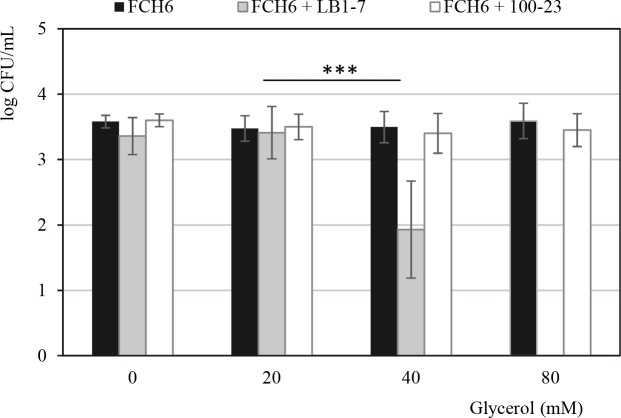
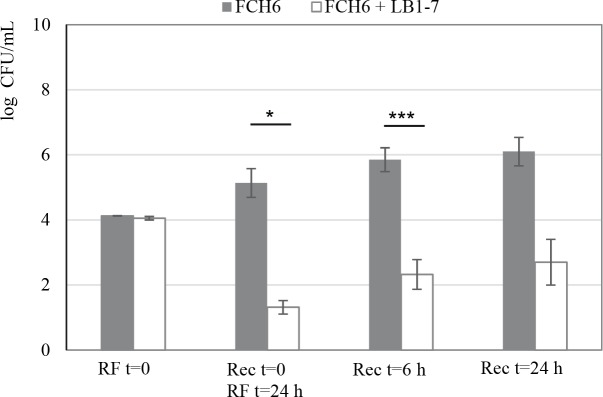
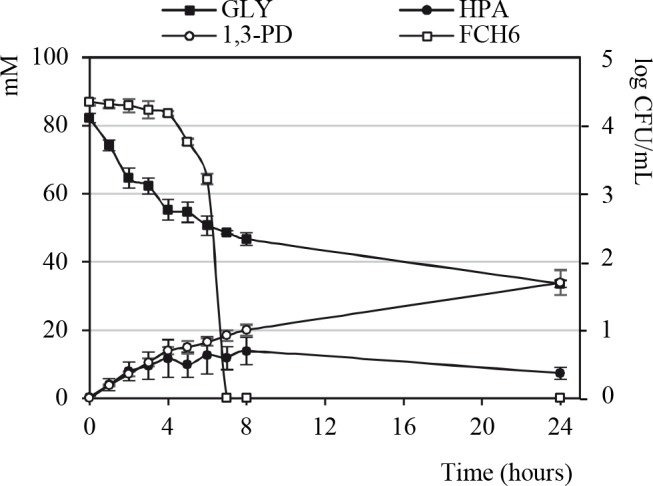
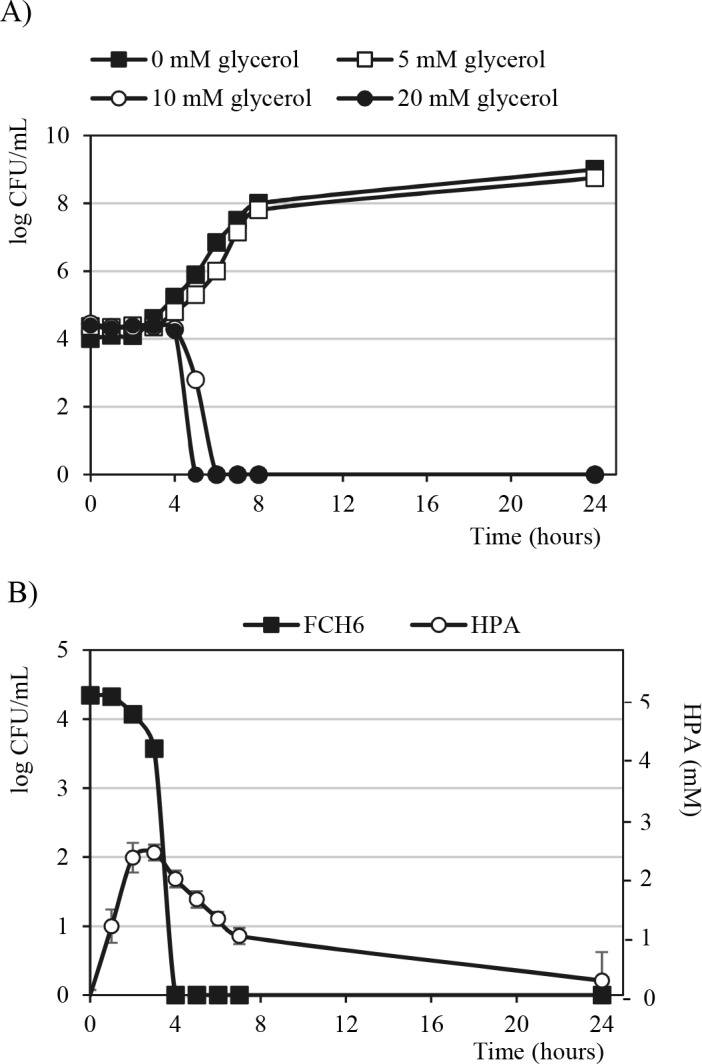
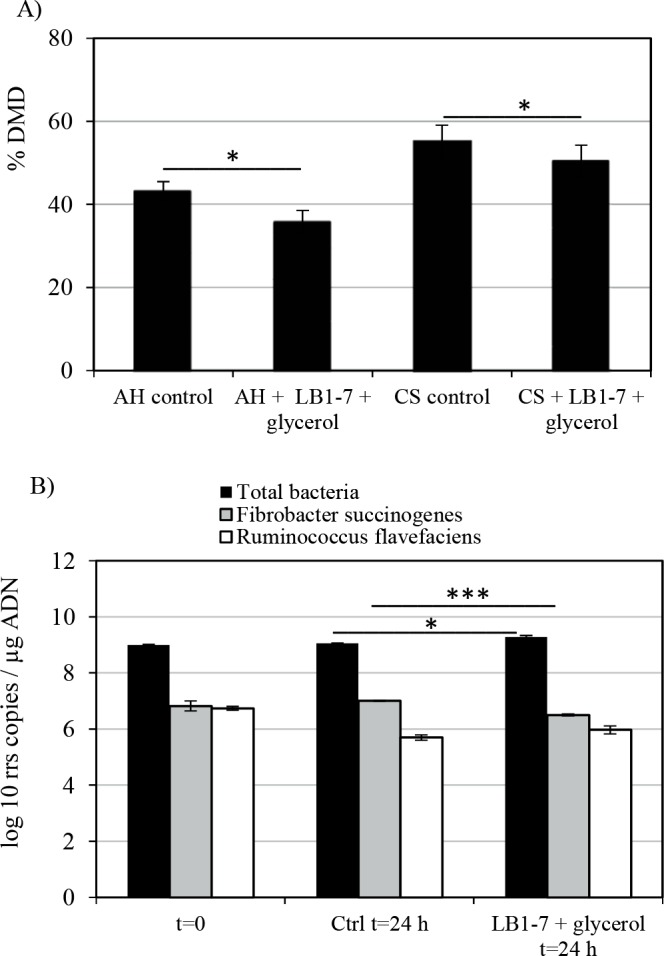
The bovine gastrointestinal tract (GIT) is the main reservoir for enterohaemorrhagic Escherichia coli (EHEC) responsible for food-borne infections. Therefore, it is crucial to develop strategies, such as EHEC suppression by antagonistic microorganisms, to reduce EHEC survival in the GIT of cattle and to limit shedding and food contamination. Most human-derived Lactobacillus reuteri strains produce hydroxypropionaldehyde (HPA), an antimicrobial compound, during anaerobic reduction of glycerol. The capacity of L. reuteri LB1-7, a strain isolated from raw bovine milk, to produce HPA and its antimicrobial activity against an O157:H7 EHEC strain (FCH6) were evaluated in bovine rumen fluid (RF) under strict anaerobiosis. EHEC was totally suppressed when incubated in RF inoculated with L. reuteri LB1-7 and supplemented with 80 mM glycerol (RF-Glyc80). The addition of LB1-7 or glycerol alone did not modify EHEC survival in RF. Glycerol was converted to HPA (up to 14 mM) by LB1-7 during incubation in RF-Glyc80, and HPA production appeared to be responsible for EHEC suppression. The bactericidal activity of L. reuteri LB1-7, the concentration of glycerol required and the level of HPA produced depended on physiological and ecological environments. In vitro experiments also showed that EHEC inoculated in rumen fluid and exposed to L. reuteri and glycerol had a very limited growth in rectal contents. However, L. reuteri exerted an antimicrobial activity against the rumen endogenous microbiota and perturbed feedstuff degradation in the presence of glycerol. The potential administration of L. reuteri and glycerol in view of application to finishing beef cattle at the time of slaughter is discussed. Further in vivo studies will be important to confirm the efficiency of L. reuteri and glycerol supplementation against EHEC shedding in ruminants.
牛胃肠道(GIT)是导致食源性感染的肠出血性大肠杆菌(EHEC)的主要储存库。因此,制定诸如通过拮抗微生物抑制EHEC等策略,以减少EHEC在牛胃肠道中的存活,并限制其排泄和食品污染,至关重要。大多数源自人类的罗伊氏乳杆菌菌株在甘油的厌氧还原过程中会产生一种抗菌化合物——羟基丙醛(HPA)。在严格厌氧条件下,对从生牛乳中分离出的罗伊氏乳杆菌LB1-7菌株产生HPA的能力及其对O157:H7 EHEC菌株(FCH6)的抗菌活性进行了评估。当在接种了罗伊氏乳杆菌LB1-7并添加80 mM甘油的瘤胃液(RF)中培养时,EHEC被完全抑制(RF-Glyc80)。单独添加LB1-7或甘油并不会改变EHEC在瘤胃液中的存活情况。在RF-Glyc80中培养期间,LB1-7将甘油转化为HPA(最高可达14 mM),HPA的产生似乎是EHEC受到抑制的原因。罗伊氏乳杆菌LB1-7的杀菌活性、所需甘油浓度以及产生的HPA水平取决于生理和生态环境。体外实验还表明,接种在瘤胃液中并暴露于罗伊氏乳杆菌和甘油的EHEC在直肠内容物中的生长非常有限。然而,罗伊氏乳杆菌对瘤胃内源性微生物群具有抗菌活性,并在甘油存在的情况下干扰饲料降解。讨论了在屠宰时将罗伊氏乳杆菌和甘油应用于育肥牛的潜在可能性。进一步的体内研究对于确认补充罗伊氏乳杆菌和甘油对反刍动物EHEC排泄的抑制效果很重要。