Satomura Atsushi, Fujita Takayuki, Nakayama Tomohiro
Division of Laboratory Medicine, Department of Pathology and Microbiology, Nihon University School of Medicine, Japan.
Division of Nephrology, Hypertension and Endocrinology, Department of Medicine, Nihon University School of Medicine, Japan.
Intern Med. 2018 Mar 1;57(5):751-755. doi: 10.2169/internalmedicine.9407-17. Epub 2017 Nov 1.
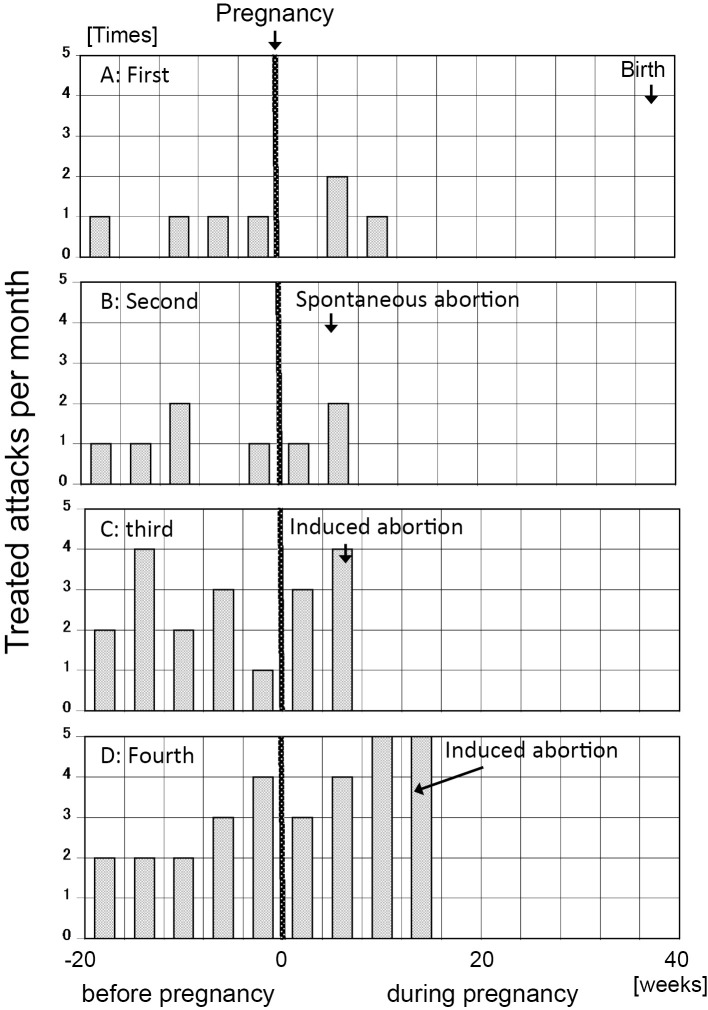
The patient was a 38-year-old Japanese woman who had been diagnosed with hereditary angioedema type I at 7 years of age based on her family history. She had undergone four pregnancies. She gave birth to a healthy baby girl after her first pregnancy and had reported few episodes of angioedema. However, she subsequently required abortions due to frequent angioedema episodes that occurred during her three subsequent pregnancies. Thus, our patient showed two clinical pregnancy courses. After treating her with C1-inhibitor concentrate, her symptoms of angioedema disappeared. The preventive use of C1 inhibitor concentrates should be considered in hereditary angioedema (HAE) patients with frequent angioedema attacks during pregnancy.
该患者是一名38岁的日本女性,根据家族病史,她在7岁时被诊断为I型遗传性血管性水肿。她经历过四次怀孕。第一次怀孕后生下了一个健康的女婴,且报告的血管性水肿发作次数很少。然而,在随后的三次怀孕中,由于频繁出现血管性水肿发作,她随后需要进行流产。因此,我们的患者表现出两种临床妊娠过程。用C1抑制剂浓缩物治疗后,她的血管性水肿症状消失了。对于在怀孕期间频繁出现血管性水肿发作的遗传性血管性水肿(HAE)患者,应考虑预防性使用C1抑制剂浓缩物。