Institute for Physical Activity and Nutrition (IPAN), Deakin University, Melbourne, VIC, Australia.
Institute for Health and Ageing (IHA), Australian Catholic University, Melbourne, VIC, Australia.
Sci Rep. 2017 Nov 1;7(1):14840. doi: 10.1038/s41598-017-13260-z.
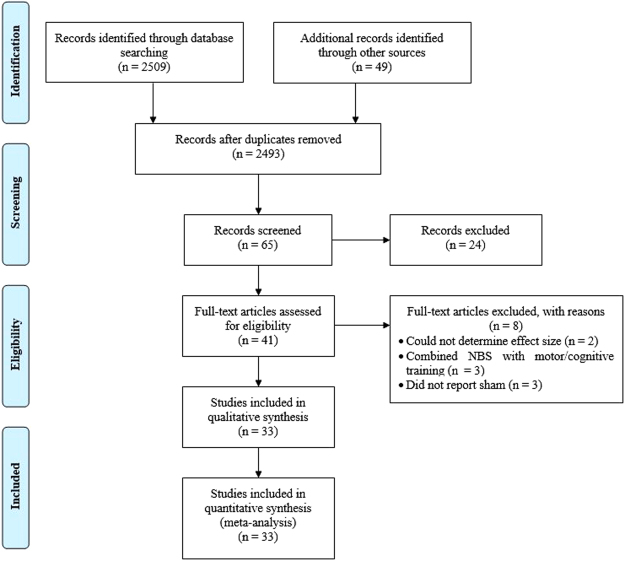
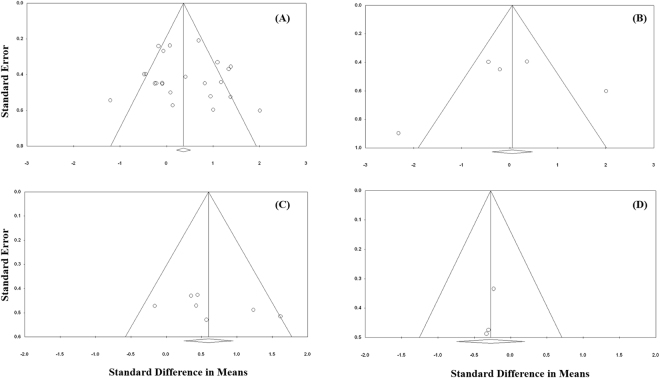
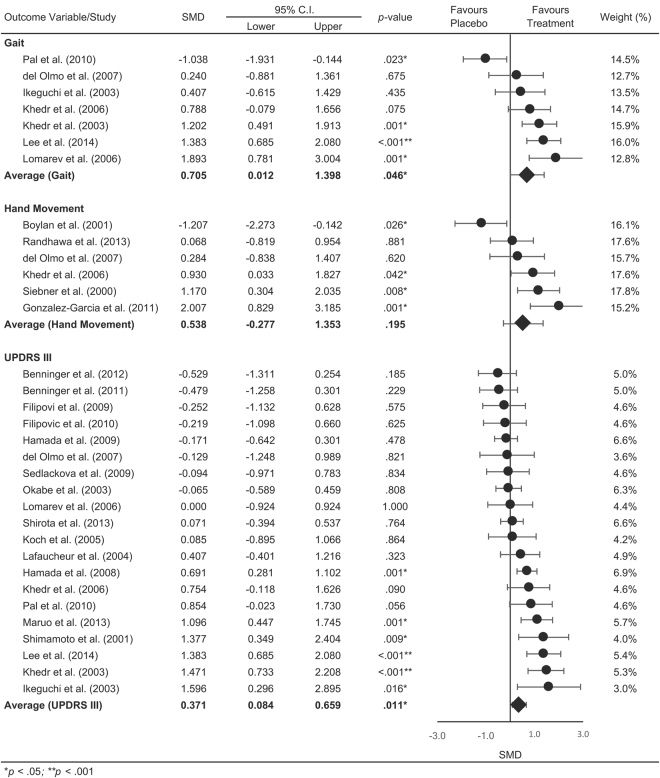
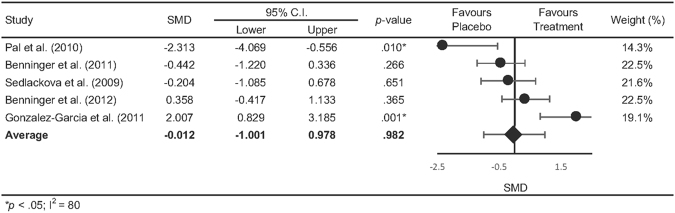
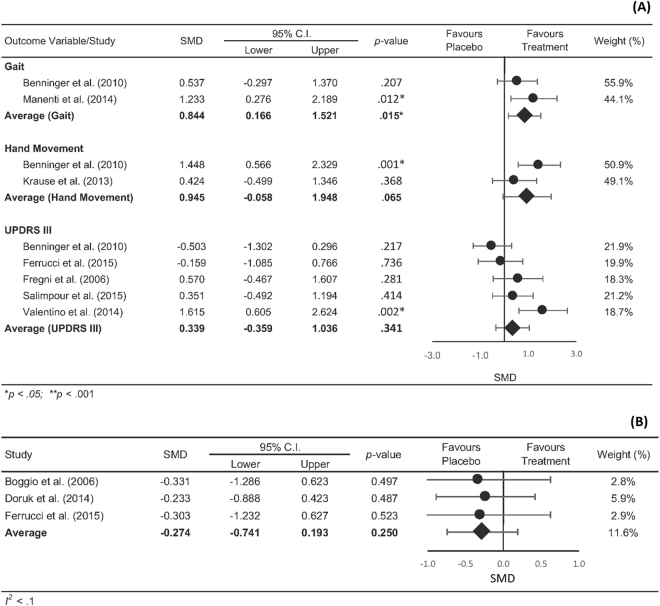
Parkinson's disease (PD) is a neurodegenerative disorder affecting motor and cognitive abilities. There is no cure for PD, therefore identifying safe therapies to alleviate symptoms remains a priority. This meta-analysis quantified the effectiveness of repetitive transcranial magnetic stimulation (rTMS) and transcranial electrical stimulation (TES) to improve motor and cognitive dysfunction in PD. PubMed, EMBASE, Web of Science, Google Scholar, Scopus, Library of Congress and Cochrane library were searched. 24 rTMS and 9 TES studies (n = 33) with a sham control group were included for analyses. The Physiotherapy Evidence Database and Cochrane Risk of Bias showed high quality (7.5/10) and low bias with included studies respectively. Our results showed an overall positive effect in favour of rTMS (SMD = 0.394, CI [0.106-0.683], p = 0.007) and TES (SMD = 0.611, CI [0.188-1.035], p = 0.005) compared with sham stimulation on motor function, with no significant differences detected between rTMS and TES (Q [1] = 0.69, p = 0.406). Neither rTMS nor TES improved cognition. No effects for stimulation parameters on motor or cognitive function were observed. To enhance the clinical utility of non-invasive brain stimulation (NBS), individual prescription of stimulation parameters based upon symptomology and resting excitability state should be a priority of future research.
帕金森病(PD)是一种影响运动和认知能力的神经退行性疾病。目前尚无治愈 PD 的方法,因此,寻找安全的治疗方法来缓解症状仍然是当务之急。本荟萃分析量化了重复经颅磁刺激(rTMS)和经颅电刺激(TES)在改善 PD 运动和认知功能障碍方面的有效性。检索了 PubMed、EMBASE、Web of Science、Google Scholar、Scopus、美国国会图书馆和 Cochrane 图书馆。纳入了 24 项 rTMS 和 9 项 TES 研究(n=33),并设有假刺激对照组。物理治疗证据数据库和 Cochrane 偏倚风险显示,纳入研究的质量较高(7.5/10),偏倚较低。我们的结果显示,rTMS(SMD=0.394,CI [0.106-0.683],p=0.007)和 TES(SMD=0.611,CI [0.188-1.035],p=0.005)与假刺激相比,对运动功能有总体的积极影响,rTMS 和 TES 之间没有显著差异(Q[1]=0.69,p=0.406)。rTMS 和 TES 均未改善认知功能。刺激参数对运动或认知功能没有影响。为了提高非侵入性脑刺激(NBS)的临床实用性,基于症状和静息兴奋性状态的刺激参数个体化处方应成为未来研究的重点。