Department of Mechanical Engineering, The University of Hong Kong, Hong Kong, SAR, China.
Environmental Control Systems, Boeing Commercial Airplanes, Everett, WA, USA.
Sci Rep. 2017 Nov 1;7(1):14826. doi: 10.1038/s41598-017-13840-z.
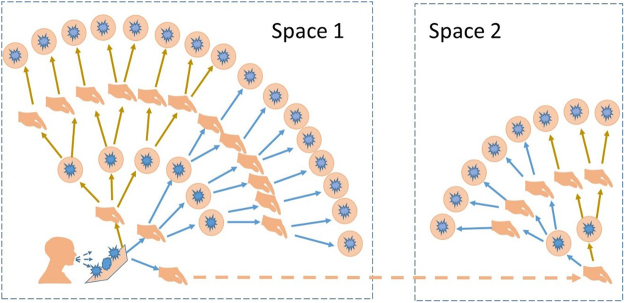
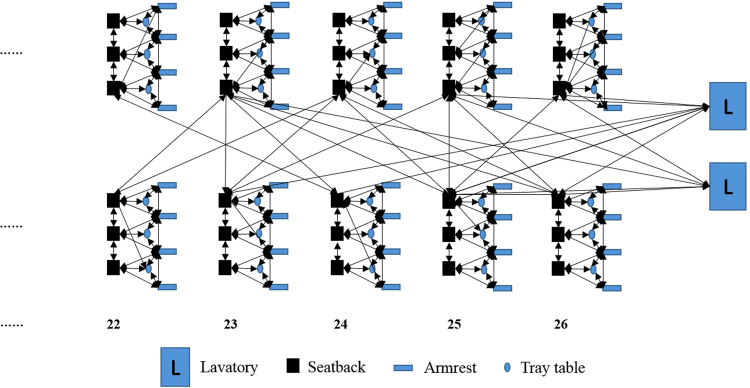
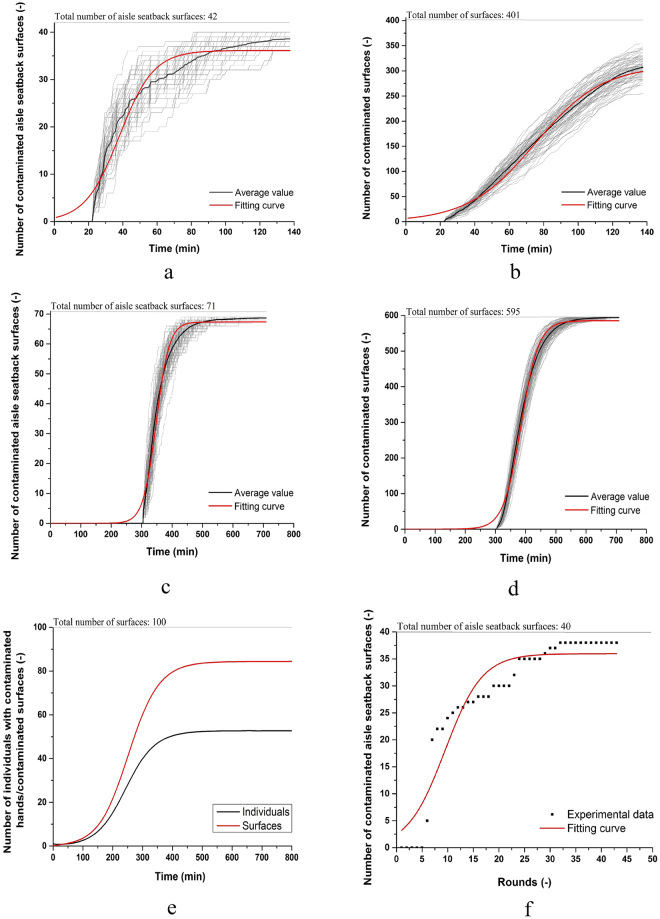
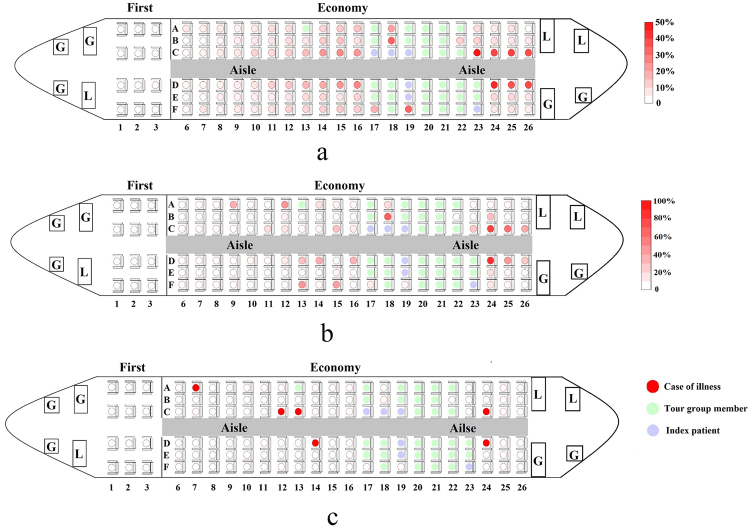
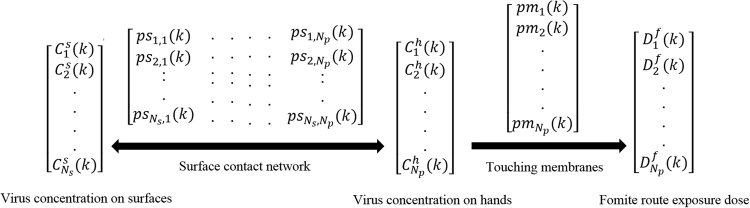
Surfaces and objects surround us, and touching them is integral to everyday life. Pathogen contaminated surfaces (fomites) are known to transmit diseases. However, little is known about the ways and speed at which surfaces become contaminated. We found that under certain conditions, the number of contaminated surfaces grows logistically, corresponding to possible rapid transmission of infection. In such a surface network, pathogen can be transmitted great distances quickly-as far as people move. We found that the surface contamination network in aircraft cabins exhibits a community structure, with small communities connected by the aisle seatback surfaces and toilets, which are high-touch surfaces. In less than two to three hours, most high-touch surfaces in the cabin are contaminated, and within five to six hours nearly all touchable surfaces are contaminated. During short haul flight, aisle passengers have higher fomite exposure. This closely matches the spatial infection pattern of one reported inflight norovirus outbreaks. Our model is generally applicable to other crowded settings. The commonly repeated advice to "wash hands frequently" may be replaced in future by more strategic advice such as "clean surfaces right now", or advice based on who should wash their hands, and when.
表面和物体环绕着我们,触摸它们是日常生活的重要组成部分。已知受病原体污染的表面(接触传染媒介)会传播疾病。然而,我们对表面被污染的方式和速度知之甚少。我们发现,在某些条件下,受污染表面的数量呈对数增长,这可能意味着感染会迅速传播。在这样的表面网络中,病原体可以迅速传播很远的距离——就像人们移动的距离一样远。我们发现,飞机客舱中的表面污染网络呈现出社区结构,小社区通过过道座椅靠背表面和厕所连接,这些都是高接触表面。在不到两到三个小时的时间内,机舱内的大多数高接触表面都会被污染,而在五到六个小时内,几乎所有可触摸的表面都会被污染。在短途飞行中,过道乘客的接触传染媒介暴露率更高。这与一次报告的机上诺如病毒爆发的空间感染模式非常吻合。我们的模型通常适用于其他拥挤的环境。未来,可能会用更具战略性的建议(如“立即清洁表面”)来取代常见的“经常洗手”建议,或者根据谁应该洗手以及何时洗手来提供建议。